Was San Diego Mayor Todd Gloria hoping to turn the page on public outrage over new parking fees by ignoring the topic during his 2026 State of the City address?
If so, the tactic backfired.
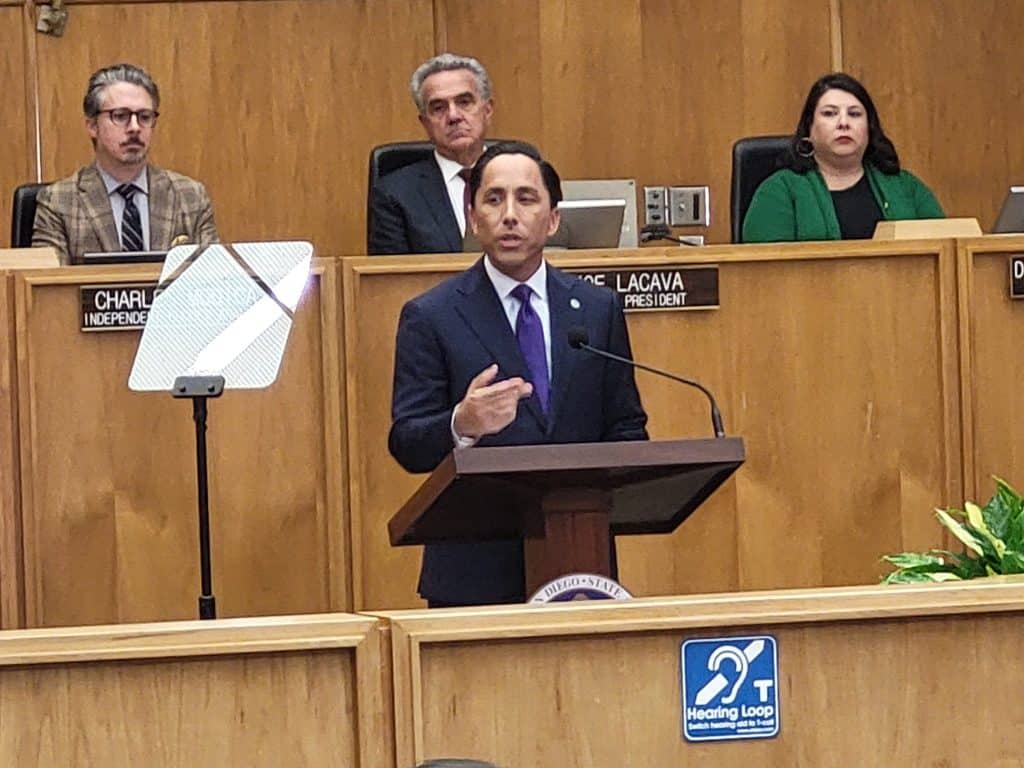
Those fees – in place at Balboa Park and also covering 17 blocks in downtown San Diego – are what many people still wanted to talk about after the mayor’s glaring omission in his annual speech. It was delivered on January 15, and the setting for the second year in a row was the 250-seat City Council Chambers at City Hall.
TV newscasts, online reports and other headlines focused on parking fees. Leaving the topic out of his address didn’t tamp down the ire. It stoked flames of discontent.
After the city faced more than a quarter-of-a-billion-dollar deficit in its last annual budget, one of the hot button fixes by the mayor was implementation of new charges on people who drive cars.
Rookie move by a veteran politician. Southern Californians revere their automobiles. Boosting or creating car-related fees in San Diego would be akin to taxing cheese curds in Wisconsin. Or putting a tariff on peaches in Georgia.
In early January, these woebegone parking fees were rolled out in Balboa Park. Often referred to as a city treasure, or the jewel of San Diego, it had always been free to park nearby and enjoy the museums, cultural offerings and manicured green spaces.
Now, there’s a confusing payment structure in place that charges you depending on which lot you park in, if you bought a pass, and whether or not you’re a resident of the city.
After a shaky rollout, San Diego City Councilmembers Sean Elo-Rivera and Kent Lee called for freezing the fees until better implementation can be put in place. Councilmember Stephen Whitburn announced he wants all fees to be completely repealed.
In a fairly unprecedented move, politicians from surrounding cities are also calling on Gloria to reconsider parking fees. Chula Vista Mayor John McCann, El Cajon Mayor Bill Wells and San Marcos Mayor Rebecca Jones believe Balboa Park is a regional asset and financial barriers to family visits shouldn’t exist.
Scorecard: The city has already collected hundreds of thousands of dollars from Balboa Park meters and parking passes. However, anecdotal reports say parking lots are about 30% emptier than usual.
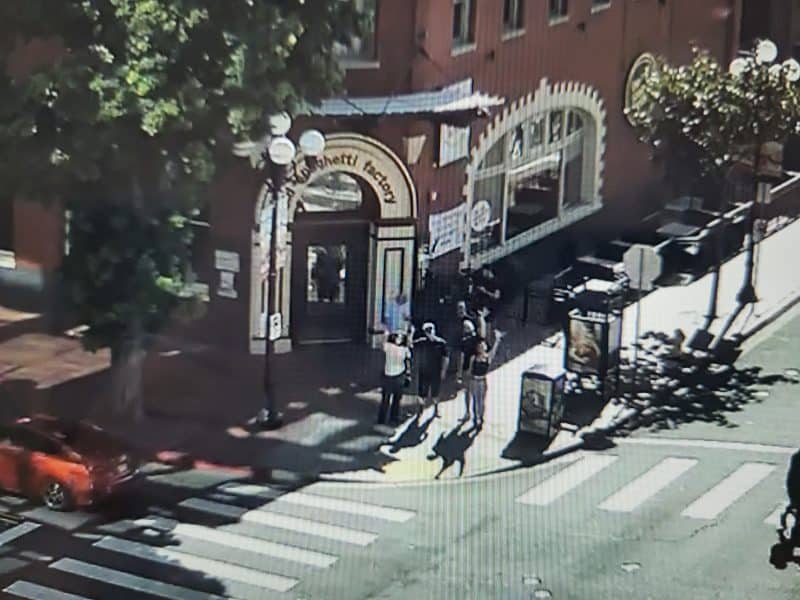
In downtown San Diego, business owners are aghast over increased parking meter rates. Especially special event parking fees that affect East Village and the Gaslamp Quarter. On the 81 days when the San Diego Padres have home games at Petco Park, prices surge and meter rates quadruple to $10 per hour for six hours (before, during and after Padres games).
Gaslamp proprietors saw empty parking spots on the streets and fewer patrons inside their bars and restaurants after the fees were implemented.
City Councilmember Raul Campillo has proposed his “5/5/5 Plan” be substituted for the current scenario. His idea calls for charging $5 per hour during special events, for five hours, and only in five blocks that surround Petco Park.
Scorecard: The mayor said collected meter fees have already been put back into the city in the form of streetlight replacement. Fifth Avenue business owners said parking fees have left a bad taste in the public’s mouth and Gaslamp business has suffered. Plus, staff that can’t afford to shave $60 off their nightly pay for parking have quit.

The San Diego State of the City is about more than parking meter fees. Safety, homelessness, affordable housing, street and pothole repair were broached by Gloria. But if you’ve heard one of his addresses you’ve heard all six of them.
Homelessness numbers and police statistics are easy to pick and choose from. Some amount of affordable housing is a future endeavor yet to be seen. Did we really learn anything?
Street repair and pothole maintenance is the baseline job requirement for any city. Crowing about street repair and filling potholes sounds like a commercial trying to sell you a car by boasting it has four wheels and brakes.
Being mayor of a major U.S. city can’t be an easy job. Especially post-Covid and in a time when state and federal dollars are waning. Yet, even before Gloria was re-elected in 2024, his stock had been dropping. Longtime boosters of the local Democratic Party whispered about their dissatisfaction with a lack of forward progress.
The one-time party golden boy had always been considered bright, charismatic and driven, with potential to be a change agent rather than a placeholder elected official.
Gloria had spent eight years as a San Diego City Councilmember (2008 to 2016). He served briefly as the “iMayor” after Bob Filner was ousted from the position. Gloria moved on to state government before returning to San Diego to be elected mayor in 2020.
He’s always been ambitious. Though he denied he would leave the city, it was anticipated that if Kamala Harris won the presidency in 2024, Gloria would’ve been offered a spot in her administration. It’s a moot point now.
Political observers told The Sun Gloria seemed distracted during his first term as mayor. During the primary, he declined to participate in all the mayoral debates. Larry Turner, an independent who was a police officer, garnered 45% of the vote in the general election. Campaign professionals said a first-time candidate shouldn’t have been able to pull that many votes from an incumbent mayor in a predominantly Democratic town.
Looking ahead politically, Gloria may be eyeing a 2028 run for one of the local seats in Congress. If so, San Diegans will have to hope he’ll be able to multitask a run for national office while leading the city out of rolling deficits.
We’ll see. During his State of the City, Gloria’s presentation was less inspiring than in the past. His voice was flat, lacking punch. Scattered applause for some of his points was tepid and sounded perfunctory rather than supportive.
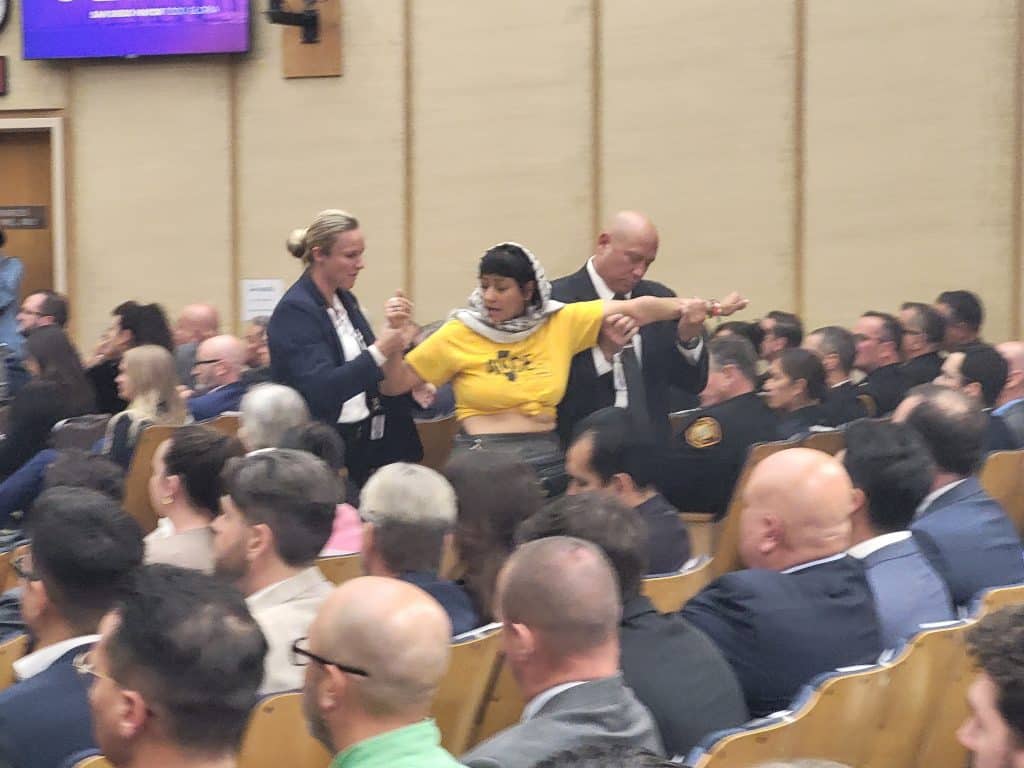
The mayor’s speech was interrupted five times by protestors. Most of those escorted out of council chambers shouted anti-ICE messages and beseeched Gloria to protect them from U.S Immigration and Customs Enforcement officers.
If the protestors had waited, they would have heard Gloria take his most impassioned stance of the day: against future ICE activity in San Diego. He vowed to not cooperate with ICE officers engaged in immigration enforcement.
The mayor also mentioned the name of Renee Nicole Good, the woman shot and killed by an ICE officer last week in Minneapolis. He called Good’s death, “a life lost because of the callous and reckless actions of a federal agent, which outraged all of us.”
City Council President Joe LaCava briefly spoke with The Sun after the State of the City. LaCava wasn’t surprised Gloria didn’t mention parking issues and didn’t think he needed to.
“He did talk about challenges for the city,” LaCava said. “And he did talk about ICE and that was important news.”
In wrapping up his address, Gloria said San Diego was a city “in transformation.” That’s akin to a baseball team manager blaming a bad season on it being a “rebuilding year.”
Sports fans don’t like rebuilding years. Citizens don’t want transformation years. Everybody wants leadership and action. Nobody wants to wait until next year for results. Kicking the can down the road gets old. Even if that road is relatively clean and has a few less potholes than last year.
Fans also don’t like it when you raise ticket prices. And you can be sure residents of Greater San Diego don’t like paying for parking at their city treasure.
Failing to address an issue rarely makes it go away. And in this case, it shined an even brighter spotlight on the topic. SDSun