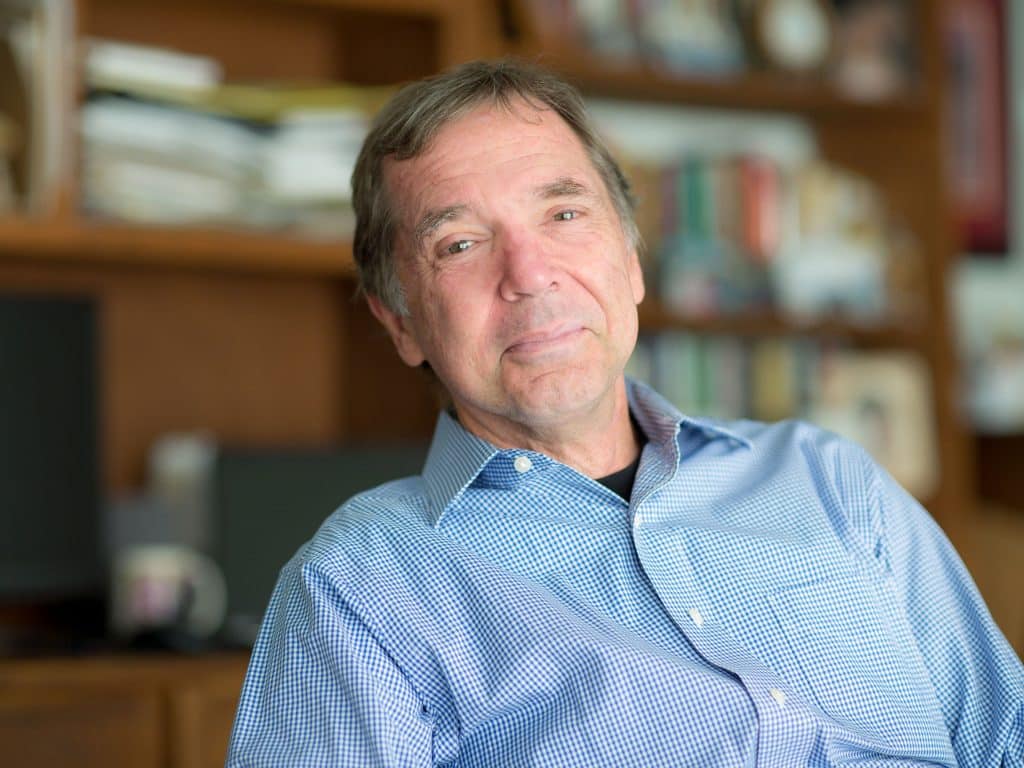
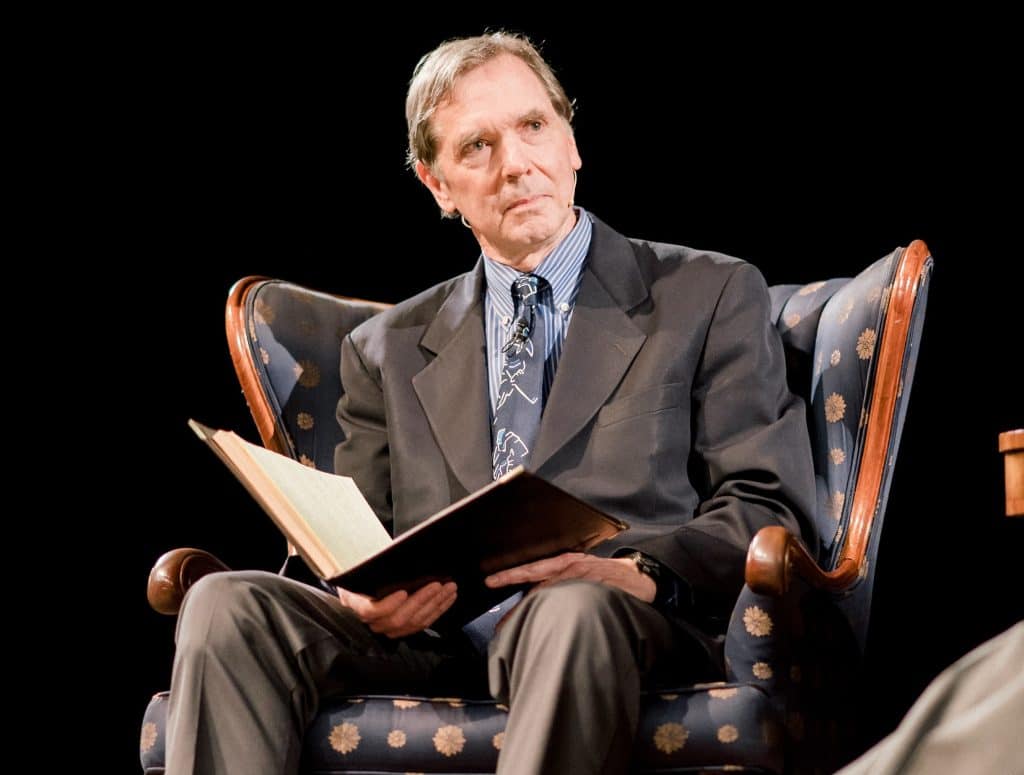
Point Loma Nazarene University Journalism Program Founder & Director Dean Nelson imparted a lifetime of knowledge during a January 20 Zoom gathering sponsored by The San Diego Press Club.
I was honored to do a Q&A with Nelson, who’s written 14 books, many focused on best practices in media and journalism.
Nelson is also founder and host of the annual Writer’s Symposium by the Sea. The 31st edition will take place February 25 to 27 on the PLNU campus. This year’s guests, who’ll be interviewed onstage by Nelson, include acclaimed broadcast journalist Judy Woodruff, international writer Jamaica Kincaid and award-winning novelist George Saunders.
For the Press Club event, the tables were turned on Nelson as he fielded my questions about media practices, national events involving reporters and queries about the state of the city regarding San Diego’s media infrastructure.
Here’s a sampling of the interview. Note: Portions of this Q&A were edited for length and clarity (a practice Nelson approves).
Question: Not long ago, a Washington Post reporter had her home searched. What does this say about the state of journalism?
Dean Nelson: It’s disturbing and un-Constitutional. It won’t stand up in court. We should be disturbed by this but not surprised. Authoritarian governments do this all the time. Nixon. Eugene McCarthy did this. Any free country has had this conflict. It’s disturbing and wrong but it’s not new.
Question: News organizations routinely edit responses from interviews. What’s acceptable, even in shortening quotes? How do you walk the line?
Dean Nelson: When reporters quote people, they can help make the point and balance out the comment. Compression, or “editing” of a quote is perfectly acceptable. Reporters do it all the time. But you can’t distort the impact or the meaning. Edit for clarity but not to make a point you’ve already decided you want to make.
Question: Give your state of the city overview of San Diego media.
Dean Nelson: The word fragmentation comes to mind. I would love to have one big mega news outlet that is the paper of record. We don’t have something in San Diego as strong as we used to, but that doesn’t necessarily mean things aren’t getting covered. The San Diego Union-Tribune has fewer reporters and editors. Okay, fine. But Voice of San Diego does some really good, important work. And then you’ve got inewsource that’s doing all this investigative stuff. Then you’ve got…The San Diego Sun, and the Times of San Diego along with all of those community papers that now have an infusion of money from [Newswell] out of Arizona State University. Not to mention the television stations and KPBS. There are a lot of reporters out there covering interesting stuff. But it’s not all on the same screen.
“They have to prove to me first that they can tell a story that might be very divisive and I’d not be able to tell what their opinion is.”
Dean Nelson
Question: What do you see as the future for the nonprofit news model?
Dean Nelson: I think it’s going to increase. Baltimore, St. Louis and Minneapolis have nonprofit outlets. Voice of San Diego was one of the first in the country. The problem is they’re not very big so they have to choose the topics they’re really going to dig into that the community cares about. Education. Local politics. They aren’t going to cover sports or crime. They have to be very choosy.
Question: How do you get young or inexperienced reporters up to speed on covering complex issues like homelessness?
Dean Nelson: I go back to Don Hewitt of 60 Minutes. He said, “I don’t care about issues. I care about how issues affect people. According to Hewitt, the issue in the Bible was evil in the world. But the story was Noah. So…The way you cover something as unsolvable and complex as homelessness is you make it about people. It could be the people living in the encampments or the people trying to bring them water and food and blankets. The only way people are going to care is to take the story out of the policy wonkish-ness budget stuff (which is necessary) and show how homelessness lands on a somebody.”
Question: Talk about reporting facts versus opinion.
Dean Nelson: From the first week of Introduction to Journalism Class, I pound into students’ heads that nobody cares what they think. Tell me the story. Verify the story. And make it interesting. If later, they become commentators, Influencers or whatever term we want to call it, that’s fine. But they have to prove to me first that they can tell a story that might be very divisive and I’d not be able to tell what their opinion is.
For the full hour video of this Q&A, go to: YouTube. SDSun