The city of San Diego is deep into cost-cutting mode. The current austerity issue stems from a quarter of a billion dollar deficit in San Diego Mayor Todd Gloria’s annual budget. The San Diego Sun talked to residents and workers in downtown’s urban core about fiscal issues. Many were familiar with the failure of Measure E on last November’s ballot. If passed, a new sales tax might have poured $400 million into city coffers, thus reversing the deficit. Herewith, an unscientific sampling of views about San Diego austerity in a People On The Street poll.
Cortez Hill resident Nick Grismore didn’t vote for Measure E. “I’m sure that for a lot of families, that sales tax can make a [negative] difference in their life,” he says
C Rush also voted against Measure E. She calls herself middle-class and says tax increases impact the working class and homeless San Diegans the most.
“I felt like the taxes were hurting us,” says Rush, a Pacific Beach resident who works downtown. “They’re taxing the little people. The average, everyday person doesn’t have a four or five-person household income, and it seems like that’s what you have to have these days.”

Julie Jacobson did vote for the Measure E tax in November. However, the Little Italy resident thinks increasing the city’s budget should come from a structural budget reallocation, not by neglecting public infrastructure.
“I’m a firm believer that our taxes should be going to our community, and I don’t necessarily see it in our community,” Jacobson says. “I live just down the street, and see homelessness everywhere.”
Little Italy resident Jerome Kennedy says he didn’t vote in the November election because he was transitioning from homelessness at the time.
“I would have voted to keep the sales tax down, but I would have had to do more research on why the sales tax needed to go up,” he says.
Kennedy relies on city funds for services.
“Me, I’m disabled,” Kennedy says. “I’m legally blind. I’m sure [the City of San Diego] could allocate money from other areas. We need public transportation.”
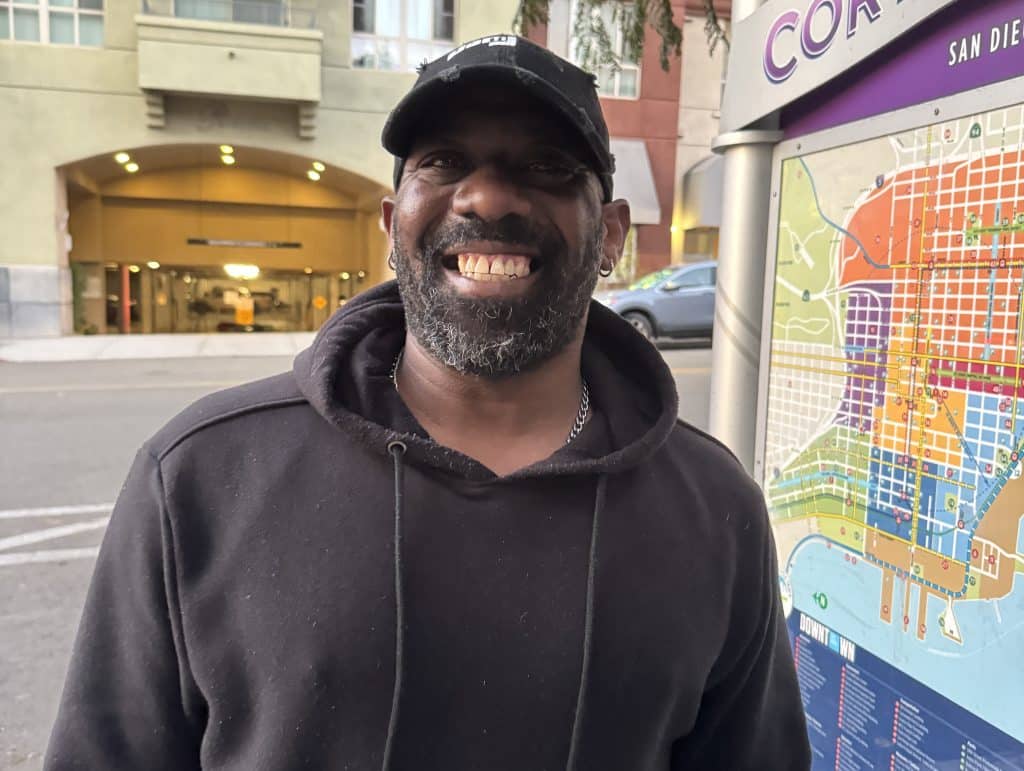
Measure E passage or not, Chula Vista resident Mark Bernstein thinks the city’s budget deficit is the result of negligence.
“I don’t use the trolley as much, and none of the people I know use it either,” Bernstein says. “Public transport in San Diego is pretty bad.”
La Jolla resident Andy Mora points to other priorities that are affected by a budget deficit..
“One of the first things I thought [that the budget deficit would affect] was the parks and transportation,” Mora says. “Some people can’t afford a vehicle. Low-cost options are necessary in San Diego, where the salaries don’t really match up to the cost of living.” SDSun