As conventions go, TwitchCon is Comic-Con Lite. At least by cosplay standards. Comic-Con lures 130,000 sci-fi fanatics and costumed superheroes to the downtown San Diego Convention Center every July. TwitchCon attracts a less ostentatious but still-significant 30,000 visitors for its “celebration of live-streaming, gaming and internet entertainment.”
Snapshot: Lunchtime on a postcard-perfect, mid-70s and cloudless October afternoon in the Gaslamp Quarter. Lanyard-wearing Twitchers are filing out of the convention center. They meander across trolley tracks and up Fifth Avenue. A few are in costume. A Spiderman here. A Mario Brother there. The sidewalks are active, but not teeming. A significant number of attendees are walking while talking into cell phones attached to hand-held gimbals (tech gizmos that allow users to create stable, professional looking video content).
Something stronger than a gimbal may be needed to stabilize the current political drama within the Gaslamp Quarter. Greater San Diego is still among the most desirable convention and visitor destinations in the country. The Gaslamp Quarter, the city’s renowned entertainment district and home of more than 400 businesses, has lost some shine, according to some local business operators.
Per its geographic proximity to the convention center, the Gaslamp is the city’s “front porch” to conventioneers. The area has also been a bar/restaurant/nightlife hotspot for both visitors and locals.
Gaslamp business owners say several factors are leading to a decline in business and reputation. They point to a disconnect with San Diego Mayor Todd Gloria and the District 3 City Council office that represents downtown.
Some complaints are not new. Working with the city to open a new business, or make alterations to a storefront, takes months and sometimes years. Entrepreneurs say the process is frustratingly labyrinthian. Other complaints directed at the city include:
- The abrupt reduction of city funding and a halt for a Fifth Avenue Promenade project.
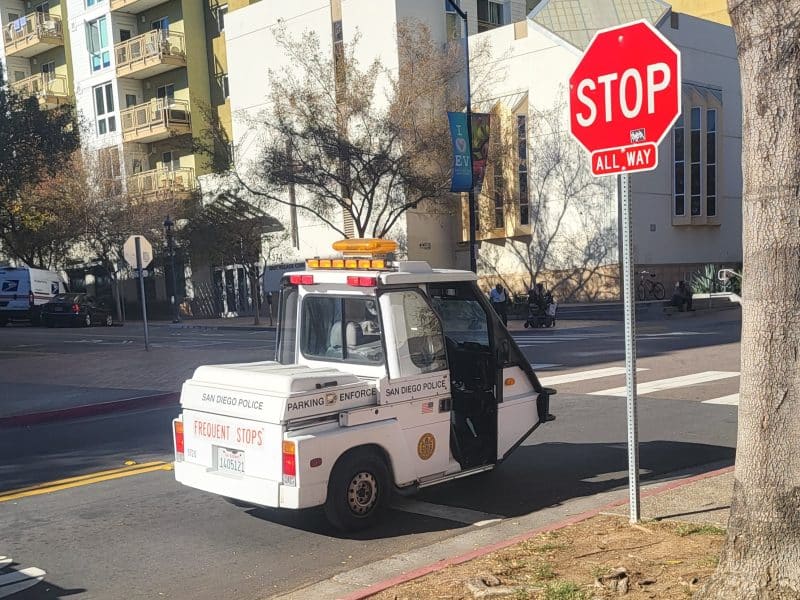
- The doubling of parking meter fees. Then “surge pricing” for meters during Padres games, which quadruples parking fees.
- A proposal to skyrocket costs for car valet service for hotels and restaurants.
- A rise in the crime rate and insufficient police enforcement.
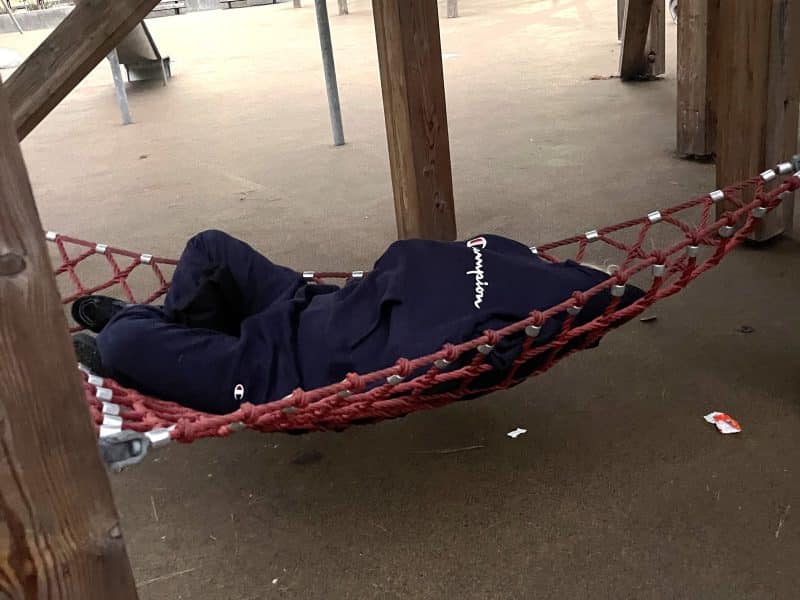
- Despite a decrease in tent encampments, visible homelessness that includes aggressive and unstable individuals.
- A decreased appearance of cleanliness.
On these and other issues, Gaslamp business leaders say the city has focused on bailing out of its quarter-billion-dollar budget deficit and turned a deaf ear to their needs. The Gaslamp Quarter Association reported that liaisons from the mayor’s office and D3 City Councilmember Stephen Whitburn stopped attending GQA’s monthly meetings at the beginning of 2025, severing lines of communication.
Mayoral spokesperson Rachel Laing and D3 Chief of Staff Jason O’Neill confirmed that their offices have stopped attending GQA meetings.
“The community representative for downtown stopped attending GQA’s monthly meetings because of the threat of litigation from the organization related to the bollard contract,” Laing wrote via email.
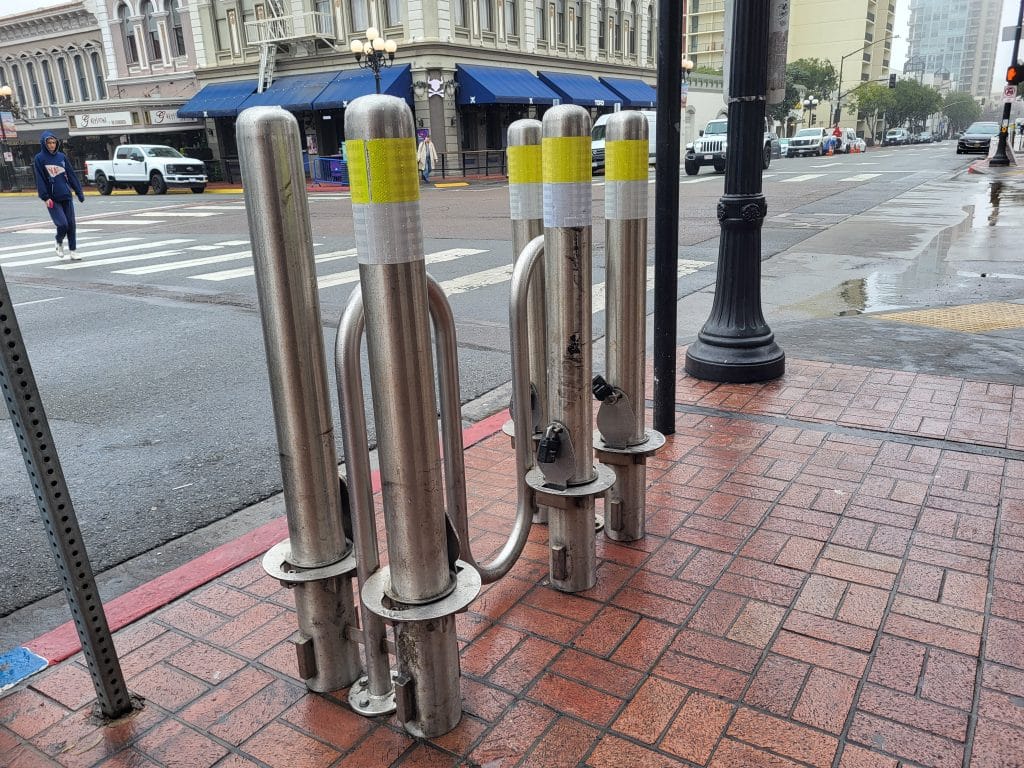
The bollard contract refers to the removable metal devices used to block street traffic as part of the plan to create a Fifth Avenue Promenade.
“After a particular Teams call on the [Fifth Avenue] bollard reimbursement with GQA at the beginning of the year, it became clear that until GQA’s financial issues were corrected sending staff to their meeting was no longer productive,” O’Neill wrote.
Both Laing and O’Neill indicated their offices continue to help Gaslamp Quarter stakeholders on a regular basis.
Gaslamp Quarter Executive Director Michael Trimble acknowledged the potential litigation. He said the GQA has backed away from a lawsuit. (More on Bollard-Gate below.)
In August, lacking direct lines of communication, Trimble and Mayor Gloria traded letters on Instagram decrying and defending the parking meter fee increases.
In Trimble’s last post directed to the mayor, he called Gloria’s actions “condescending, evasive and profoundly out of touch with the people you claim to serve.”
Trimble further posted: “This is no longer about parking. This is about trust, and you’ve lost it…We are not going away. We will not be silent. And we will not stop fighting for the workforce and the businesses that make downtown San Diego a place worth visiting.”
The 16.5-block Gaslamp Quarter extends from Harbor Drive to Broadway on Fourth, Fifth and Sixth avenues. It had an inauspicious beginning before making it onto the National Register of Historic Places in 1980. Many Gaslamp buildings were constructed in the Victorian Age (which can make modernization of shops and venues challenging, a complaint from some business owners today).
The area was called New Town in the 1860s. Development began in 1887 when Alonzo Horton bought up myriad city blocks hoping to create a vibrant city by the bay. From 1880 to 1916, the Gaslamp Quarter was dubbed the “Stingaree.” It was a working class town filled with gambling halls and bordellos.
From the 1950s to the ’70s, the area was in decay. It was regarded as a hangout for sailors attracted to the local pornographic theaters and massage parlors.
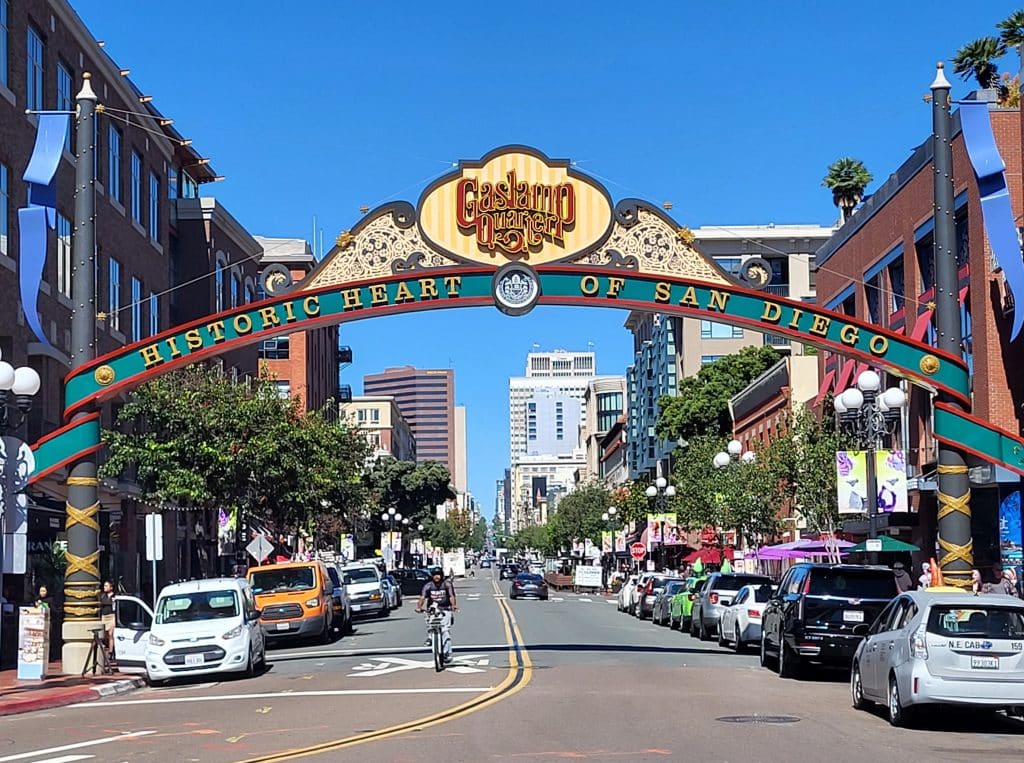
In 1976, city leaders established the (now-defunct) Centre City Development Corporation and aimed to redevelop the Gaslamp Quarter. By 1992 the iconic Gaslamp Quarter Archway was installed at the base of Fifth Avenue.
As the Gaslamp Quarter was shedding its reputation as the domain of bordello-seeking sailors, nearby Horton Plaza (a former mega-mall now in ownership limbo) was built in 1985. The San Diego Convention Center (built in 1989) also helped legitimize downtown, especially “Below Broadway” where the sketchiest areas, including the Gaslamp Quarter, were located.
When the San Diego Downtown Association and San Diegans Inc. merged in 1993 the Downtown San Diego Partnership was created. Still in existence, the Partnership’s mission is to “advance the economic prosperity and cultural vitality of downtown San Diego.”
Post-pandemic, the Downtown Partnership’s challenge has been to rebuild and support downtown businesses and avoid a backslide to that seedy Below Broadway reputation.
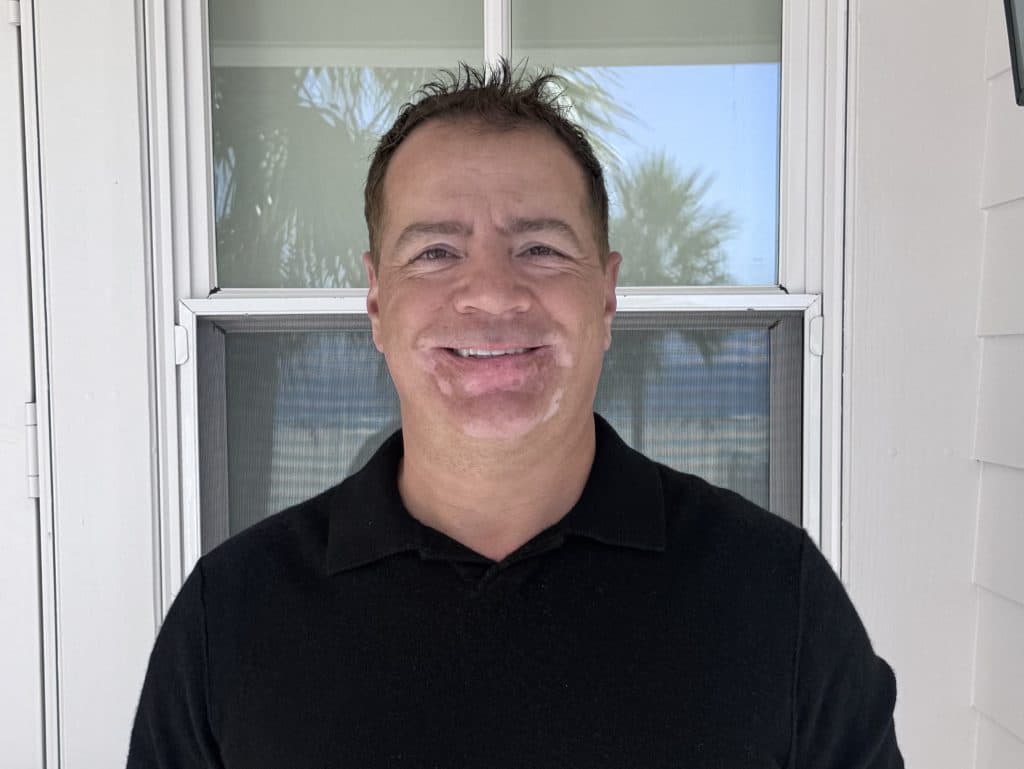
The Gaslamp Quarter was at a turning point in 2004. That’s when Mike “Mikey G” Georgopoulos arrived on the scene.
“When I got here, everybody told me about how it used to be, which was military, rough, seedy, not the place you want to come to,” Georgopoulos said.
Despite that grim initial assessment, Georgopoulos stuck around for more than two decades as a partner in RMD Group. Today, RMD owns Huntress steakhouse, Lumi sushi, Rustic Root with its rooftop bar, and sports entertainment venue Swing Social. All are located on Fifth Avenue in the Gaslamp.
RMD keeps busy. Holdings also includes another Rustic Root in Solana Beach and Ballast Point brewpubs in Little Italy and Miramar, as well as others outside San Diego. The group also currently manages food and beverage for the downtown Hard Rock Hotel and Carte Hotel in Little Italy. On top of that, RMD does sales for 10 restaurants and bars in the Gaslamp, Little Italy and East Village.
Over the last two decades, RMD had a hand in Gaslamp spots SideBar (now owned by a former employee), Ciro’s Pizza, F6ix, Fluxx and Stingaree. Obviously, Georgopoulos has Gaslamp cred.
He recalls that for nearly two decades, despite bumps in the road, the Gaslamp grew in popularity, became known as a destination with top restaurants, and was a money-maker.
“We attracted restaurants with legitimate chefs,” Georgopoulos said. “Brian Malarkey came on the scene. National brands wanted to be here. It was all up.”
He says after a decade of good business and creating a great vibe, the blame goes widespread – to the business community, the mayor’s office – for taking their eyes off the ball.
“Services were cut back, cleaning was reduced,” Georgopoulos said. “Fees that should have stayed in the Gaslamp started leaving and going into other parts of San Diego. And getting licences (especially liquor licenses) and permits to do business down here was still a challenge.”
He says major operators from Las Vegas and Los Angeles were spooked away from doing business in the Gaslamp. Currently, the GQA reports a 30% vacancy rate. The empty storefronts are most obvious along the blocks of Fifth Street just below Broadway.
“The Hakkasan Group came in and bought restaurants and clubs,” Georgopoulos said. “They renovated and put big money into what was Searsucker and Stingaree. But they packed up and left. Why? San Diego stifled development and growth by not issuing licenses in a timely manner.”
The pandemic also caused Hakkasan Group to reshuffle its holdings.
Overall, a little cooperation and communication regarding the Gaslamp would go a long way, Georgopoulos said.
“You’d have situations where a landlord wants you to sign a lease right now, but nobody can say if you’ll get a liquor license in six months,” Georgopoulos says. “How is that pro-business? You can’t sign a lease and commit to not knowing. The city wouldn’t do it, so people wouldn’t invest. Then that landlord’s property sits vacant for another six months.”
When similar issues affected Georgopoulos, he was driven to join the board of the Gaslamp Quarter Association.
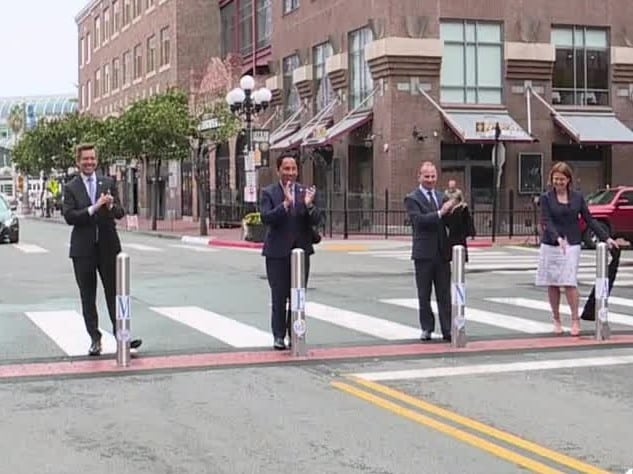
The Fifth Avenue Promenade. Pre-pandemic, Georgopoulos was involved in the planning of the Fifth Avenue Promenade. The goal was to stop car traffic on Fifth Avenue and make a stretch of the Gaslamp’s main drag pedestrian-friendly. The project called for the planting of trees and adding consumer-friendly activations along the route. The vision was akin to the Third Street Promenade in downtown Los Angeles.
What finally came to be in 2023 was a system of removable bollards at intersections on Fifth Avenue. The press and the public confused the situation by referring to the bollard installation as The Promenade. The bollards, however, were supposed to be a first step toward an ambitious end goal.
Some business owners liked the bollards, citing increased safety. Others said the car-less street just made the area look empty. And that a large percentage of the people walking down the middle of Fifth Avenue were homeless individuals demonstrating aggressive or erratic behavior.
Then the bollards went away, after years of planning and millions of dollars of funding. The cause of its demise is still being debated. The GQA’s Trimble said the city yanked the funding because of its budget deficit. The mayor’s spokesperson said Trimble should have known funding for the Promenade plan was going to diminish.
Trimble said he’s got a lot more to reveal about this issue in the future. That may come up as the San Diego City Council debates the future of fund management of community parking districts, detailed in a recent report by inewsource.
Georgopoulos said the situation turned ludicrous. He resigned from the GQA board after he learned the fraught “Gaslamp Promenade on 5th” project won the Downtown Partnership’s 2024 “Create The Future Award.”
In February 2025, when bollard removal was making headlines, a Downtown Partnership spokesperson issued this statement: “…We hope that the city of San Diego and Gaslamp Quarter Association can work with the community to come up with creative solutions to re-implement the bollard program to protect pedestrians and boost the economic vitality of this neighborhood. We stand ready to be part of these conversations…”
The Sun recently reached back out to the Downtown Partnership with multiple requests for further comment.
A Partnership spokesperson wrote that the Partnership’s President & CEO Betsy Brennan was out of town… “and we have several initiatives that are requiring our organizational focus right now.”
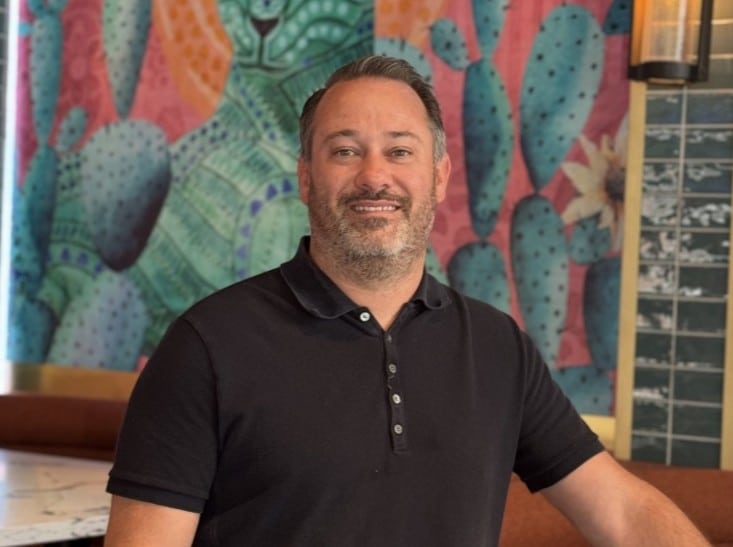
The Verant Group’s Aron Langellier is currently on the GQA board. The operating partner of the popular Barleymash restaurant also oversees Gaslamp-based operations for the Smoking Gun bar/restaurant, the new Hasta Mañana Cantina, and Spill The Beans coffee shop. He’s been working in the Gaslamp since 2012. Previously, he worked for a decade in Pacific Beach’s hospitality scene.
He’s disappointed the city doesn’t seem to be interested in looking for solutions to help sustain the Gaslamp Quarter.
“They’re not running a smooth operation, that’s for sure,” Langellier said.
He’s pointing at increased parking meter fees. Earlier this year, the city doubled the hourly cost of a city meter to $2.50. During new special surge pricing (when the San Diego Padres have a home game or there’s an event with a crowd of more than 10,000) the price of an hour on a meter jumps to $10. That’s for six hours – two hours before the event starts and four hours after.
Those fees affect the Gaslamp Quarter and East Village, where Petco Park is located. The Padres also expressed surprise and concern about the meter rate hikes.
“The impact has been immediate,” Langellier said. “We’re watching people show up later to the games. We’re watching people leave as soon as the game is over. They’re not coming into the restaurants and hanging out in the Gaslamp because it’s too expensive, it’s a pain in the butt.”
The meter hikes are also affecting staffing, he said.
“We’re seeing staff quitting because they can’t afford to pay to come to work,” Langellier said. “They can’t afford to make $150 and spend $60 of it on parking.”
During a late August interview, Langellier said he knew of five staff who’d quit because of the new parking fees. And he noted the restaurant has been closing earlier: “Instead of staying open until 2 a.m., we just close when it slows down.”
Mayor Gloria has said the new parking fees are meant to regulate parking in the city, and that public transportation is a viable alternative to driving downtown.
Langellier said restaurant revenue is off by 30% since the parking meter increase. That’s significant, especially given that Barleymash, at the prime real estate corner of Fifth Avenue and Market Street, is often the busiest restaurant in the Gaslamp Quarter on any night of the week.
“We still have a decent crowd,” Langellier said. “But it’s not even close to what it used to be. We attribute it to many things. The parking is huge. The safety is huge. Cleanliness is another thing.”
Regarding safety. A report from the 2024-25 San Diego Grand Jury points out that while crime has decreased over the past three years in the city of San Diego at large, it’s increased in the Gaslamp Quarter.
Gaslamp data shows property crime is down 69%, according to the Grand Jury. But the report indicates a 17% increase in crimes against persons (including murder, rape and assault); and a 6% increase in crimes against society (including prostitution and drug violations).
The San Diego Police Department’s Central Division has a Gaslamp Enforcement Team, which includes officers on bicycles. There are staff shortages. The Central Division is in need of 50 to 100 more officers, according to the Grand Jury.
Regarding cleanliness. The Downtown Partnership oversees a Clean & Safe division staffed with “ambassadors” who do sidewalk power washing, trash pickup, graffiti removal and more.
Clean & Safe received nearly unanimous high marks from downtown business operators. Ambassadors generally respond quickly to messages left on a Clean & Safe app for requests to clean up messes.
Experienced business owners like Georgopoulos and Langellier said Clean & Safe used to be a premium cleaning service. They noted that while the city of San Diego has cut back on its cleaning responsibilities, Clean & Safe has become the baseline service.
“The city is and has been providing baseline services to the Gaslamp Quarter in line with what it provides to all neighborhoods — police and fire protection, road maintenance, street sweeping, etc.,” mayoral spokesperson Laing wrote. “…Clean & Safe provides the additional premium service like sidewalk pressure washing, safety ambassadors and augmentation of the city’s homeless outreach teams.”
An anecdotal observation by a San Fernando Valley-based event company employee who came to San Diego for Comic-Con in 2024 raised eyebrows. Damon Zwicker had a lengthy letter-to-the-editor published in The San Diego Union-Tribune under the headline: “I came to work at Comic-Con and left reeling from the Gaslamp’s dark side.”
He wrote about his “profound disappointment and outrage” about the “deplorable conditions” he found in the Gaslamp.
Zwicker’s letter continued: “The streets are plagued by individuals evidently intoxicated, littered with glass pipes and needles. Sidewalks are covered in feces and urine, trash is strewn everywhere, and orange-vested city workers are reduced to pressure washing the streets and mopping the sidewalks in a futile attempt to maintain some semblance of cleanliness.”
He continued: “Mayor Todd Gloria and the people of San Diego should be ashamed of allowing such conditions to persist…It’s time for the city’s leadership to take real, meaningful action to restore the Gaslamp Quarter to a place of pride, not a source of shame.”
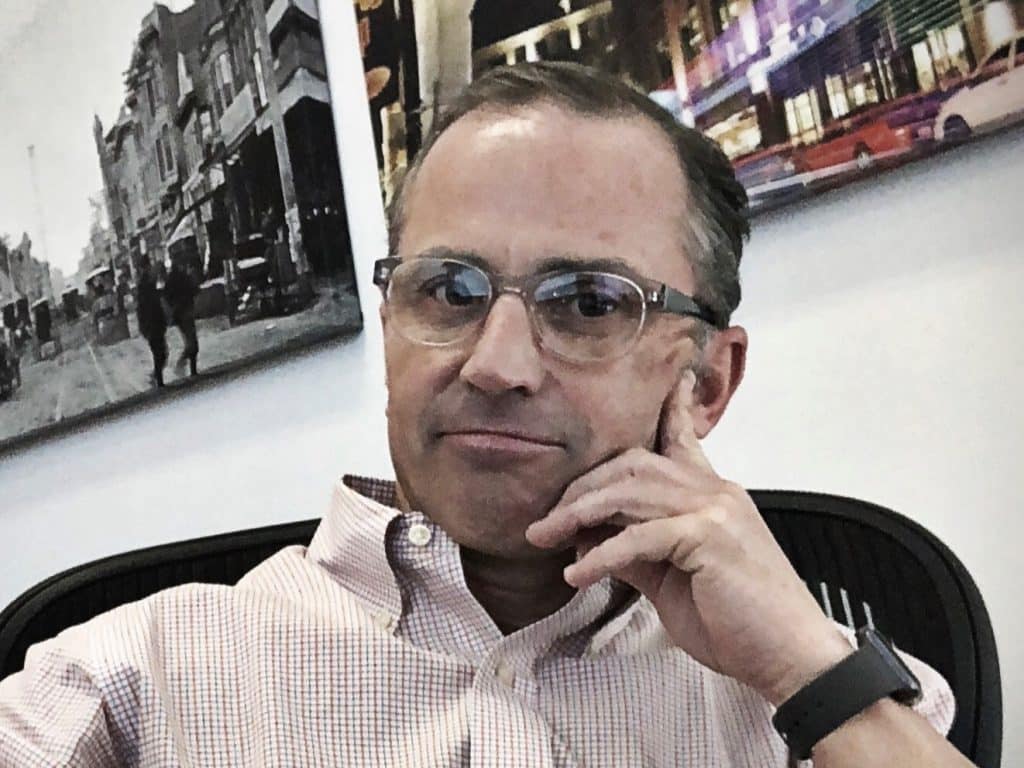
The GQA’s Trimble doesn’t relish negative press about the Gaslamp Quarter. His harsh public criticism of the mayor on social media was uncharacteristic.
The Sun previously labeled the public back-and-forth between Trimble and the mayor as “a feud.” The mayor’s office objected to that word. “None of this constitutes a ‘feud,’” Laing wrote. “The City and GQA simply have different priorities.”
Trimble agreed with that assessment but added: “Yes, I’ve been very vocal. But I want the message to come across that the Gaslamp is still a destination. A very important asset to the city.”
A spokesperson for the San Diego Tourism Association said the Gaslamp Quarter remains a top destination for visitors, particularly those attending meetings and conventions downtown.
The SDTA spokesperson wrote in an email: “The challenges you’ve highlighted are significant to the business community…we are optimistic that continued collaboration will keep the Gaslamp Quarter at the heart of our success story.”
Trimble thinks the city does still view the Gaslamp as an important neighborhood but wants more transparency from the mayor.
“I do believe we will come together and find a happy medium with all these parking proposals,” Trimble says. “They’re going to have to reanalyze fees and I hope we see that for 2026.”
That includes a proposal before the city council that would skyrocket fees paid by hotels and other operators of car valet services. The city is leaning toward having valet operators pay for street access equal to full daily usage of parking meters. In the case of one downtown hotel with multiple spots, that would bump its fee to the city from hundreds of dollars to nearly $100,000 a year.
Where’s a gimbal when you need one? For some perspective, The Sun reached out to former Downtown Partnership head Laurie Black, who led the organization from 1997 to 2001, and spearheaded the creation of the Clean & Safe program in 2000.
Black clarified that she’s not up to speed with the current political kerfuffle in the Gaslamp, but offered perspective on the management of downtown San Diego operations, services and fees.
“The city needs to understand the value of the Gaslamp Quarter,” Black said. “Downtown is a neighborhood now, with grocery stores and schools and all its activities. And the Gaslamp is there because of tourism. Either for tourism or as a neighborhood, people want to be able to visit.”
During her time in downtown business advocacy, Black said collaboration was key.
“We all talked,” she said. “Everybody was in the room. The mayor. The convention people. The Port. The city manager. Today, somebody needs to immediately call an all-hands-on-deck meeting with the head of the Gaslamp, head of Clean & Safe, the Downtown Partnership and the mayor’s office. If you have to do it with a mediator, then so be it.”
Solutions need to come sooner rather than later for RMD’s Georgopoulos. He bluntly said that if things don’t change, he’ll be forced to start looking to do business elsewhere. SDSun