The San Diego Sun was privileged to engage Mary Walshok in an exclusive, wide-ranging interview focused on downtown issues, development, and the city’s past performance and possible future path.
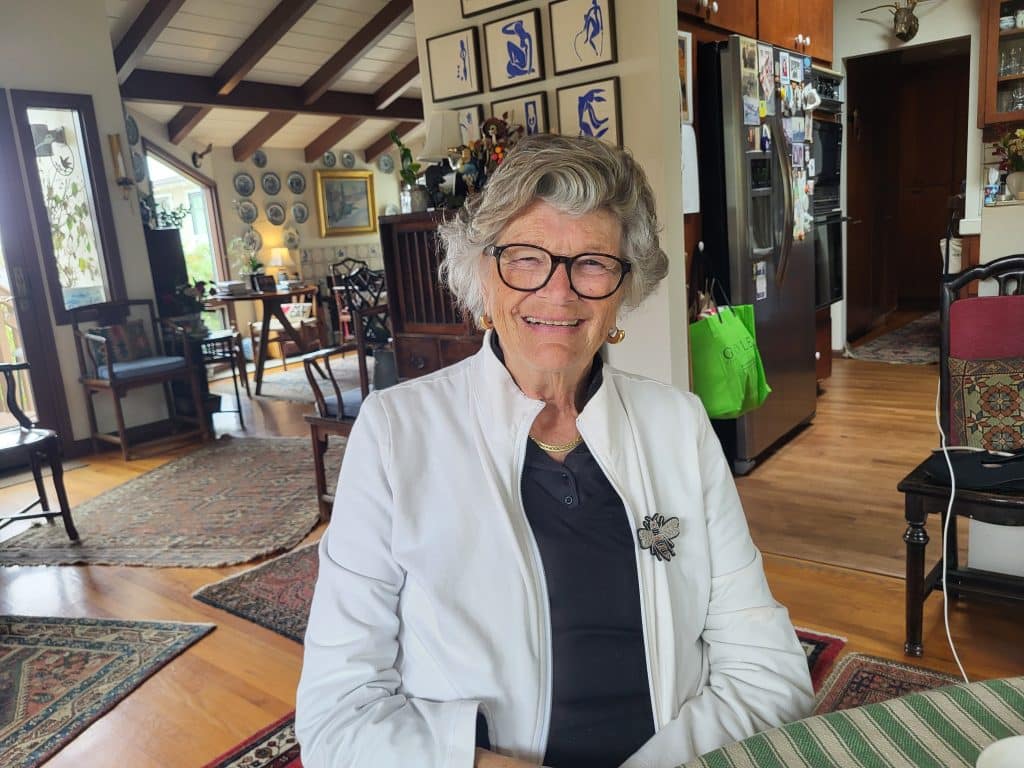
Walshok is an academic icon. She led continuing education and public programs at the University of California, San Diego for 40 years (1981-2021). Now an associate vice chancellor, she was key in establishing the UC San Diego Park & Market muti-use building in downtown San Diego’s East Village.
Due to the extension of the trolley to UC San Diego’s La Jolla campus from the city, and to the Mexico border, the university’s three-year-old downtown facility is widely viewed as a connecting space for arts, culture, science, civic programs and more.
The spry, 83-year-old co-founder of the entrepreneurial nonprofit CONNECT has traveled the world, was knighted by the King of Sweden in 2002, has written six books and is close to publishing a seventh. Walshok has both a master’s degree and a PhD in sociology.
A pragmatic optimist with vast institutional knowledge, Walshok is also charmingly self-deprecating. After speaking to The Sun, she said, “I mean, the problem with a PhD in sociology is you never stop talking. So, I’m a little embarrassed how much I’ve talked.”
Not to worry. This interview has been edited for length and clarity.
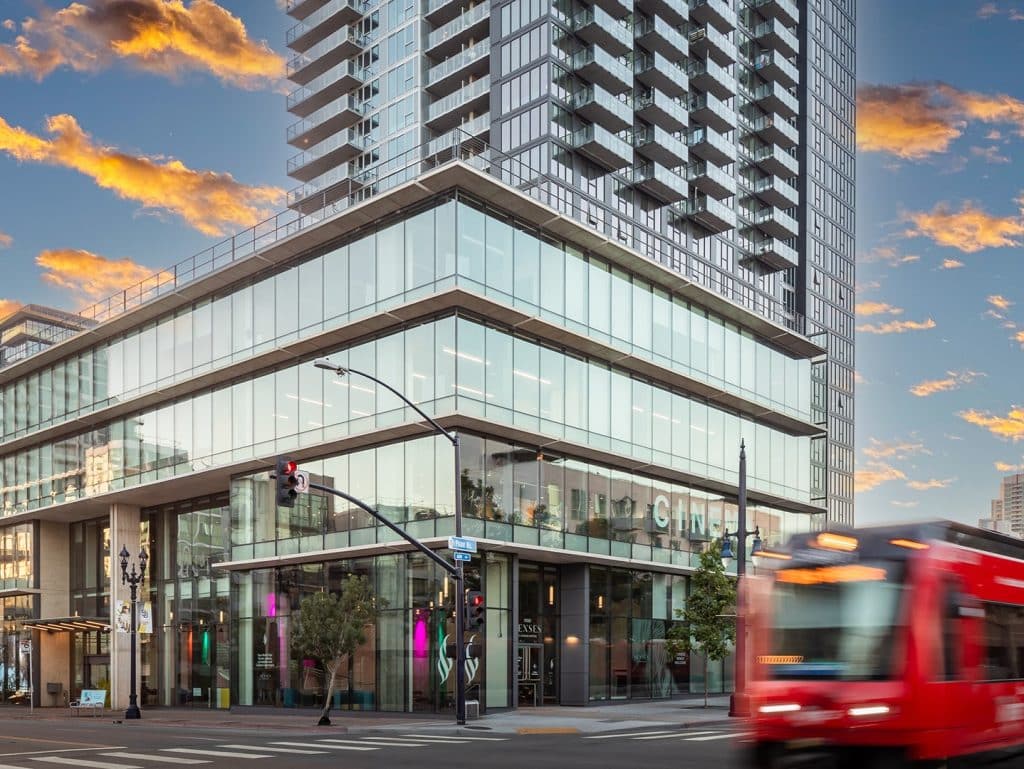
Where Cities Can Lead
I think cities can lead. But a lot of cities, including San Diego, subcontract developments to profit-making enterprises, like real estate developers. Real estate developers are not bad guys. Right? They create incredible jobs. They can build wonderful buildings, but in their case, the primary incentive is profit. “I’ve got to get a good margin.” And increasingly they’re accountable to investors.
So they have a different set of purposes. When the government cedes the development of public space, parks, a civic center, an education center or a public library to the private sector, it’s going to be harder for it to work. Particularly if it’s in areas where there isn’t a market. Apartments you can rent. That’s a market, right? In the old days, office buildings you could rent. Well, that market changed, right?
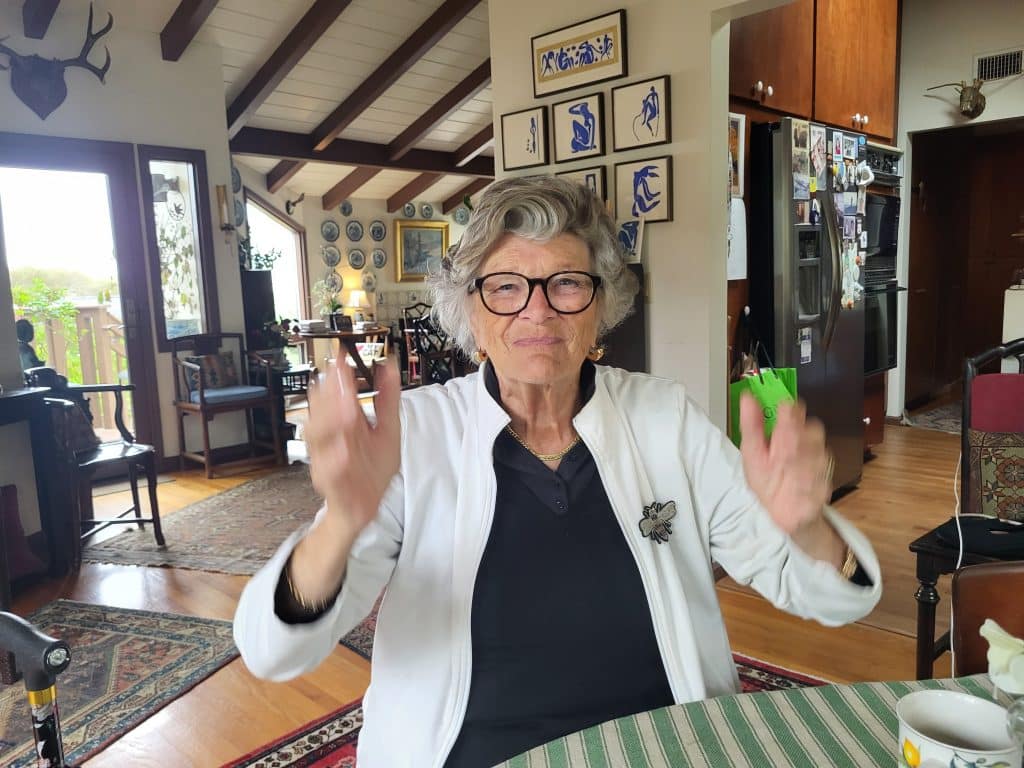
Designing UC San Diego Park & Market
We designed Park & Market very intentionally. We designed it to be both profitable in some ways and giveaway in other ways.
Park & Market isn’t a downtown classroom building. We do undergraduate and graduate education and professional certificates through extension. We knew the building had to be self-supporting. We’re debt servicing that building. The taxpayers did not pay for Park & Market. We designed it to be multifunctional, multipurpose.
The university touches the lives of San Diegans in so many different ways. We have fabulous music and theater programs. We have wonderful visual arts. We have a cinema studies program. We have science. We do pre-college youth programs.
And more. On the first floor, there’s a theater and a forum and a coffee house where you can have big events. You could do a free public concert for 400 people. You could do a Cinco de Mayo celebration, which we’ve done with the Mexican Consul General. You can have conversations about leadership with Ernest Rady, Irwin Jacobs and Malin Burnham in the theater, with coffee and cookies after. You can do lots of different things with that space, like charge Comic-Con when they come to town to have an event.
We can afford to do some of the low-cost/no-cost programs because it’s a Robin Hood model. We knew we had to have space that was rentable, including office space. But we weren’t just going to have a floor of offices and say, “Oh, you’re an accounting firm. You’re a law firm. Come on in.” No. We wanted the office space to resonate with the values and the goals of what the university is trying to do.
We’ve got The San Diego Regional Economic Development Corporation, and the Burnham Center for Community Advancement. The County of San Diego Black Chamber of Commerce. UCSD’s labor studies program and the School of Public Health. We designed it in such a way that they can all interact with one another.
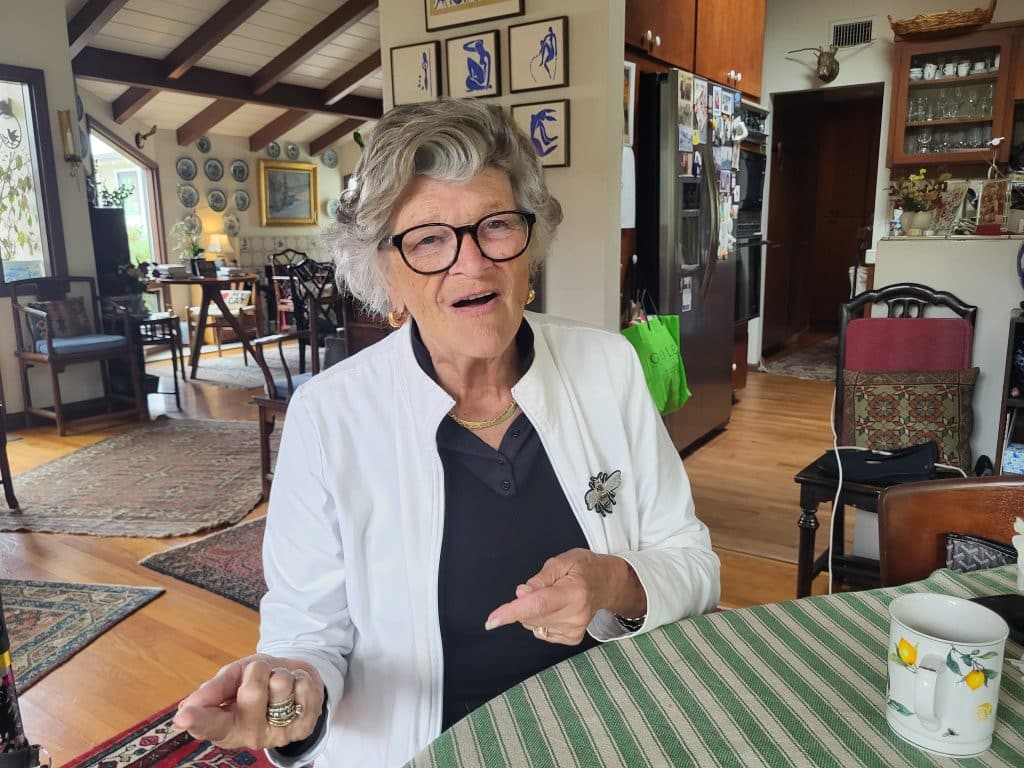
Multiple Bottom Lines
There are some fabulous examples of downtown initiatives that have multiple bottom lines. They have a civic, cultural or community purpose. But to do good, they also have to make money.
In the writing I do, I talk about cost-recovery models versus profit-making models. Programs with a public service mission that can charge fees or attract investors so that they can be financially stable and sustainable over time.
That’s Park & Market. But it’s also the Midway Museum. What a wild and crazy idea that was. The city didn’t make an investment in it. And that museum is one of the most visited museums in the United States. People pay an admission fee, but it doesn’t gouge the public with $50 tickets. People rent it for big parties. That’s an example of an urban redevelopment initiative. They have a business and all their docents and a lot of their staff are volunteer veterans. The museum teaches young people our history and is for people who love planes and mechanical stuff. It’s an entity that serves many purposes, including being fiscally sound, not profitable.
In the Barrio Logan, you have Bread & Salt. The downtown library is another example. Built with upfront capital, these are institutions that will be meeting places, gathering places, accessible to diverse populations and enrich community life. But in a way that’s affordable. Not in a way that says, “Oh, I need you to subsidize me for the next 50 years, 3 or 4 million a year.” So, you’re looking at your financial bottom line, your social bottom line and community value.
The Digital Gym CINEMA
Including the Digital Gym CINEMA in Park & Market was an inspired move on our part. It was such a coup. We up-fronted the money. They could have never spent $800,000 to build the theater space that we put in. They pay rent. So over time, we will get that money back. The university’s paying its mortgage, as it were. But at the same time, it’s become the hub for the Asian Film Festival, the Latin American Film Festival, Cinco de Mayo, all kinds of wonderful things. And it brings people into the space.
It’s that tapestry of for-profit, not-for-profit, rent-based, arts and culture, business, community affairs. You can create spaces where multiple things happen. And that’s what I mean by multiple bottom lines. The taxpayers aren’t paying it. The users of the building contribute to it working. We call it a “tub on its own bottom.”
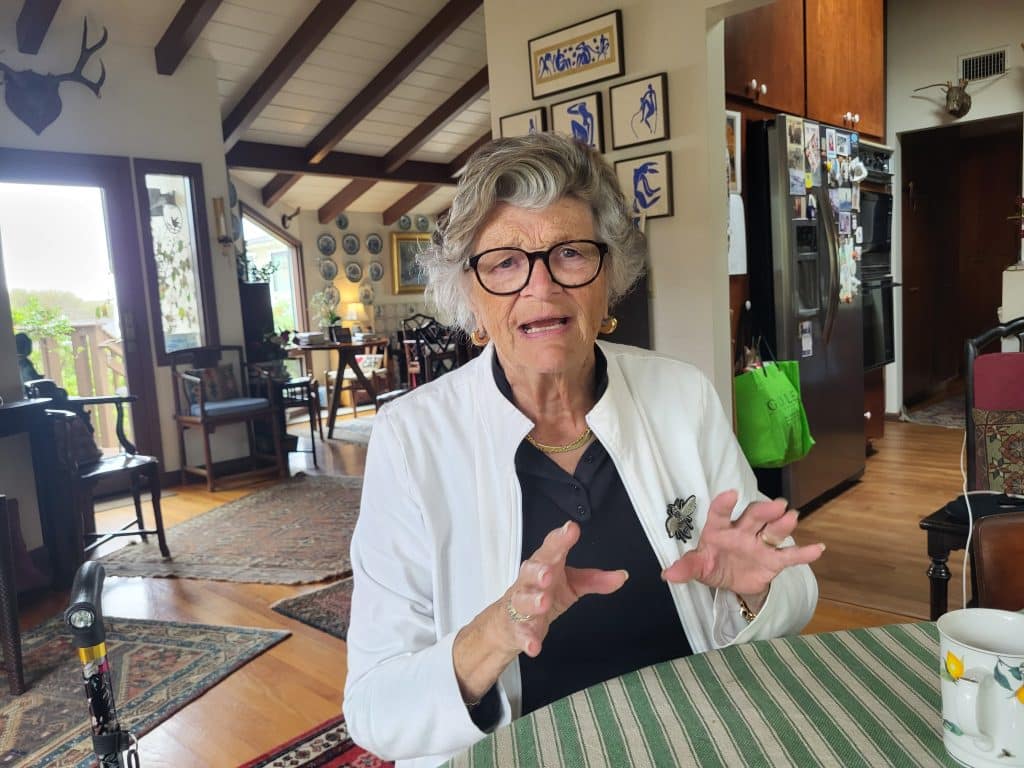
A Tub On Its Own Bottom
The phrase is an academic term that refers to being self-reliant, responsible for your own needs and capable of achieving goals through your own efforts.
And museums are tubs on their own bottoms, right? They’re not fully subsidized. Think about all the museums in Balboa Park. They have members, they have subscribers. They rent their space, they go to philanthropists, they go to foundations. It’s a very mixed revenue kind of model. But that kind of deliberate, thoughtful design of space contributes to flourishing communities.
And my self-interest is when I have flourishing communities, I’m going to get wonderful students and good employees. I mean, universities have a public mission, but they also have self-interest.
I think what is starting to happen now with the Civic Center and with the support from the Downtown San Diego Partnership is an effort to deliberately design, redesign, a space to have these multidimensional components.
It should not be turned over to a single developer. But, we should imagine what we want it to be, and then invite the architects and developers to help us make it happen. That’s what we did at Park & Market. We wanted to create an environment, and then we went out for bids. The typical process in San Diego is, “Give me a bid, developer. Tell me what you think we can do with the space.” That’s not responsible civic leadership.
Civic Leadership
With Park & Market, we very intentionally went where no one else would go. As did the downtown library in East Village. Those were intentional moves to try to create community. And they weren’t led by the city.
Then we had to jump through the city’s hoops. All the regulatory issues. Yes, the university has regulatory issues, too, which can be more onerous than the city’s. But the point is that the projects I’m describing had not been initiated by the city.
If a university center’s there, if the anchor public library is there, now we can build apartments where college-educated professionals want to live. When they build the East Village Green park we’ll suddenly have a booming place where there have been empty lots and decaying buildings. There are always financial and political interests. But it’s how much they dominate the visioning, designing and implementation process. I learned early in life that profit is the reward for good performance. So if you focus on doing the right thing, the profits will come.
Ranking Downtown
Yes, my PhD is in sociology, and I write books about social dynamics, community and organizational renewal and reinvention. How’s San Diego doing in that regard? San Diego is doing better than a lot of cities in terms of its economy. But in terms of the civics, downtown is way behind, in my opinion. Downtown’s the old economy. North of Interstate 8 is the new global economy.
Old Economy vs. New Economy
The old economy is manufacturing, tourism, retail, real estate development, more locally anchored enterprises. You buy and sell services and you serve customers. If you’re in City Hall, you want a convention center, you want a football stadium. The city has not sufficiently understood how you can get city center urban renewal by leveraging the needs and interests of your growth sectors other than tourism.
Yes, Horton was a swing and a miss. And IQHQ has not rented. Everybody downtown – the Downtown Partnership, the Chamber of Commerce, all those downtown urban developers said, “Oh, isn’t this wonderful? We’re going to build incubator spaces and we’re going to build labs.” Well, I’m a sociologist. I can tell you the research. No matter where you go in the world, clusters of biotech companies are within a five-mile radius of a university or a hospital. They’re not where cruise ships land.
Downtown focuses on conventions and cruise ships. If you are [north of downtown San Diego], you want water, you want high quality housing, you want good schools. And so you approach what you need for your economic interests to survive and thrive quite differently. I think part of the problem in this town is we’ve never had city leadership that understands this dynamic. SDSun