
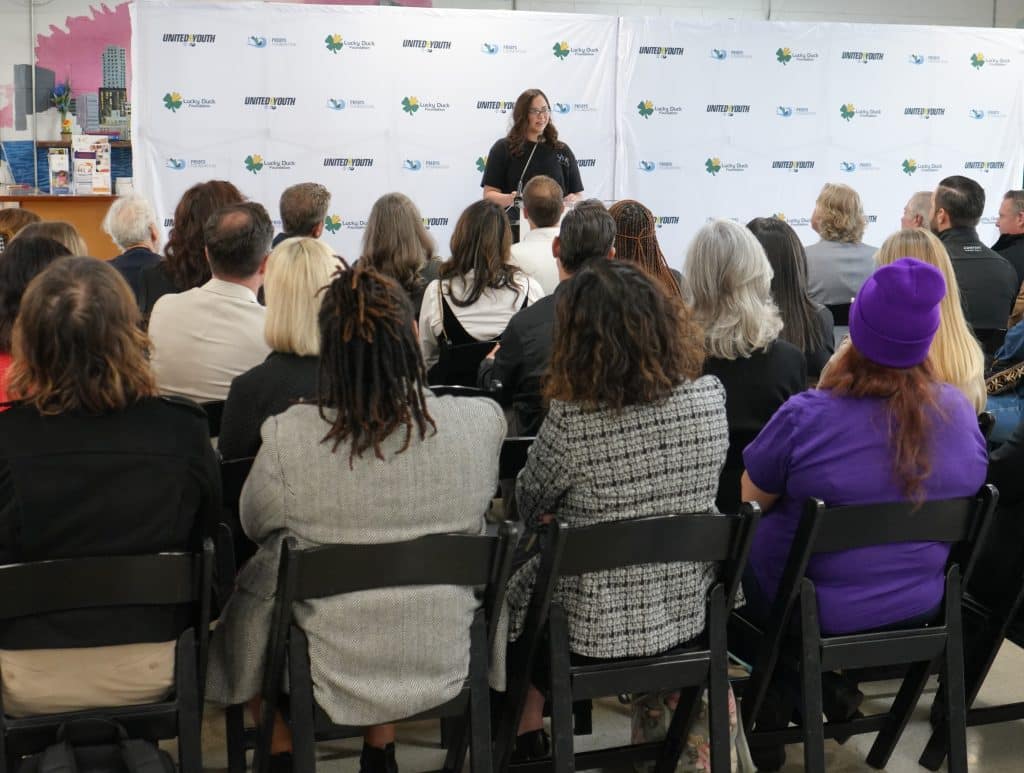
A bevy of big names from Greater San Diego’s nonprofit world came together for a November press conference. Lucky Duck Foundation. Prebys Foundation. David C. Copley Foundation. These three heavy hitters pitched in $5 million to launch the United for Youth initiative. It aims to create a collaboration among local entities that support the region’s 2,000 at-risk foster kids.
More than 40 service providers and partners were recognized at the Youth Assistance Coalition facility in Sherman Heights as part of this praiseworthy and pragmatic new alliance.
Lucky Duck Foundation CEO Drew Moser said that before the initiative, some of the 40 participating organizations hadn’t even heard of each other. He says getting service providers out of their silos and essentially operating as one large unit will pay strategic dividends that will benefit the foster community.
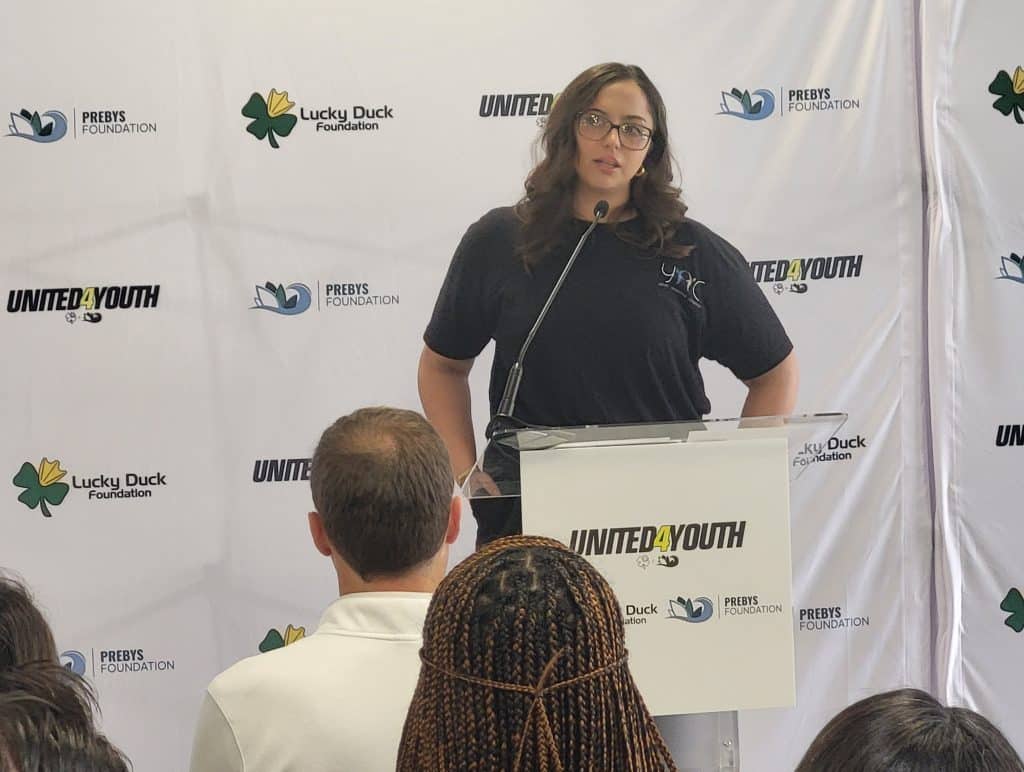
After organization leaders spoke at the press conference about the genesis and the benefits of United for Youth, an unannounced speaker came to the lectern. Lilli Ethier works at the Youth Assistance Coalition. She’s a survivor of the foster care system (and about to celebrate her 24th birthday). In a soft but unwavering voice, she spoke matter-of-factly for 10 minutes to a room full of strangers about her often painful foster care experience.
“She told her story with such humility and passion and authenticity,” Moser said. “It’s heartbreaking and inspiring what Lilli has gone through and what she has become. There are 2,000 stories like this in San Diego and she gives us a glimpse of what these youths are facing.”
After her standing ovation, The San Diego Sun made plans with Ethier to talk more about her foster care experiences. We met on a cool morning at a downtown San Diego coffee shop. She dressed demurely in a white sweater. Just like at the press conference, Ethier spoke about her life story with quiet confidence.

Born in Arizona, she described her dad as an alcoholic who was not in the parental picture. When she was 12, her mom moved Ethier and her younger sister to San Diego.
“We moved because she found out there was a family member that was sexually assaulting me,” Ethier said. “My mom got distraught. She didn’t want what happened in her childhood to happen to her daughter.”
They couch surfed in San Diego. Statistically, they were homeless. Luckily, they never had to live unhoused on the street.
Ethier’s mom’s mental health was in decline. Her mom owned guns and Ethier “freaked out” one day when she got a sense that her mom might be preparing to take her own life and possibly her daughters’ lives.
She reported this and was soon separated from her mother and placed in a foster home with her sister.
About a year later, her mother took her own life.
From the age of 14 until she was 17, Ethier was stressed out as part of a large family situation in the foster care system.
“The foster system puts a lot of pressure on the foster families to take in so many kids,” she said. “And there’s a lot of kids with medical issues. I ended up taking care of eight kids. And I become overwhelmed. I’m basically a parent to these eight kids, I would brush their teeth, give them baths, cook dinner, clean the house, do the laundry.”
It broke her, mentally. She needed to process her own trauma but was too busy being a mom to other kids. She went in and out of four different mental health facilities. Each time she went back to the large foster family the tension became worse.
Her foster parents finally refused to allow her back in the house. On the verge of becoming homeless, she found a spot in a shelter for minors. When she turned 18, she was qualified to stay at downtown San Diego’s Urban Street Angels group residence (a United for Youth participant).
“I felt like my life was over,” Ethier said. “With everything I’ve been through, I just felt so overwhelmed and I saw no hope. Then I met a staff member who told me about overcoming homelessness. It made me feel like I could do that, too.”
Now she’s got a job. After a couple attempts that didn’t work out, Ethier has a downtown San Diego apartment. She’d like to do more public speaking and is excited about the United for Youth initiative.
“How do I see it in my own eyes?” she asked. “Let’s say someone gets into Urban and their case manager finds out they’re a former foster kid. Then it’s easier to get them involved in these services, and it’d be less overwhelming.”
Being in the system is disorienting. “You have so much on your plate,” she said. “And it’s scary. It’s super hard to ask for help. [United for Youth] would help relieve the kid that needs services. And also just feel more safe and more welcoming.”
Statistically, according to the Lucky Duck Foundation: 65% of kids leave foster care at age 18 with no place to call home. After reaching the age of 18, 20% will instantly become homeless. Only 50% are employed by age 24. 71% of young women in foster care become pregnant by age 21.
“Because they come from having no support system,” Ethier said. “They just get moved around a lot. They turn 18 and the system doesn’t know what to do with them. Then they’re homeless. That’s a fear I still have. I don’t want to become homeless again.”
I asked Ethier if she had some primary concerns she’d like to see addressed by United for Youth. She said there should be: separate training tracks for housed and unhoused participants, as well for women and men; classes that teach “financials,” that is, how to manage and budget money; and oversight should go into any mentoring efforts.
“I had two [mentors] in the foster care system,” Ethier said. “They didn’t work out. I was paired with people who met me once and abandoned me. In my life experience, it made it hard to trust people.”
Lucky Duck’s Moser says United for Youth will address all three of Ethier’s ideas and concerns, and more.
“One of our participants has full-time mentors,” Moser added. “That is a challenge of volunteerism, there’s not always teeth to the agreement. But we’ll make sure the organizations with mentorship components do thorough recruitment.”
Ethier has high hopes.
“This can help kids know they can have a future,” she says. “That’s why I share my story. My family’s past doesn’t control me. I’m my own person. Every kid can be their own person.”
Especially when backed by a reinforced safety net with as few holes as possible. SDSun