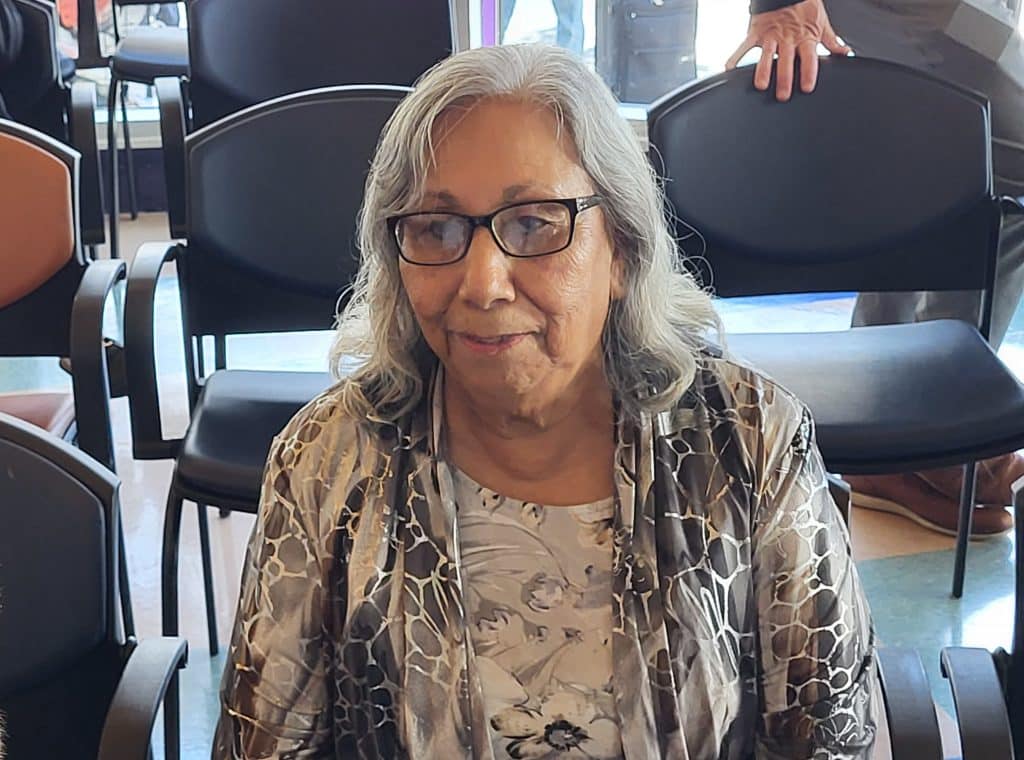
A decade ago, Rosalinda “Rosie” and Manuel Flores were evicted from their home. Rosie says the apartment manager told them upgrades needed to be done. Instead, three units were built on the block and the Floreses could not afford the new rent.
The situation was bleak, especially in light of Manuel’s diabetes and mobility issues. On the brink of living on the streets, they got a loan from a family member and bought a small RV. That’s where the couple, both now 77, lived for two years until they heard about the Serving Seniors organization.
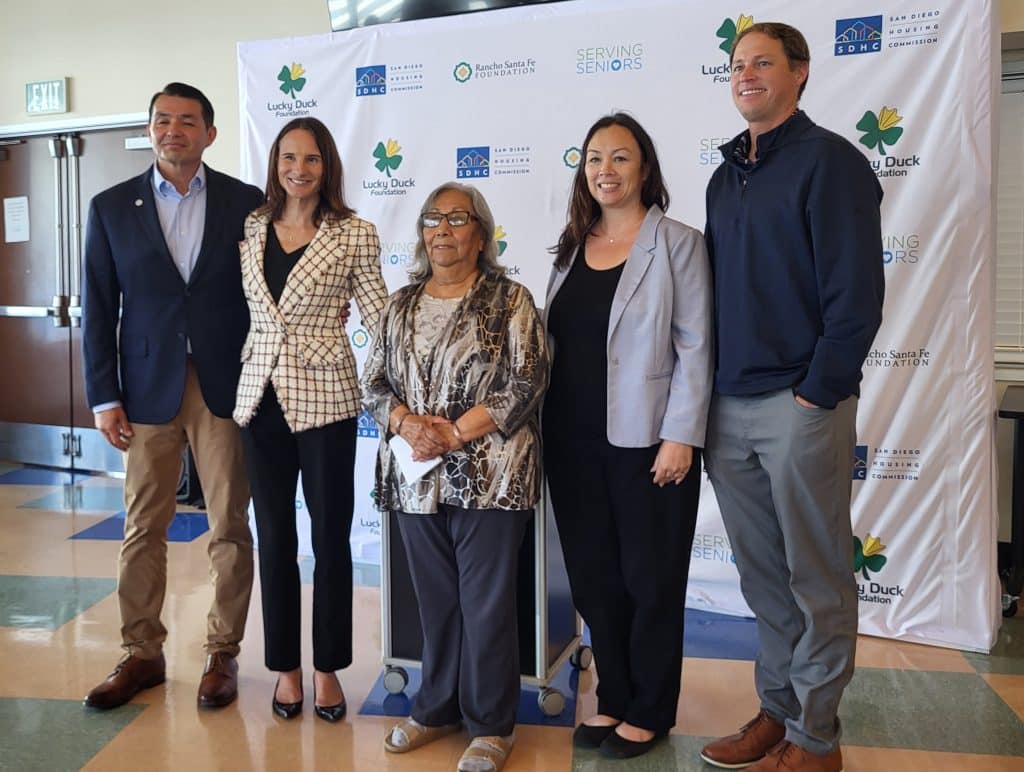
Rosie was one of the speakers at a Monday, June 16 press conference held at the Gary and Mary West Senior Wellness Center to announce significantly increased philanthropic funding for Seniors Safe at Home. The program supports the local elder population and is run through the nonprofit Serving Seniors and The San Diego Housing Commission.
“The need is urgent,” Serving Seniors President/CEO Melinda Forstey says. “We see rent increases, medical expenses and loss of a partner…people need help now.”
Seniors Safe At Home originally got off the ground with a $500,000 donation from The Lucky Duck Foundation. At the recent press conference, it was announced The Ranch Santa Fe Foundation was donating $100,000. Lucky Duck matched that amount and kicked in another $100,000.
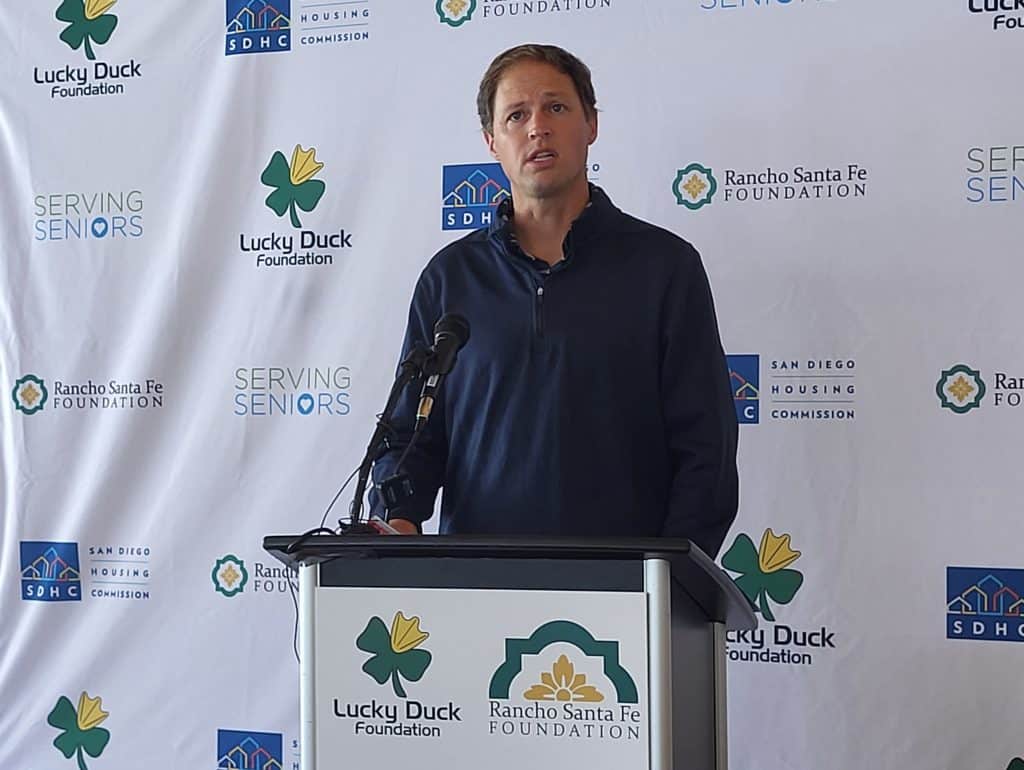
“Seniors are the largest and fastest growing homeless population in San Diego,” Lucky Duck Foundation CEO Drew Moser says. According to data from the Regional Task Force on Homelessness, adults aged 55 and older make up nearly 30% of San Diego County’s unsheltered homeless population, with nearly half falling into homelessness for the first time in their life.
Mosier says “shallow rent subsidies” (small amounts of money gifted to seniors that allows them to make rent) can be the difference between people having a roof over their head or becoming unsheltered.
The shallow subsidies can be as low as $250 per month, or $3,000 per year.
Mosier and others are asking the general public, and especially state and local governments, to step up. For $250 a month, anyone can adopt a senior.
On the governmental side, Mosier hopes that in budget-deficit-filled times, rather than creating new funding, current money not proving to be effective could be reallocated.
“There was recent legislation introduced at the state level (SB37) that was a shallow rental subsidy program directed at seniors, but that would have added new funding,” Forstey says. “SB37 passed the state Senate and Assembly but Governor Newsom vetoed it. So, we’d rather look at what current funding there is so we can reallocate and get that off the ground at the state level.”
Currently, the city has a Housing Instability Prevention Program, run through the Housing Commission. It serves older adults and families. Ongoing funding has been recommitted.
“In 2023, San Diego County launched their shallow rental program and expanded it last year,” Forstey says. “If the county does have reserve funding, we know this program is incredibly cost-effective.”
Rosie Flores would agree with that. Aided by a shallow subsidy, she and Manuel currently live in a one-bedroom apartment in the 150-unit Potiker City Heights Residence.
“Everything’s so expensive, so it’s hard,” Flores says. “It’d be nice if the city could help more people. I’m scared to not have a roof over my head. And I feel for those people you see pushing carts on the street. I know those people would like to go inside and rest their head.” SDSun