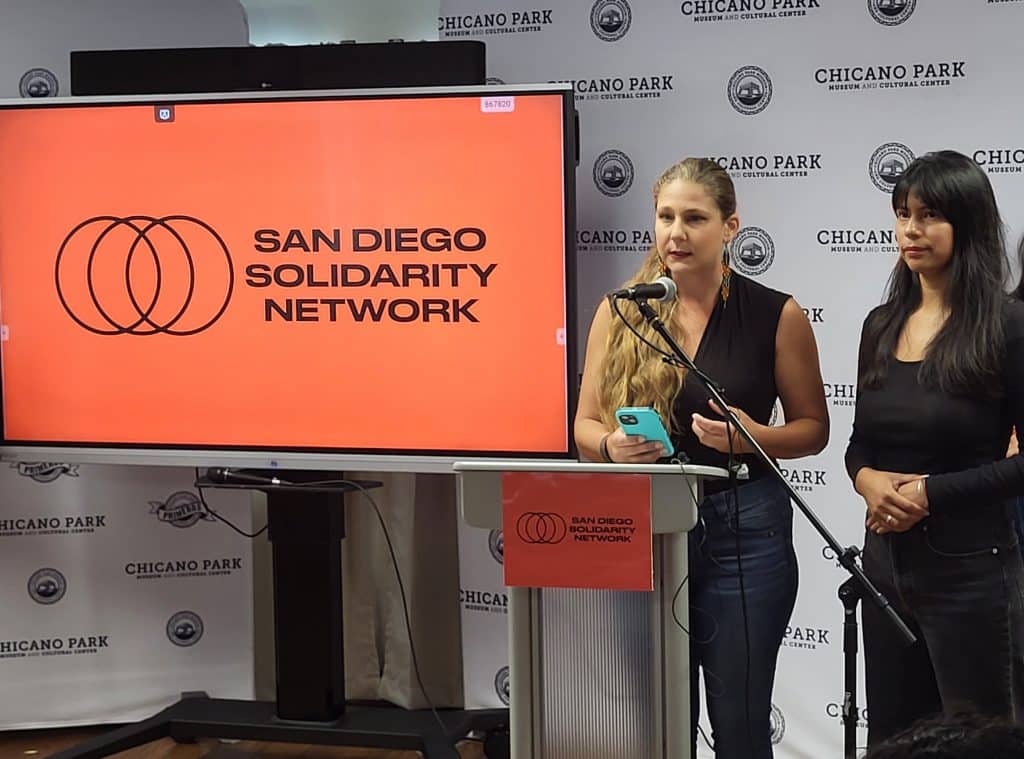
In response to federal funding rollbacks affecting advocacy programs by local nonprofits, the San Diego Solidarity Network has declared a unique “State of Civic Emergency.”
The newly formed volunteer coalition of nonprofit leaders and community advocates publicly announced the declaration on Monday, June 17 at the Chicano Park Museum and Cultural Center in Barrio Logan.
“This is not just a funding crisis,” SDSN co-steward Shantal Suarez Avila says. “It’s a dismantling of the safety net that holds the region together.”
In declaring the state of emergency, SDSN co-steward Claire Groebner says: “We need to see that our house is on fire…We’re not waiting for the government to declare that. We say it because we feel it.”
Six months ago, President Trump began enacting a series of executive orders aimed at defunding an array of social programs, including ones that promoted DEI (diversity, equity and inclusion). The effects of those executive orders are trickling down into communities and affecting food access, housing, environmental concerns, research, arts and more, according to SDSN founders.
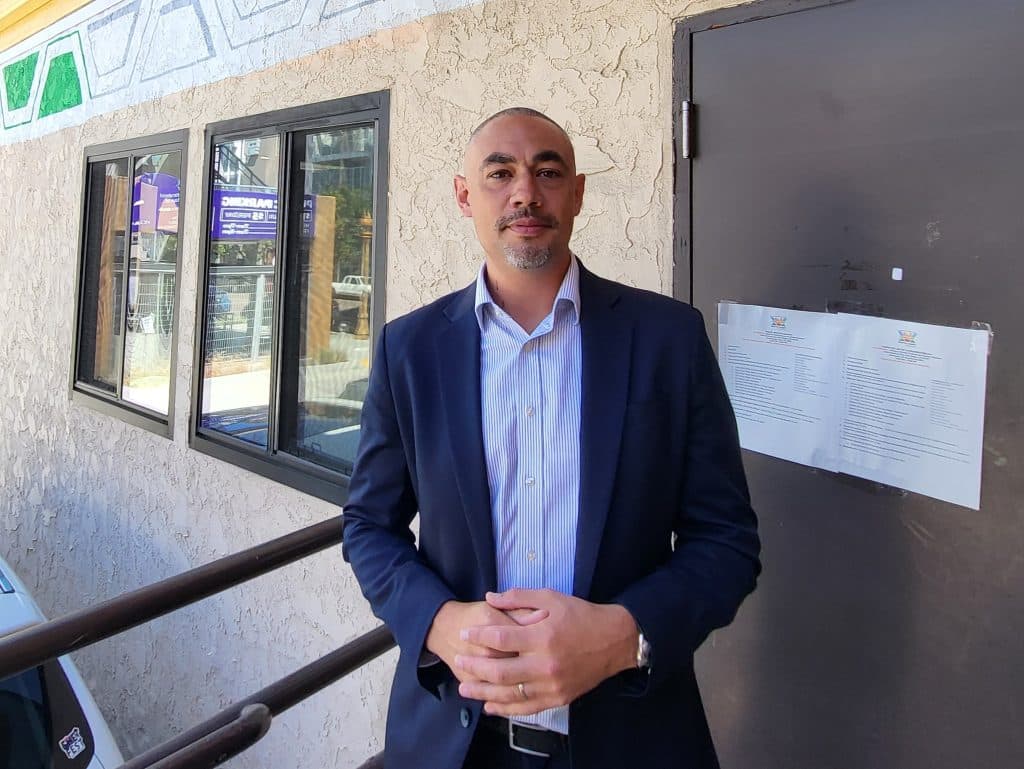
District 9 San Diego City Councilmember Sean Elo-Rivera praises the SDSN and agrees that cuts to federal programs have become problematic.
“This emergency is the result of an attack on working families, seniors losing access to the medication they need to survive, children losing access to the food they need to grow…and an attack on the organizations that exist to serve the people who are becoming more vulnerable,” Elo-Rivera says.
The councilmember says he takes the attack personally.
“The people doing the hardest work – feeding our families, protesting the planet – should not be begging for scraps,” he says. “They should be fully funded, respected and supported.”
Government funding accounts for 30% of nonprofit revenue, according to the “San Diego County Survey of Nonprofit Leaders,” conducted in March 2025 by The Nonprofit Institute and the University of San Diego.
According to the study, 72% of San Diego’s 12,000-plus nonprofits report direct or anticipated impacts from federal executive orders. One-third have already modified or ended services. Nearly 500 staff have been laid off or furloughed.
Roughly half of the surveyed nonprofits report having issues accessing funds. Rampant among nonprofits: layoffs, financial instability and increased anxiety among staff and clients, according to the study.
What’s next?
The SDSN’s Declaration of Civic Emergency calls for “urgent, coordinated action by those with power, resources and influence.”
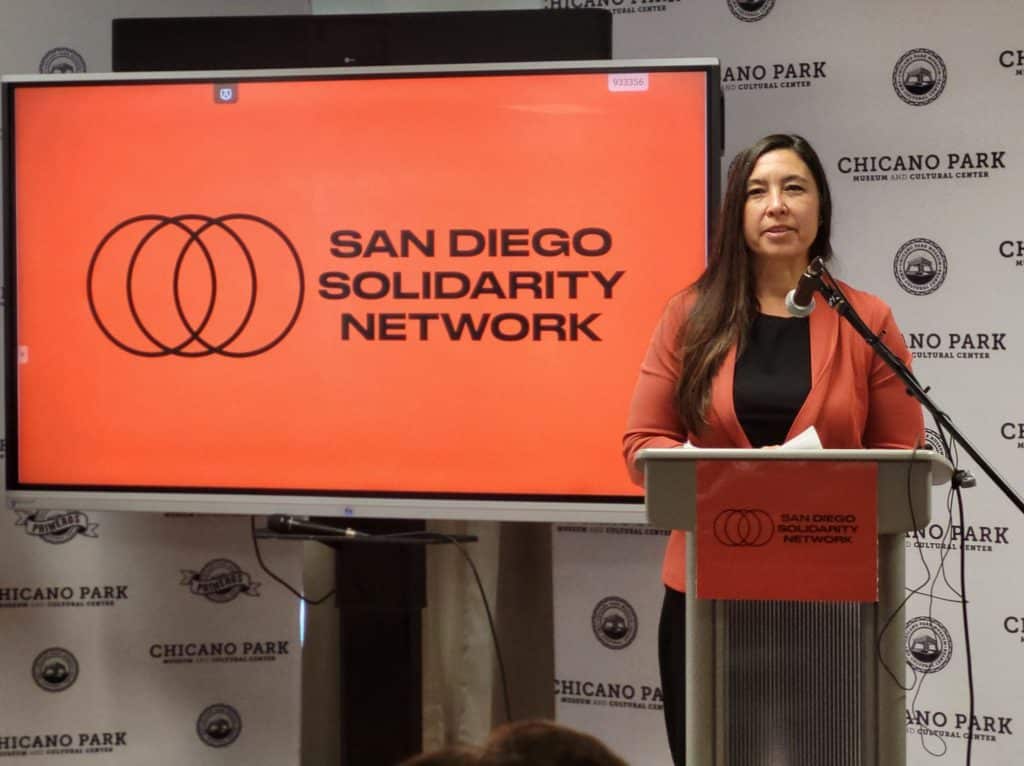
At the press conference, Catalyst of San Diego & Imperial Counties President & CEO Megan Thomas announced her organization’s short-term attempt to bolster other nonprofits. Catalyst is a network of private funders.
Catalyst members have created two funds: a Resilient Response Fund (intended to fund group infrastructure to help meet the crisis) and a Short-Term Bridge Fund (loans to help nonprofits get through cash-strapped moments of time).
It remains to be seen if longer range aid from San Diego’s budget-strained city and the reserve-rich county will be forthcoming.
“Yes and no,” Elo-Rivera says. “We’ve been working with community organizations in the last five months to build resiliency. Nobody believes more in the power of government to do good than I do. But the government isn’t going to fix all this.”
Elo-Rivera says his job at the moment is “to listen to what existing gaps are most important for the government to step in and support. And using our connections to the broader community to let people know what can be done.”
Regarding current financial reserves held by the county, Elo-Rivera says there’s a compelling case for the San Diego County Board of Supervisors to unlock those funds.
“I support the vision of Supervisors Terra Lawson-Remer and Monica Montgomery Steppe,” Elo-Rivera says. “They make a compelling case to invest county resources into the community. If you’re sitting on resources and there are folks in pain, what good are those resources if not used to alleviate that pain?”
Note: Most votes on county action are deadlocked pending a special election on July 1 for the fifth member of the County Board of Supervisors. Presently, the board is made up of two Democrats and two Republicans.
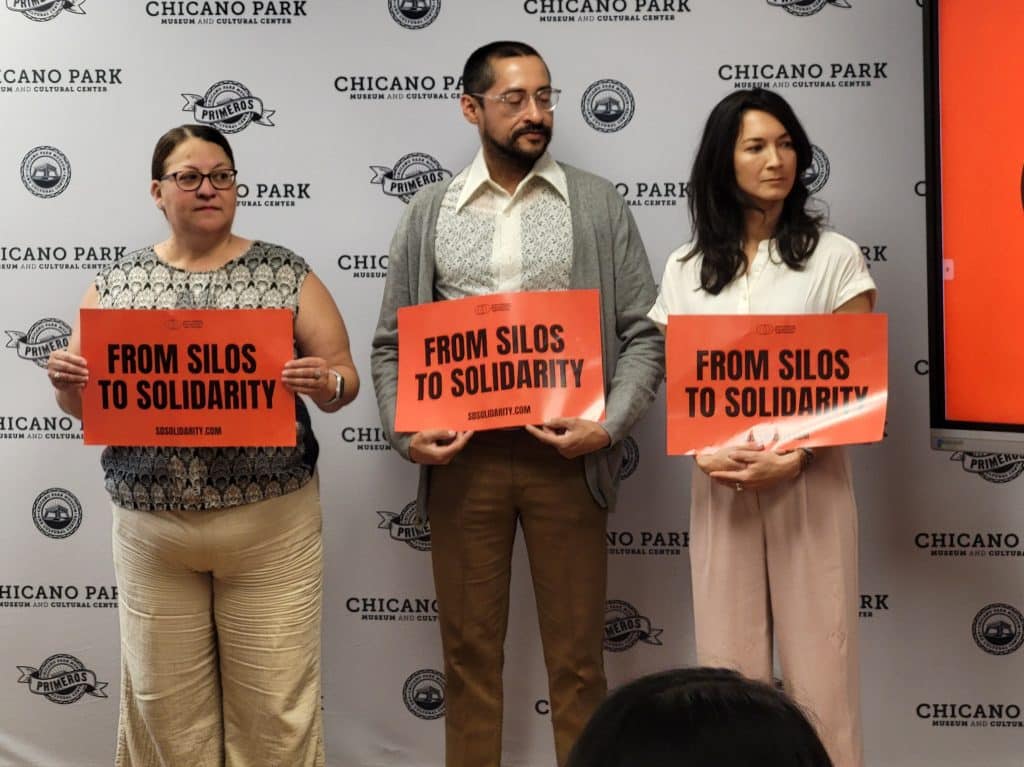
Outside possible local and state government assistance, and help from bigger-budgeted philanthropic groups, leaders of the SDSN hope the current crisis enables nonprofits with differing missions to come together and address needs as a stronger, single entity.
That effort is expressed in SDSN’s motto: From Silos to Solidarity.
“Everybody needs to be involved in this,” SDSN’s Groebner says. “We can’t just say, ‘Oh, they’ll fix it over there. There’s no one coming to save us. We’re all we’ve got.”
Groebner, who’s fulltime job is associate director at Olivewood Gardens and Learning Center in National City, says the SDSN was spawned out of the San Diego chapter of another national volunteer group, Community Centric Fundraising.
“There’s some pride in San Diego that we are organizing with rapid response,” Groebner says. “There is a real need to move out of silos. We were seeing a lot of silence, and sectors not speaking to each other. But yes, we’ve had different folks from around the country join our recent town halls, and yes, this could be a national model.” SDSun