The weekend of November 7–8 was scheduled for railroad infrastructure maintenance, a period downtown residents typically look forward to because passenger, commuter and freight trains do not operate. Although track and intersection work may occur, these weekends are usually quiet, with no Amtrak, Coaster or BNSF train operations.
This past weekend was anything but quiet.
Testing to evaluate the maintenance work required trains to operate. This process is not normal for maintenance work. Those familiar with the “Quiet Zone” understand that when maintenance is underway or crossing safety equipment is not fully operational, railroads issue a “protection order,” requiring engineers to sound their horns at affected crossings.
Unfortunately, the train operations used for testing caused significant noise disturbances for downtown residents in the Columbia and Little Italy neighborhoods.
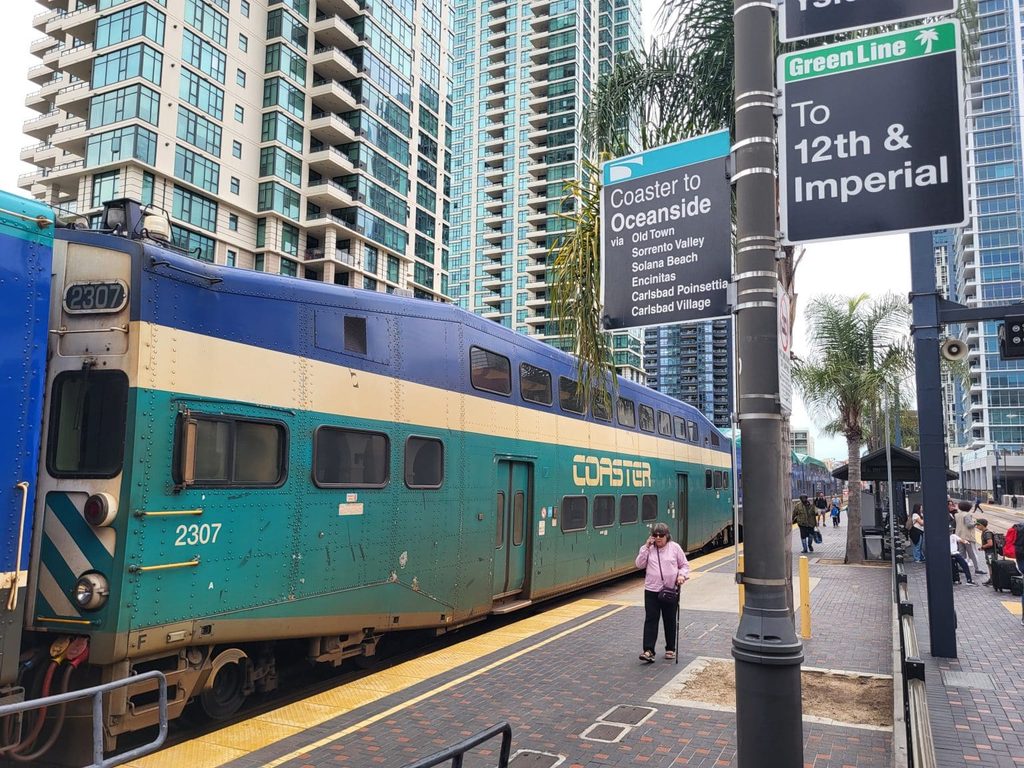
The disruption began early Sunday morning when a short Coaster train, consisting of one locomotive and one car, arrived around 3:45 a.m. Its horn sounded as it entered the area before the train remained idling at Santa Fe Depot for an extended period.
Unlike Amtrak trains, which typically connect to the electrical grid while parked overnight and shut down their engines, the Coaster’s Siemens Charger SC-44 locomotive, which is the same type of locomotive that Amtrak uses, did not shut down. Its running engine created additional noise, further disturbing residents already awakened by the horns.
The situation worsened Sunday night into Monday morning, particularly for residents near the Santa Fe Depot and along the rail corridor going north.
Beginning around 10 p.m. Sunday, the short Coaster train repeatedly traveled north to test the maintenance work, returned to the depot, and repeated the process. Trains entered or departed the depot area approximately every 10–15 minutes, sounding their horns at Cedar, Beech and Ash street crossings.
This process continued until approximately 3 a.m.
One resident, realizing sleep was unlikely, began documenting the horn noise at Santa Fe Depot. The recorded times included: 1:00 a.m.; 1:15 a.m.; 1:22 a.m.; 1:37 a.m.; 1:47 a.m.; 2:03 a.m.; 2:10 a.m.; 2:26 a.m.; 2:37 a.m.; 2:47 a.m.; and 2:55 a.m.
Numerous residents filed complaints with the North County Transit District (NCTD), which operates the Coaster. I submitted complaints covering both nights and also spoke with NCTD customer service.
I additionally contacted the Federal Railroad Administration (FRA) inspector with whom I regularly communicate about Quiet Zone matters. The FRA oversees the federal Quiet Zone program, and the inspector can review whether applicable regulations were followed and whether the railroad’s actions were appropriate under the circumstances.
Maintenance is necessary, but residents deserve answers about the timing, frequency and duration of these overnight operations.
Residents Can Submit Complaints
If you were affected by the noise, please share your experience directly with NCTD. You can call customer service or submit a complaint through its website.
Community feedback is important in bringing attention to the impact railroad operations have on downtown neighborhoods.
The maintenance weekend is over, and the repeated overnight horn noise related to testing has stopped. Downtown residents can finally get some much-needed rest. Hopefully, future maintenance projects will give greater consideration to the people who live alongside the railroad corridor. SDSun
Columnist Janet Rogers is a downtown resident who is co-chair of the Train Coalition at Santa Fe Depot, the Embarcadero Coalition and Safe Walkways. To join the Train Coalition email list, contact Janet at TheTrainCoalition@gmail.com