

The David’s Harp Foundation is an urban oasis on one of the meanest streets in San Diego’s East Village.
Before the city’s largest and seediest homeless encampment was Whac-A-Moled to other parts of the county, 17th Street was not the place to visit or loiter. Unless you were looking to score drugs. The tents and tarps are gone, at least for the moment, but the air on 17th Street is still skunked by the aroma of low-quality weed.
In this environment, offset from the street by a parking lot and a lockable fence, is the colorfully painted front exterior of David’s Harp. A mural on the wall depicts a caterpillar transforming into a Monarch butterfly. Musical notes are playfully woven into the artwork. Believe it or not, joyful and soaring music happens here.
Not just music, though. Founder Brandon Steppe calls David’s Harp “an ecosystem of student-owned media production companies, right here in East Village.”
The nonprofit uses music and media production as a platform to earn mentoring relationships with youths. Many have found themselves on the wrong side of the law, impacted by time behind bars or in the juvenile detention system.
Steppe creates relationships with these kids.
“Here, young creatives are gaining access to San Diego’s creative economy, not just as workers, but as owners and innovators,” he says. “Our young people are producing real work for partners like SONY, Cox and SDG&E.”
Kids are getting the tools to build actual brands and businesses, which Steppe says is changing what’s possible in their lives and communities.
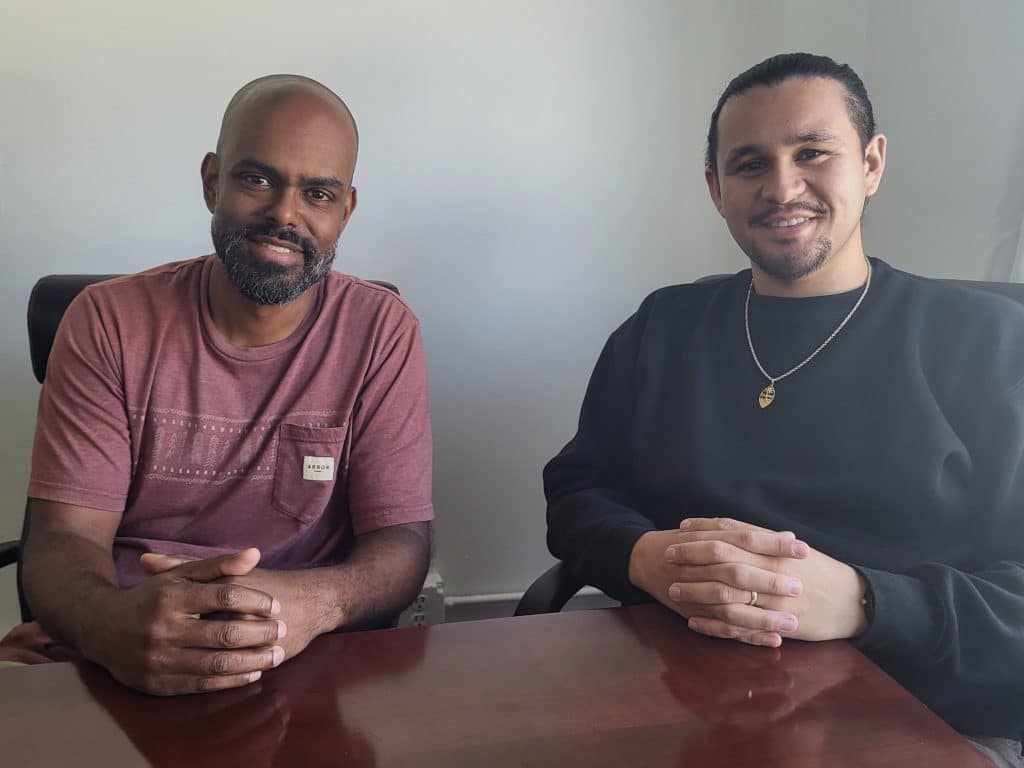
Steppe is the grandson of Cecil Steppe, former head of San Diego County’s Urban League and the Department of Social Services, who also served as Chief Probation Officer. Brandon’s great aunt Rebecca Craft founded what was then called the Negro Women’s Civic League in San Diego in 1934.
In 2006, Steppe, a fourth-generation San Diegan, walked away from a comfortable salary in the corporate world. His life goal was to build a professional recording studio in his father’s garage in Southeast San Diego.
He estimates at the time there were three times as many gangs as after-school arts programs in Southeast.
Steppe vividly recalls the day he left his job at a downtown car rental company.
I was riding up an elevator and it felt like I was having an aneurysm,” he says. “My mind was hurting and I felt like I’d lost my soul.”
The graduate of the San Diego School of Creative and Performing Arts cashed out his investment accounts, paying the steep penalties, to fund the studio.
One of the first youngsters who approached Steppe was a 16-year-old high school student named Rayvon. He asked for lessons to make hip-hop music. Steppe immediately realized the power of his musical platform. So he made a deal with Rayvon: Get your grades up and I’ll continue to teach you how to produce Beats.
It wasn’t an easy path. Rayvon, still hard from the street, wasn’t into the mentorship dynamic. One day, Steppe decided to “take off my mask and open up about my own problems.” It worked. Rayvon began sharing about his troubled life. And Steppe could see that music was like magical relief for the troubled youth.
It reminded Steppe of a Bible story. David’s Harp is not a religious-based nonprofit, but the founder describes himself quietly and matter-of-factly as “a man of faith.”
The Biblical story is steeped in Jewish tradition. King Saul, the anecdote goes, was besieged by an evil spirit. He reached out to a young David to help ease his mind. (Yes, this is the David of David and Goliath, who went on to become King David.) David played a harp for King Saul, and it both eased his mind and warded off the evil spirit.
Steppe realized music was doing the same for Rayvon. Thus, the origin story of the name.
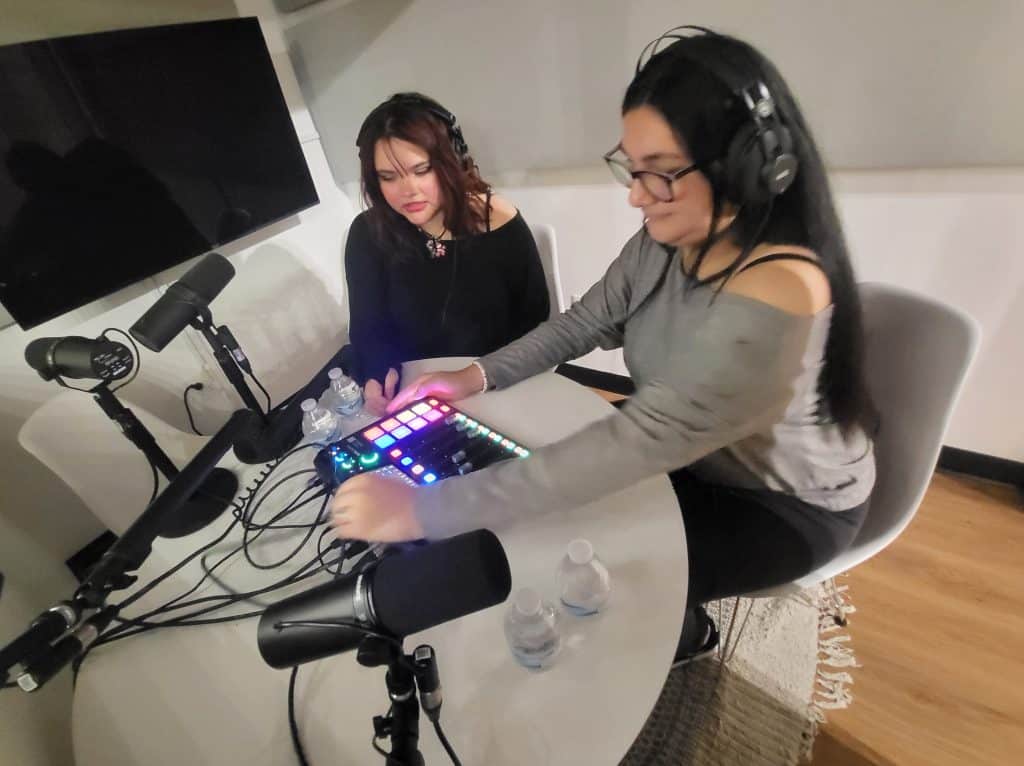
A tour of the David’s Harp facility reveals it to be a sprawling incubator space. It’s been in the 17th Street location since 2012.
Leading the tour are both Steppe and Adrian Cantero. A one-time student here starting when he was 16, Cantero has stuck around for nearly a decade. Today, the Sweetwater High graduate is both a David’s Harp board member and community engagement manager.
He originally saw David’s Harp on Facebook.
“My uncle told me about it,” Cantero says. “At the time my grades were suffering severely. I was failing English and math. But I did graduate, and these guys were there cheering me on.”
Cantero says many of his friends from high school are currently serving time in prison. David’s Harp helped him navigate away from that lifestyle.
Note: By using mobile recording studio backpacks, David’s Harp does also run a music program inside the East Mesa Juvenile Detention Facility.
“After graduation, I told Brandon I wanted to work, to do music,” Cantero says. “He was like, ‘Alright, well, these skills you learned in the studio, you can actually get paid for them.’”
The pinnacle from the last 10 years for Cantero was getting to work on a Billboard-charting Christian hip-hop album of recording artist Jon Keith. He’s a Southeast San Diego native and David’s Harp graduate who pulls in 10 million streams a year on Spotify.
Walking around the 17th Street facility, Steppe and Cantero introduce various program participants. Eighteen-year-olds Alana Valdez from Barrio Logan and Maylani Mendez from downtown are gearing up to produce their A&M podcast. The show is about to launch. The girls will talk about their lives, their goals and the future.
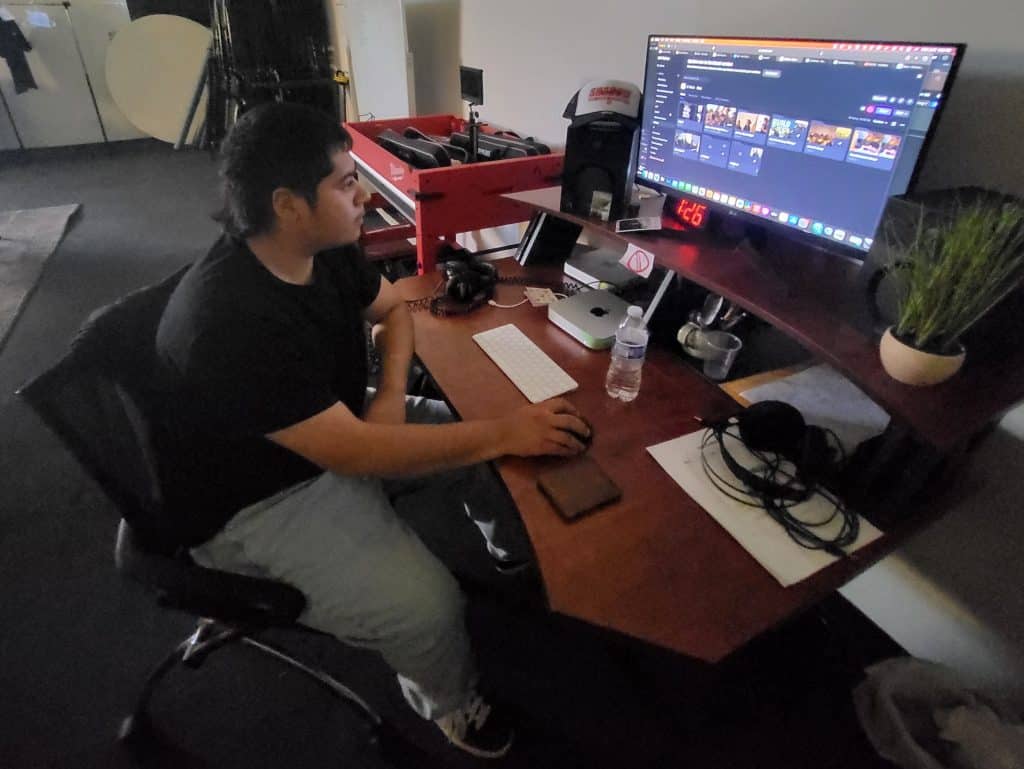
On the Biz Pod side of the floor are young content creators already working as 1099 contractors. At present there are six student-run businesses here that last year earned a collective $410,000.
Dan Shocon is one of those entrepreneurs. The 22-year-old founder of Shocon Productions has been at David’s Harp for a year and a half. Currently finishing an RFP for a gig, he says this year he’s billed for 15 jobs, mostly video services work.
In 2024, 48 students graduated from David’s Harp, according to Steppe, taking away real-world skills to start businesses or work for other companies.
In 2021, David’s Harp received a prestigious windfall. Billionaire philanthropist McKenzie Scott’s Yield Giving Foundation gave the organization one million dollars. As is often her practice, Scott’s gift comes with no strings. Recipients are trusted to use the money to best advance their nonprofit cause.
Steppe says when he first received a notice by email of the donation he thought he was being punked. He didn’t believe it and declined the gift. A couple weeks later, a trusted associate convinced him it was the real deal.
What did David’s Harp do with a million dollars? In part, the organization purchased a six-bedroom, four-bathroom home in Southeast. It’s on an acre of land. Since so many students had been homeless, the building is now called Transformation House.
David’s Harp students pay $500 a month in rent to live there. That money is kept in escrow for them. At the end of a year, the kids get their $6,000 back, enabling them to find their own apartment, or help launch a business.
It’s such a smart investment. David’s Harp is now literally an ecosystem for young people to have a place to live, get job skills and then move into the real world with those skills.
Nobody knows, or is saying, how this Scott grant came to be. Steppe says his organization had recently won a national prize for music and that’s how David’s Harp may have gotten noticed.
For her part, Scott does not publicly talk about her philanthropy, which started with a $36-billion-dollar bankroll. Scott is the ex-wife of Amazon founder Jeff Bezos.
In a blog, Scott writes: “In order to cede focus to the organizations we’re supporting, we choose not to participate in events or media stories.”
In a separate blog entry, she writes: “…We also assessed organizations focused on supporting community engagement itself. The 1.6 million nonprofits in America employ 10% of our country’s workforce, and 63 million volunteers…Their service supports and empowers people who go on to support and empower others.”
With that perspective, David’s Harp was a perfect pick. SDSun