
“Living In The City” is The San Diego Sun’s feature Q&A with downtown San Diego residents. It’s a way to get to know the city by meeting the people who live here. This is number 57 in an ongoing series.
Name: Joanna Wasmuth
Neighborhood: Electra (Marina District)
Personal deets: My husband, Greg, and I are celebrating 31 years of marriage! We moved to Hillcrest from Vancouver, Canada, then bought our condo downtown at the beautiful Electra, with epic harbor views and sunsets. We moved to New York (Hell’s Kitchen) in 2014 and came back to San Diego in 2020 during the pandemic. We love being back and are here to stay.
Work deets: I’m an executive coach and consultant, helping purpose-driven leaders become the CEO of their own lives, launch their dreams and impact the world without compromising their personal wellbeing. Greg uses the latest in AI to build product experiences that drive exponential growth.
Working from home: Greg and I are up early to exercise. I walk 3-5 miles a day and do Pilates. Greg rollerblades 7 miles and goes to our building gym. We have coffee on the balcony, where we start every day sharing what we’re grateful for. Then we go off to our separate home offices, meet up for lunch, then greet the sunset with a sip of champagne.
My health issue: I had early Covid and it triggered a blood clot (DVT) in my leg that broke free and became three pulmonary embolisms, blocking three of the four arteries to my lungs. They caused massive damage to my lungs, heart and brain. I nearly died. I didn’t know anything about blood clots. The reality is staggering. In the U.S. alone, blood clots affect up to 900,000 people each year, claiming about 100,000 lives. More than breast cancer, motor vehicle crashes and AIDS combined.
Recovery: After my release from the ICU, I was on oxygen for four months while undergoing cardiac and pulmonary rehab. My recovery became a total life transformation. I added a few steps every day to build stamina. A year later I was able to walk a marathon-length course! My husband mapped out a flat, scenic route along the water – starting in La Jolla Village and crossing the finish line 26 miles and 12 hours later at the Gaslamp Quarter sign. Countless family and friends walked segments alongside me. We handed out info about blood clot prevention along the way.
Taking stock: Recovery isn’t just a chapter. It’s a complete story rewrite. These past five years have reshaped my existence. While some days I hardly recognize my life, I’ve learned one thing for sure: Every single day is a gift, even the difficult ones. Recovery is a team sport, and I owe my strength to the unwavering support of my family and friends, especially my husband. He has watched over me 24/7 these past five years, and I am forever grateful.
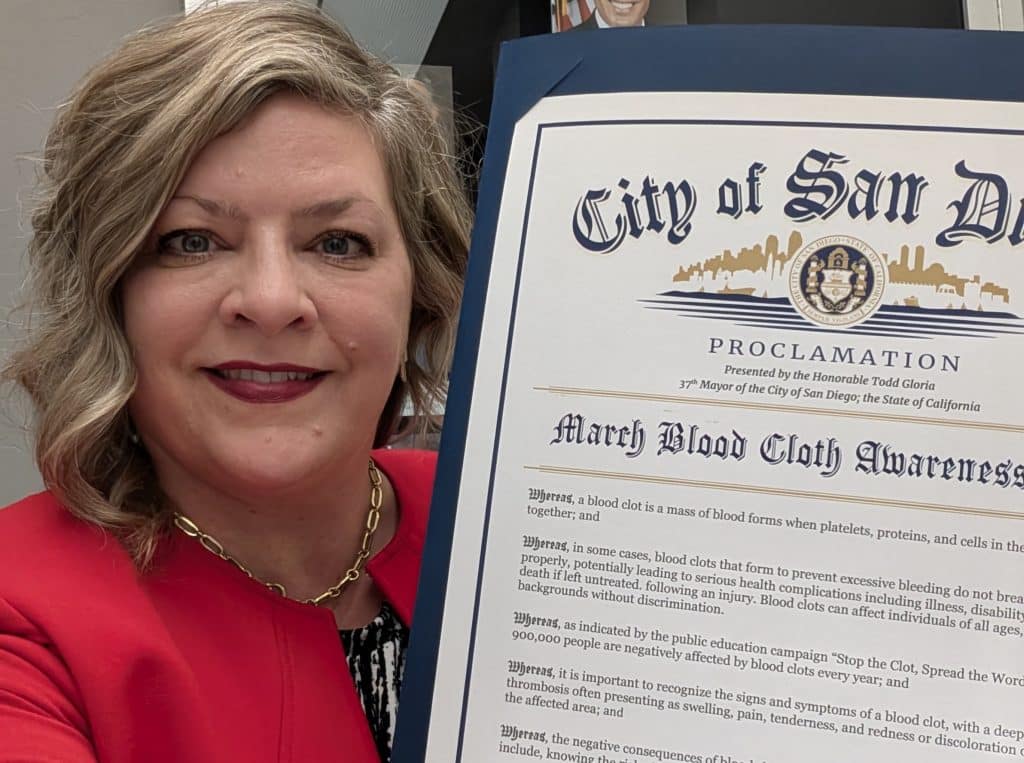
Taking action: As part of my advocacy, I joined the National Blood Clot Alliance board for Sports and Wellness and became an ambassador to spread awareness and save lives through prevention and quick action. This year, Mayor Todd Gloria responded to my request and proclaimed March as Blood Clot Awareness Month in San Diego. As I share my story, I’m amazed at how many people have a loved one lost to or impacted by blood clots. I urge you to take five minutes to visit Stop the Clot and learn about risk factors and how to reduce them — especially if you travel or are hospitalized for any reason. You’ll also find questions to ask your doctor if you have any of the risk factors, signs or symptoms, which just might save your life or someone you love.
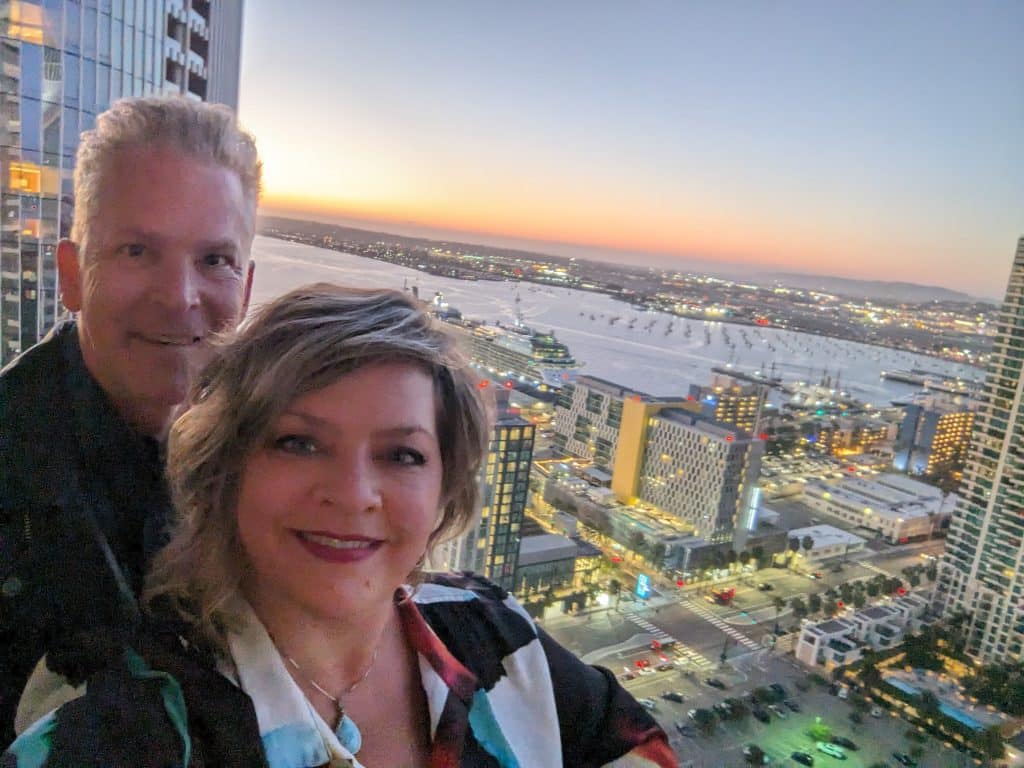
Why move downtown: We decided to move back to San Diego so I could heal in a peaceful environment, with family and friends and plenty of sunshine to encourage daily walks. Downtown is a laid-back yet vibrant city. Amazing views. Great restaurants. Inspiring art scene. There’s always something going on, and I love being in the heart of it all, yet only a 15-minute drive to the beach.
Transportation breakdown: We walk everywhere downtown, but use our car or e-bikes to go to the beach, Balboa Park, the wineries or to visit friends and family.
Worst aspects of living downtown: Crime, train noise/disruption, plane noise.
Describe Downtown SD in 3 words: Vibrant. Historic. Diverse.
Most surprising part of living downtown: The history! We’ve taken several walking tours and discovered some interesting historical tidbits:
- Alonzo Horton realized that corner lots sold for more, so he made the blocks shorter!
- The US Grant Grill (a place for high-powered lunches) refused to allow women in for lunch until 1971 when Lynn Schenk and friends staged a “sit in” and the policy was eventually changed.
- Wyatt Erp used to stay at the Horton Grand Hotel.
- Zoo animals used to be kept in the basements and rooms of some of the Gaslamp buildings!
Fave lunch place: Vistal at the Intercontinental hotel. I have frequent business meals, and they have easy validated parking, nice views, heaters or umbrellas and a friendly staff.
Top dinner spot: Herb and Wood. They have delicious gluten-free bread and take food allergies very seriously.
Best bars: Our top ones are are…
- Whiskey House. It feels like a little piece of NYC in SD! Great ambiance and Guiness Book of World Records holder for most number of spirits.
- Grant Grill for upscale cocktails and live music.
- The Casbah for a taste of San Diego’s alternative music scene.
- The Stout Public House is where we go to watch Canadian Hockey games!
Go-to take-out places: Lotus Thai and Urban India (fantastic food, but the loud music is not our dinner vibe).

Best downtown place to take visitors: Seaport Village to Star of India Walk. So many great boutiques, galleries, wine bars and restaurants along the way. And nice to watch the boats and the military activity along the water.
Homelessness: I have great empathy for our neighbors experiencing homelessness. They each have an individual story, with unique factors that have led to their situation. The lack of affordable housing is a big problem. It’s hard to get a job or raise a family without a safe home to live in. We are so grateful for all of the organizations trying to help. My husband has gotten to know several people who live on the harbor path that he rollerblades on. He talks with them every day, encouraging them to take the next step to rise up. It works for some who just need encouragement.
Best safety tips: (From living in NYC) Stay aware of your surroundings, including ensuring you can hear through your headphones. If you have to use your phone while walking, step out of sidewalk flow and ensure your back is to a wall so you can’t be surprised from behind. See what’s happening around you. Situational awareness is key.
The city needs more: Affordable housing. And retail stores where you can get the things of life that you need – clothes, shoes, gifts. Would be great if downtown had a street that better resembled Fifth Avenue in NYC or the Champs Elysee in Paris, with a mixture of restaurants, cafes and bars, but also stores where you can do your real-life shopping.
Final thought: Before my health crisis, I was a global executive, traveling the world and leading teams focused on social impact. Walking my way into wellness transformed me into the CEO of my own life. My health is hard-won, and I cherish it. I now get to use the lessons and skills I’ve learned on this journey to help others lead themselves into living with authentic peace and purpose. SDSun