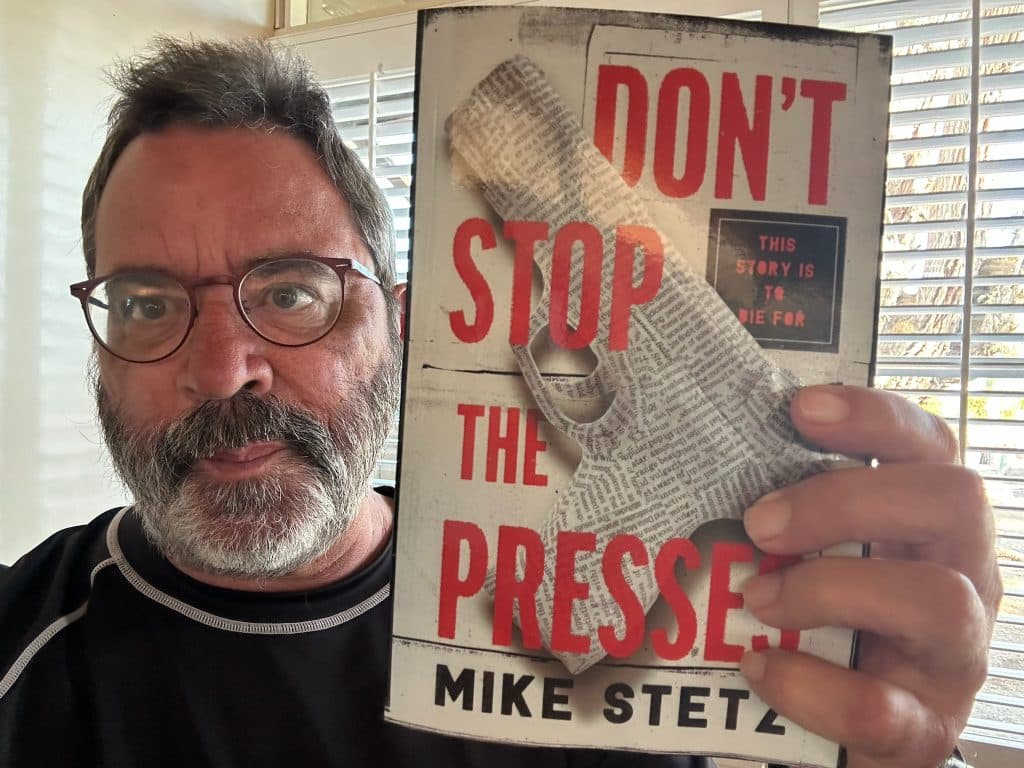
Former local newspaper columnist Mike Stetz has written a fictionalized, fantasy-revenge novel about working for a paper based not-so-loosely on The San Diego Union-Tribune.
In Don’t Stop The Presses, Stetz’s protagonist is reporter Ben Roberts. He works for the San Diego Sun. Hang on! That title sounds familiar.
Stetz sent me a press release about his self-published book. It was accompanied by a note: “Sorry…for using your website name for my fictional newspaper name in my novel…I grew up in Baltimore reading the Baltimore Sun, hence the name. Please don’t sue.”
I told Stetz I also hail from Baltimore. The lawyers can stand down.
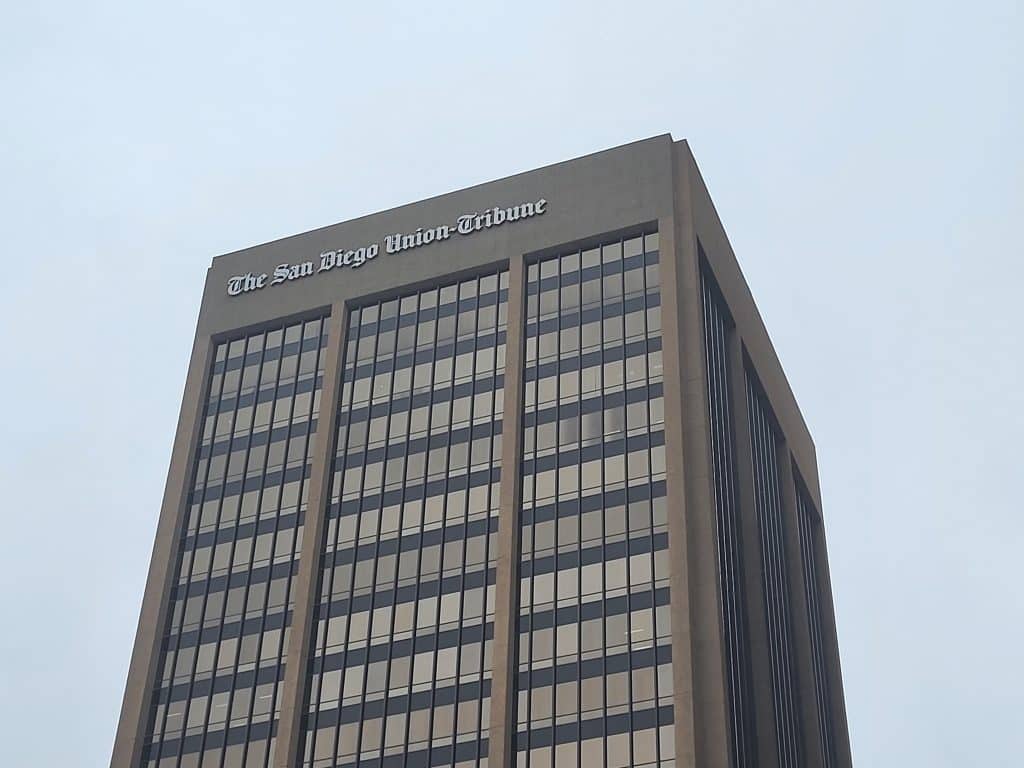
Stetz worked at the Union-Tribune for 13 years (October 1998 to April 2011). A general assignment writer who became a columnist, he covered wild fires, military issues and a variety of stories. He never waded into investigative pieces about the local professional football team. Until now.
Recall the San Diego Chargers bolted to Los Angeles in 2017. A similar conundrum is at the heart of Stetz’s well-reviewed second novel. Someone on the San Diego City Council who wants to run for mayor is bribing somebody else to get the fictional “Sharks” to stay in town. Right when Roberts is about to crack the story wide open, he’s laid off.
Stetz, who is retired, wanted to write a book that showed the public how deeply personal rounds and rounds of layoffs are to dedicated reporters who view their jobs as a calling.
“It was painful when I went through it,” he says. “It’s devastating psychologically. And I know some people who’ve never gotten over it.”
In real life, the media industry isn’t doing any healing. The U-T, which no longer has downtown office space, has continued to face sell-offs and layoffs on a regular basis. The United States has lost more than a third of its newspapers since 2005, including roughly two papers per week. Last month, The Washington Post laid off 300 staffers.
In Don’t Stop The Presses, there’s cathartic logic behind the bizarre idea of a reporter taking over a newspaper’s office and printing press. It’s worth reading to find out what happens. Here’s an excerpt:
On Wednesday, I got laid off. On Thursday, I got a gun. On Friday, I took over the San Diego Sun newsroom. I had no choice in the matter. I had a story to write. And there was no way it was going to see the light of day unless I did something drastic, such as, well, commit a whole bunch of felonies.
My story was simply too rich and important to give up. It had to do with major corruption, specifically the bribing of a public figure—who was planning a mayoral run—to vote for a new, multi-billion-dollar pro football stadium.
Obviously, it’s not the kind of story that comes around every day. It’s a story that comes around once in a lifetime—if you’re lucky. Normally, as a city hall reporter, I’m writing about everyday public policy, pension reform, water rate increases… Insomniacs thanked me.
I had zero options. I had to take over the newsroom and publish my story myself. The paper was killing both me and it. My plan was crazy, I admit. But journalism has become a crazy business of late. Even comics were being axed to cut costs. Snoopy wasn’t sacred. So I’d do it for Peanuts too, I told myself.
The taking-over-the-newsroom part was easy, I figured. The Sun only had one security guard left. He had to be about sixty. And a bit chubby. And unarmed. Something told me I could get the drop on him.
All the other guards had been laid off. The paper was being gutted. Copy editors were let go. Page designers. Artists. Receptionists. Even janitors. And, of course, dozens of writers, including yours truly, a mild-mannered, hard-working scribe.
Even though this was the seventh or eighth round of layoffs and/or buy-outs—we’d all lost count—I thought I was safe. Because of my story. It was golden. A city councilwoman, Becky Strand, was being bribed to vote for a downtown football stadium for the San Diego Sharks, the city’s pro football team. Hers was the swing vote in the most expensive development project in the city’s history. She was looking for money to fund her political ambitions and did not care where it came from. She needed a lot of it.
At least that’s what a source was telling me. And the source was a good one. And, better still, the source was only telling me.
I got the call about my layoff in the morning from human resources while I was at my desk. It was a woman’s voice. She was blunt. “I’m sorry to tell you, but we’re terminating your position.” I didn’t answer. Because I thought I was about to throw up or have some other scary bodily issues.
“We need you to come downstairs to HR and sign paperwork.”
I paused some more.
“It’s about terms of your severance.”
“Wow,” I said. “Words fail me. That’s kind of ironic, for a writer, no?” I’m not sure if she got it.
She only said: “Um, I have a lot more phone calls to make.” I think she was the only HR person left, which may explain why our annual forum on workplace wellness had been axed. It was either that or wellness wasn’t an issue that management really cared about anymore. I guessed the latter. Our overweight security guard was Exhibit A.
I was stunned to hear the news, to put it mildly. I sat at my desk and let it sink in. It wouldn’t. I was in disbelief. I had been at the paper for thirteen years and was getting bounced when I was on the verge of sending a heat-seeking missile into the city hall chambers.
Why couldn’t they lay me off when I was working on a story about the parking meter revenue analysis that was about to be released?
I would have thanked them. SDSun
[Permission granted by the author to run this excerpt.]