

Former San Diego Mayor and political lightning rod Bob Filner was 82 when he died on Easter Sunday (April 20), reportedly in an assisted living facility in Orange County. Out of sight for years, news of his passing was slow to trickle down to San Diego, where media outlets began reporting his death a week after the fact.
Timing didn’t matter to Laura Fink.
“It’s safe to say that Bob Filner has been dead to me for a very long time, so I don’t often think about him as an individual,” Fink says. “And so I was fairly unmoved in any direction by his passing.”
In 2013, Fink was one of nearly two dozen women who came forward with accusations of sexual misconduct and sexual harassment by Filner. Those claims became a political firestorm and public pressure led to Filner stepping down as mayor after just nine months in office.
The first woman to come forward was Filner’s communications director, Irene McCormack Jackson. She later filed a lawsuit over unwanted sexual advances and settled with the City of San Diego for $250,000.
After Jackson stepped forward, anonymous complaints about Filner’s behavior from other women, and stories about a lewd move known as the “Filner headlock,” reached the press.
Fink was the second woman to go public with complaints about this type of behavior by Filner. Just 25 years old at the time of an incident, Fink later went before TV cameras and talked about her experience working as a deputy campaign manager for Filner. She recalled Filner asking her to turn around and him patting her rear end for the amusement of a small crowd at a dinner event.
Today, Fink is CEO of Rebelle Communications. The East Village resident does strategic communications consulting and leadership development, specifically for women aspiring to positions of power.
“I work with women who are powerful in their own right, but are looking to make big moves in their career and potentially level up,” Fink says.
Fink has also been a TV political pundit. For years, she’s appeared on San Diego news programs to dissect local issues. She’s also made national cable appearances, most often as the spokesperson for the Democratic point-of-view on right-leaning shows on the Fox network.
Filner was a Democrat, and the chorus of San Diego Democrats who spoke up against his behavior was a rare moment in time.

In one of Filner’s latter interviews with a San Diego media outlet, in 2016 he told Voice of San Diego: “I never harassed anybody…there was no sexual harassment and most of the things were made up, are fantasies.”
Fink obviously disagrees, but concedes Filner deserves credit for public service efforts during his career. That’s why she initially went to work for him.
“I respected what I had read about his politics,” Fink says. “Listen, I’m not here to say that he didn’t work hard on behalf of his constituents, because he did. But there’s a big ‘but’ when you abuse your power with respect to your staff, and it wasn’t just me. There were many other women who came forward, and others who didn’t feel that they could.”
In 1961, as a student at Cornell, Filner joined the Freedom Fighters, a group that fought segregation in the South. For that activism, he spent two months in jail. Before coming back to serve as mayor of San Diego, Filner was a member of the U.S House of Representatives from California for 20 years.
“He can receive his due for the Freedom Riders and for whatever constituents he helped through the power that he was entrusted with,” Fink says. “He will also have to live with an obituary that is completely overshadowed by his decades of poor public behavior and abuse of women.”
When Filner resigned from office as mayor, Fink says she felt “vindicated.”
“One of the invaluable lessons it taught me was that speaking out builds agency,” Fink says. “Even though it’s incredibly difficult, it allows you to reclaim your perspective and your ability to feel like you have an impact on the outcome.”
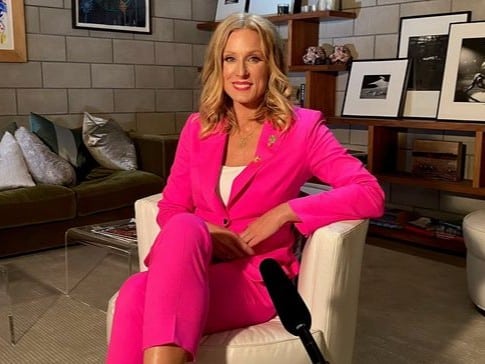
Fink says the road from vindication to personal healing has been bumpy.
It’s a process of becoming a new person after that,” she says. “Each time there’s a public scandal or some kind of terrible sexual harassment on the national scale involving a powerful man, which upsetting to say happens fairly frequently, its traumatizing. You’re like, ‘Jesus, how is this still happening?’”
The public’s current willingness to give second chances to men found guilty of abusive practices is distressing, she says.
It’s enraging to me,” Fink says. “I am traumatized every time I see the public invest their trust in these men, and many times, over the option of a highly-qualified, ethical woman…The public does not necessarily judge these incidents as being disqualifying, and that is extremely disheartening. ”
She believes accountability in this area is an unfortunate two-steps-forward-one-step-back process.
“I would say women have moved forward in terms of being educated and aware and having more agency around what we’re willing to tolerate,” Fink says. “But is there any more accountability? I’m not sure there is. The system really hasn’t changed. And it’s unlikely men’s behavior has changed significantly.”
So while Fink downplays the significance of Filner’s passing, she admits it’s a milestone of sorts. What she does mourn, on a broader scale, is how young women still fall prey to abusive men with political power.
“When you’re young, there’s a naivete in thinking that you are immune to it,” Fink says. “Or, that you can somehow deftly handle it, that you can run between the raindrops, that you can charm your way out of it, that you can endure it.”
She knows now how difficult it is to run between the raindrops when someone like Filner is bullying, intimidating and threatening retaliation.
“You try to work with your head down but it impacts you in a corrosive way and undermines your confidence,” Fink says. “When you experience this first hand it leaves an indelible mark.”
Fink abhors retelling her story. She doesn’t want it to be her legacy, but says she agreed to one interview because she hopes it has a positive impact on other women.
“Choosing to come forward and fight back is transformative,” she says. “The results are not guaranteed. But that was a transformative moment for me.” SDSun