

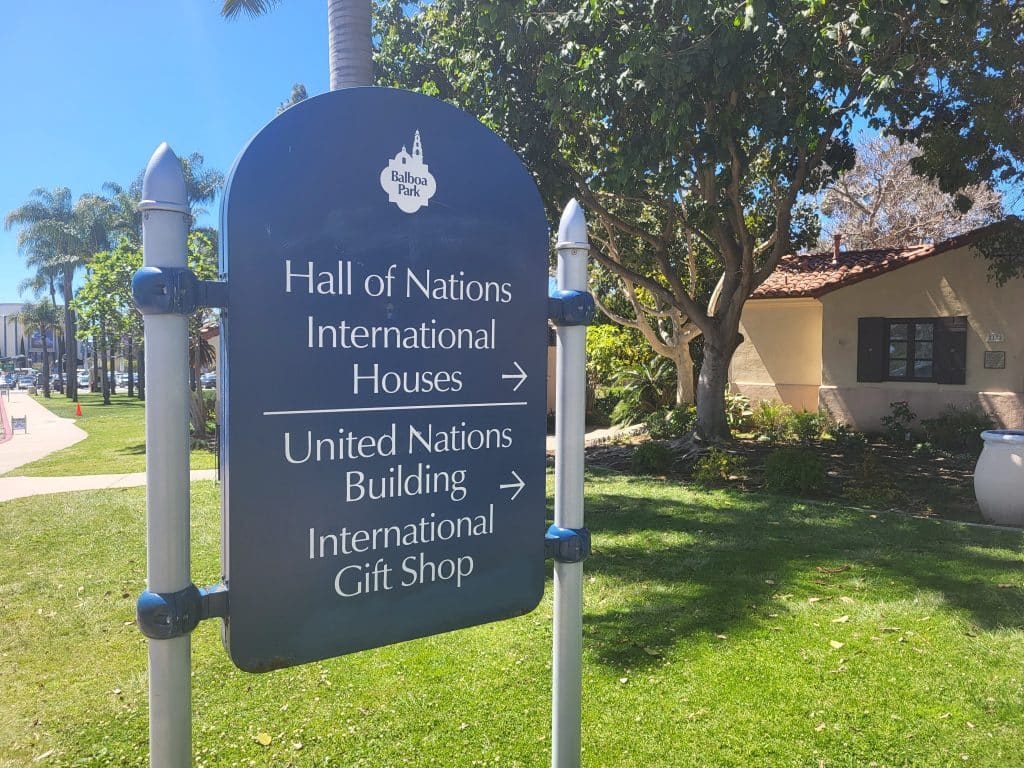
The House of Pacific Relations resembles a small town in the geographic heart of Balboa Park. Circling a common-area green lawn are Spanish Colonial Revival-style International Cottages. Uniform in their exteriors (save for flags, plaques and other furnishings), the cottage interiors vary widely in style.
Each cottage represents a diasporic culture, not necessarily a specific country.
While the House of Korea displays a South Korean flag, the cottage represents Korean culture at large.
Likewise, the House of Chamorro represents the indigenous Chamorro people, scattered across but not limited to Guam and the Mariana islands.
In 2021, Korea and Chamorro, along with Palestine, were added as part of a group of nine new houses to the collective House of Pacific Relations, rounding out the total number of cottages to 31.
The House of Pacific Relations rents out its Hall of Nations as a physical space to cottage-less countries/cultures. Pakistan, Somalia and Serbia are currently pending house status.
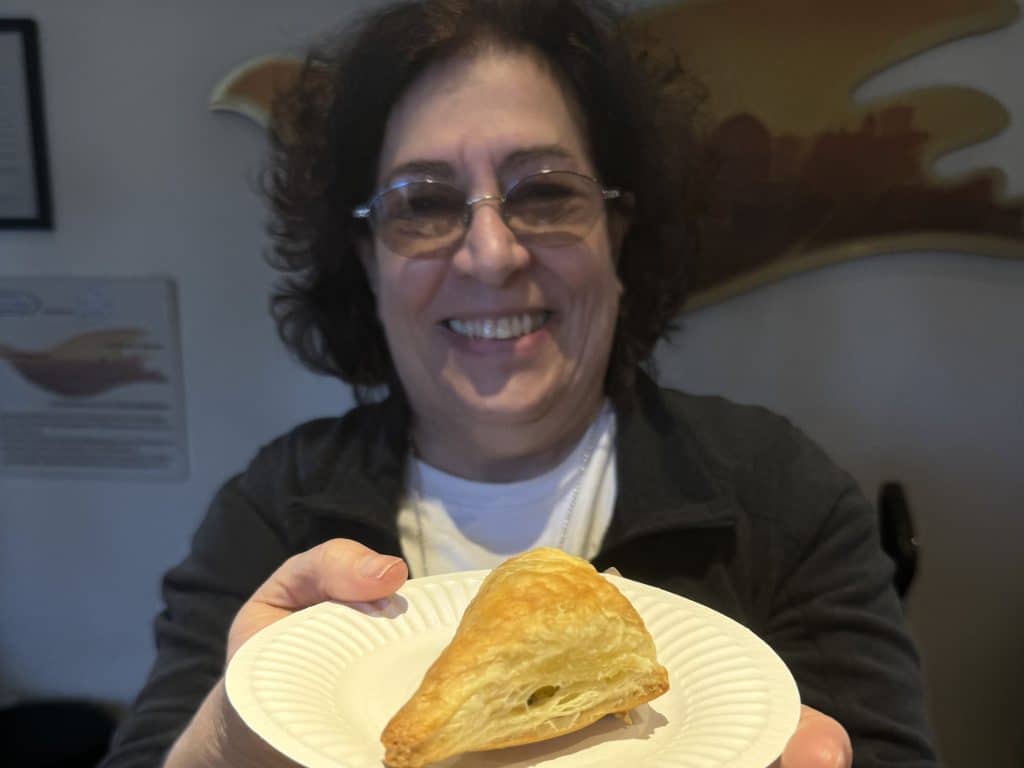
During the pavilions’ open hours (11 a.m. to 5 p.m. on Saturdays and Sundays), visitors can explore every cottage. Each offers trinkets and treats relating to their culture, including food, pamphlets and flags. The House of the Philippines hands out Filipino candies. The House of Israel offers bourekas (savory hand pies).
The consortium’s mission hasn’t changed since 1935: to encourage “pacific,” or peaceful, relations.
“Each house tries to bring in that cultural understanding,” House of Pacific Relations President Inki Welch says.
Despite interlocking historical tensions–Spanish colonization of the Philippines, Puerto Rico’s status as a United States colony, British occupation of Ireland–cottages typically don’t interact with one another.
That’s not to say that houses don’t have conflicts. They do arise–under the surface, usually out of public view. Disputes sometimes focus on the House of Pacific Relations’ requirement to be non-political.
In 2022, during Russia’s occupation of Ukraine, “Stand with Ukraine” posters in front of the House of Ukraine were removed. Immediate Past President Eugenie King said political posters in the visible exterior of a house were considered a violation of House of Pacific Relations guidelines.
Welch concurs, saying the posters were “against bylaws…because we’re supposed to be non-political, non-sectarian, non-religious and non-partisan.”
Note: After the 2023 earthquakes in Turkey, the House of Turkey held a candlelight vigil. Welch says that’s permissible. “If anything, we should look at issues through a humanitarian perspective,” she says.

The House of Pacific Relations’ non-political goal is always being tested. Less than 300 feet away from each other across the Balboa Park lawn, it’s a challenge for the houses of Israel and Palestine to ignore conflict in the Middle East.
On the surface, daily operations at both cottages are uniform.
Volunteers enter respective houses at 10:30 a.m., ahead of the 11 a.m. opening. Duties include inspecting the area for cleanliness and stocking up on giveaway swag.
House of Palestine volunteer Jelan Mustafa drives upwards of 30 minutes to get here moments before opening. She’s Palestinian. Both her parents are from Al-Bireh, north of Jerusalem in the West Bank.
“Quite frankly, me as a Palestinian person–I’ve learned so much just from volunteering here,” Mustafa says. “I pretty much learn something new every time. I’ve always loved to give back to the community, especially in times like this.”
Mustafa originally got involved after volunteering through San Diego State University’s Students for Justice in Palestine chapter.
During my interview with Mustafa, a younger man named Avi asks about the volunteer process. Avi says he was raised Orthodox Jewish. He’s lived in the College Area and has visited Jerusalem a couple times.
Since October 7, 2023, he’s wanted to “learn more about the culture I was told to stay away from.”
People volunteer at houses for a variety of reasons.
“It makes me feel good that I’m sharing information about a country I take pride in,” House of Israel volunteer Deborah Leboire says. “Even though I’m American, I’m still Jewish.”
Leboire is from the Bay Area. House of Israel president Ruth Mastron, who volunteers most weekends, is from Wisconsin. Both volunteer because they feel they have a connection to Israel.
“The history–timeline, maps, videos–you know,” Mastron says. “We try to give an overview of what Israel is all about.”
Each House’s website links to available volunteering slots. Anyone can be a volunteer, regardless of their ethnic or religious background. Failure to open a cottage for the day results in a fine from the city–though most cottages have no shortage of volunteers.
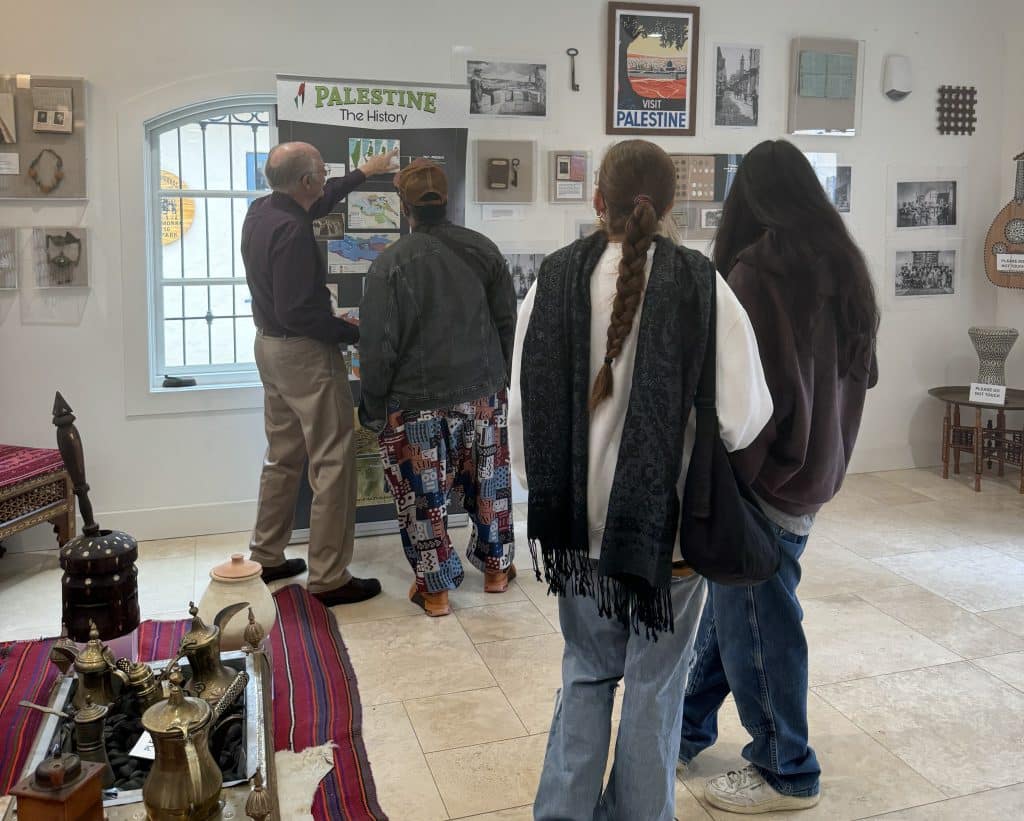
The House of Palestine’s interior decor is specifically tied to the 1948 pre-British Mandate Palestine time period, according to cultural events coordinator Suzan Hamideh.
Hamideh has been involved with the House of Palestine since its inception in 2002. She worked with her sister in al-Mazra’a ash-Sharqiya, Palestine, to bring products selected by museum curators to America.
A hand-dyed, embroidered sofa depicting trees sits opposite the doorway as part of the house’s collection. In 2021, UNESCO added Palestinian embroidery to its list of Intangible Cultural Heritage of Humanity.
Below the sofa lies a hand-dyed wool rug made in Hebron; the art form originated in the coastal city al-Majdal Asqalan. Palestinian weaving and embroidery are hyper-localized, indicating information like marital and class status to town and village location.
A painting on one wall, donated by Ibraham Al Nashashibi, a former lawyer who established Fairouz Cafe and Gallery, depicts what he remembers from his childhood neighborhood in Jerusalem.
Hung on the eastern wall of the cottage are artifacts. Some, like the photographs and stamps, are pulled from government archives. Others, like a key and a passport, were donated.
“They’re from a family from Nazareth,” Hamideh says. “In 1948, they were expelled from their homes and they had to find refuge somewhere else. Some landed in refugee camps in Jordan, or others ended up in refugee camps in Syria. There’s a lot of families that hold their keys and they pass it down to generations. You know, waiting. Waiting to go back home.”
Decor at the House of Israel, relative to other cottages, is fairly modern.
“We did a complete remodel and tried to reflect Israel today, which includes ancient history and modern high tech,” House President Mastron says. “In the last few decades, Israel has been a high-tech powerhouse.”
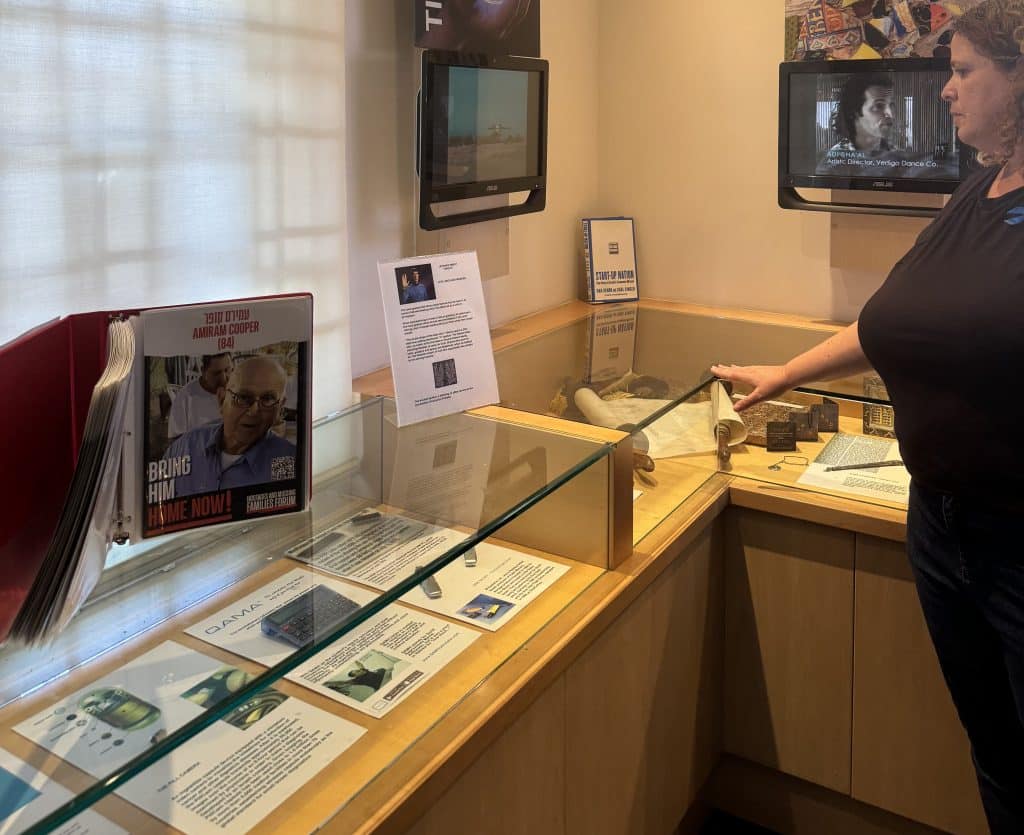
Several screens split House of Israel’s cottage into areas focusing on tourism, religious-historical artifacts and modern Israeli technology.
The tourism side of the cottage contains a live feed of the Western Wall (sometimes referred to as the Wailing Wall). Located in Jerusalem on the western side of the Temple Mount, the Western Wall is revered as a holy site in Judaism.
Next to the Western Wall monitor is a screen advertising trips to Israel. Many House of Israel visitors and volunteers are from, or have already been to, Israel. Volunteer Leboire went in the last few years, leaving prayers for her children on the Western Wall.
There’s a prayer sheet written in Hebrew on a counter in the House. Many House of Israel volunteers are American-born. There’s a push to recruit more Israeli volunteers–not only to read Hebrew, but to provide expertise.
On another side of the cottage are various religious, historical and current-technological items.
Leboire points out an Israeli invention: glasses with a scanner and reader attachment to help the visually impaired. Other Israeli technologies on display: a swallowable pill camera that takes 50,000 images over an eight hour period; and drones that can pick out marketable fruit.
Above display cases are binders with descriptions of hostages taken by Hamas on October 7. They’re labeled “Bring them home now.” Posted throughout the cottage’s various doors and windows are similar fliers.
This caused a dispute. The House of Palestine claimed politics seeped into the House of Israel.
The House of Israel’s Mastron says not discussing the fliers/posters’ backstory keeps them from being political, and therefore not a violation.
The House of Pacific Relations’ Welch says at first, Israel had the posters hung outside their wall that divides the courtyard and the public walkway.
“I told them to hide the posters inside [the walkway] so that not everybody walking by could see it, and then you can make your statement,” Welch says.
Displaying posters is fine so long as they aren’t out of bounds of the cottage’s given space (windows included), according to Welch.
The poster dispute is the tip of an ideological iceberg. Volunteers from both houses believe tension does exist, primarily because their house culture isn’t fully understood.
The House of Israel and the House of Palestine are inherently linked to the shared conflict of their real-word counterparts. The bullets, bombs and images of starving children are inescapable. Volunteers from both houses told me stories about familial histories or visits to the Middle East that informed their opinions.
House of Israel board member and volunteer Esther Hogue says she volunteers because her father attended political meetings in mid-to-late 1920s Poland about a Jewish homeland.
“My father influenced me to be a [political] Zionist,” Hogue says.
Non-Arab House of Palestine volunteers George and Karen Longstreth volunteer because they’re visited Palestine five times over 17 years, partly as medical volunteers.
George Longstreth says discussions he initiated in Israel about Palestinian access to medical infrastructure were generally met with hostility.
Diplomatically, the House of Pacific Relations does the only thing it can, carry on with its apolitical mission. Its lawn programs started in February and will run through early December. Lawn programs feature music, dance, traditional costumes, arts, crafts, and ethnic foods from participating houses.
The House of Palestine’s lawn program on Sunday, April 21 will focus on traditional Palestinian food and festivities. Event coordinator Hamideh is in charge of teaching dabke, a Palestinian folk dance.
“We just want to hold on to our cultural heritage and traditions and make sure that we preserve them for generations to come,” Hamideh says.
The House of Israel’s lawn program is scheduled for Sunday, June 2. Plans are still tentative, though organizers expect a similar event to last year’s: traditional Jewish food, choir performances and traditional dances.
“We want to open up the information about Israel to the public,” LeBoire says. “I just love to see the way people’s eyes light up when they learn about it.” SDSun