Downtown San Diego is constantly reinventing itself, but scattered among the changes are buildings that have been standing for generations, quietly preserving pieces of San Diego’s past.
I’ve recently been paying more attention to these architectural survivors during my walks. Three in particular caught my eye: the former Armed Services YMCA on Broadway, the Independent Order of Odd Fellows building on Market Street and Fire Station No. 4 on J Street.
Each has a different story to tell.
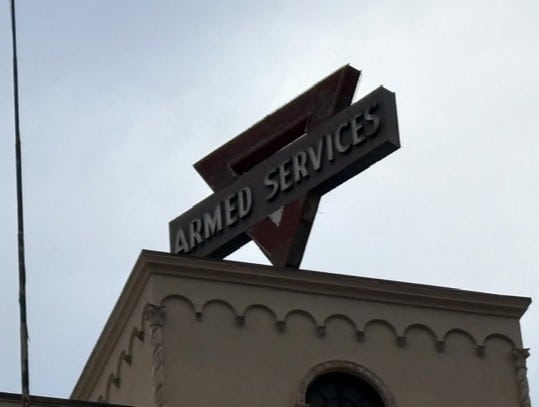
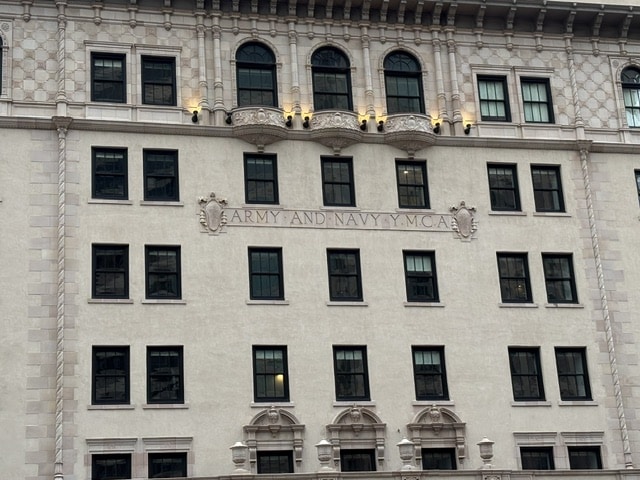
A home away from home for servicemembers. Though 500 West Broadway is now home to The Guild Hotel, when it opened in 1924, it served a very different purpose.
Designed by architect Lincoln Rogers, the building was constructed for the Army and Navy YMCA, providing a place for military personnel to find recreation, fellowship and support. I find that history particularly interesting given how much San Diego’s naval presence continues to shape the city today.
The building was designated a San Diego historic landmark in 2001 and added to the National Register of Historic Places in 2007.
What once offered temporary accommodations and community to military personnel now welcomes travelers from around the world. It’s a fitting example of adaptive reuse: preserving a historic building while finding a way for it to remain part of the city’s everyday life.
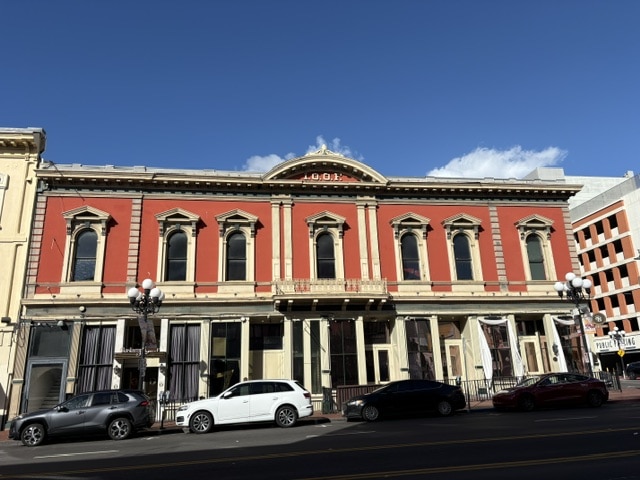
An unusual name and an even more unusual cornerstone. A walk past 526 Market Street reveals another survivor from a much earlier period of San Diego’s development. The Independent Order of Odd Fellows building, commonly called the IOOF building, dates to 1882.
Its name sparked my curiosity, and I researched it while sipping on a coffee at Spill the Beans across the street. I learned that the Odd Fellows are a fraternal organization with roots stretching back centuries. Their mission emphasized friendship, mutual assistance and charitable service, including helping people experiencing illness or financial hardship.
In San Diego, the Odd Fellows joined forces with the Masons to construct a building that would provide meeting space for both organizations. Plans began in the 1870s, but fundraising difficulties and construction delays meant the building took years to complete.
When the cornerstone was finally laid in 1882, the occasion was celebrated with a parade and elaborate ceremony. Inside the cornerstone, organizers reportedly placed a collection of coins, historical documents and even a stone said to have come from Solomon’s Temple.
This building was listed on the National Register of Historic Places in 1978.
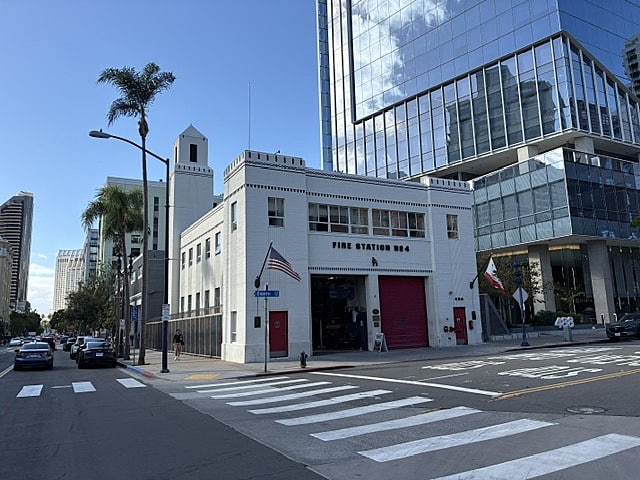
A fire station that has stood the test of time. In East Village, another historic building tells a story of public service that continues to this day. At 404 Eighth Avenue, along J Street, stands Fire Station No. 4.
Unlike the former YMCA and IOOF buildings, this structure still serves essentially the same purpose for which it was built. Placed into service in February 1938, Fire Station No. 4 is the oldest operating station in San Diego.
Designed by architect Gustav Hanssen, the station was constructed during the Great Depression using funding from the Works Progress Administration, a federal program that provided employment through public infrastructure projects. One of the building’s most recognizable features is its tower, which rises above the otherwise modestly scaled station.
Today, firefighters stationed there continue to respond to emergencies in East Village and surrounding neighborhoods. Though the fire engines may be modern, the mission of this building remains the same.
What strikes me about these three buildings is that, though their facades remain, they’ve each adapted to the passage of time. One of the many things I’ve come to appreciate about exploring San Diego on foot.
Award-winning columnist Deanna Ratnikova is the creator of The GO Deck – grab a deck today and be inspired to Get Outdoors and GO on new adventures.