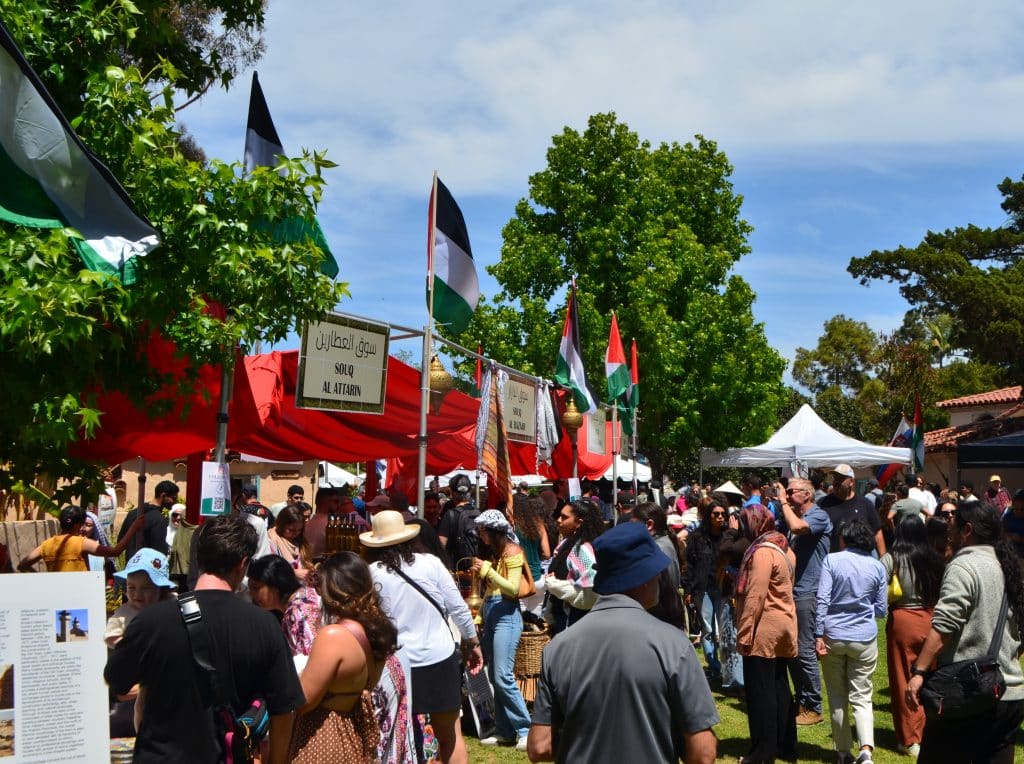
Palestine is not currently making headlines in the United States, but San Diego Palestinians remain active. The community proudly came together on April 19 for the House of Palestine’s Annual Lawn Program.
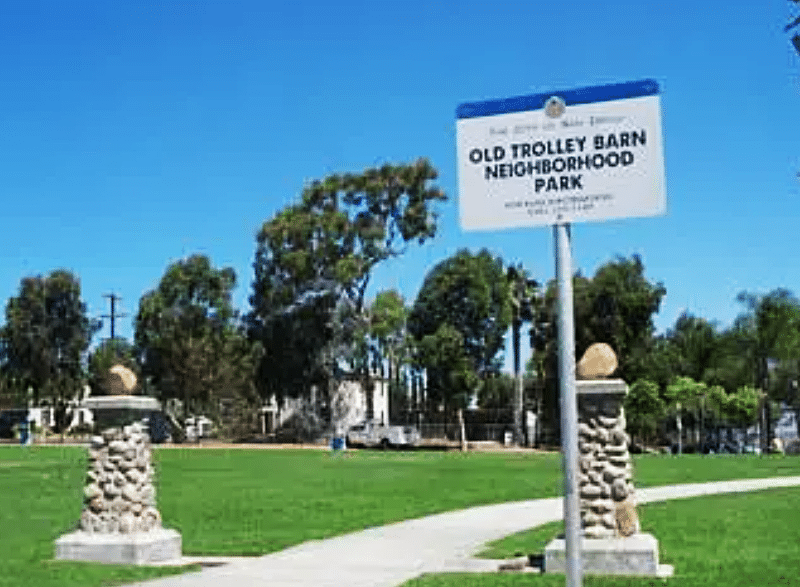
The house, which formed in 2002 and got its own cottage in 2021, is one of 34 Pacific Relations International Cottages based in Balboa Park. An annual lawn program is the biggest event of the year for each house. For the House of Palestine, it carried an even deeper purpose.
This year’s lawn program was themed “Rooted in the Land,” honoring Palestinian connection to the land and promising to preserve its culture for future generations.
Cultural and Events Coordinator Suzan Hamideh later explained in a speech: “Our land is very dear to us. It is our identity. It is who we are. It is what shapes us. And it’s something that every Palestinian connects to.”
Hamideh stressed that despite what some people assume, the event does not have a political agenda. It’s an opportunity to educate San Diegans on Palestinian culture.
Prior to the start of the program, members from the nearby House of Israel hung up Israeli flags, which could be seen from the courtyard.
Palestine spent the past two years in the spotlight facing bombardment from Israel, which has so far killed an estimated 72,000 people. While recent outbreaks of war elsewhere have shifted national attention, Palestinians in San Diego are still affected by these events.
“It’s hard because there’s so much going on,” Hamideh said. “This is not the place where we express [politics],” she said. “We express ourselves by showing the beauty of our people.”
Hamideh could be seen buzzing across the House of Pacific Relations courtyard all day, making sure each vendor stall and display was perfect.
Visitors trickled in all morning. By the time performances began, there was hardly room to walk through the crowd on the lawn.
Akram Ibrahim opened the performances with a speech encouraging Palestinians to “be proud of where [they’re] from…At the end of the day, it’s not ‘My grandfather was from Palestine.’ It’s not ‘My great-grandfather was from Palestine. My name is Akram, and I’m from Palestine.”
The Princesses and Queen of the House of Palestine led the crowd in reciting the U.S. Pledge of Allegiance and listening to the United States national anthem. A volunteer released doves into the crowd.
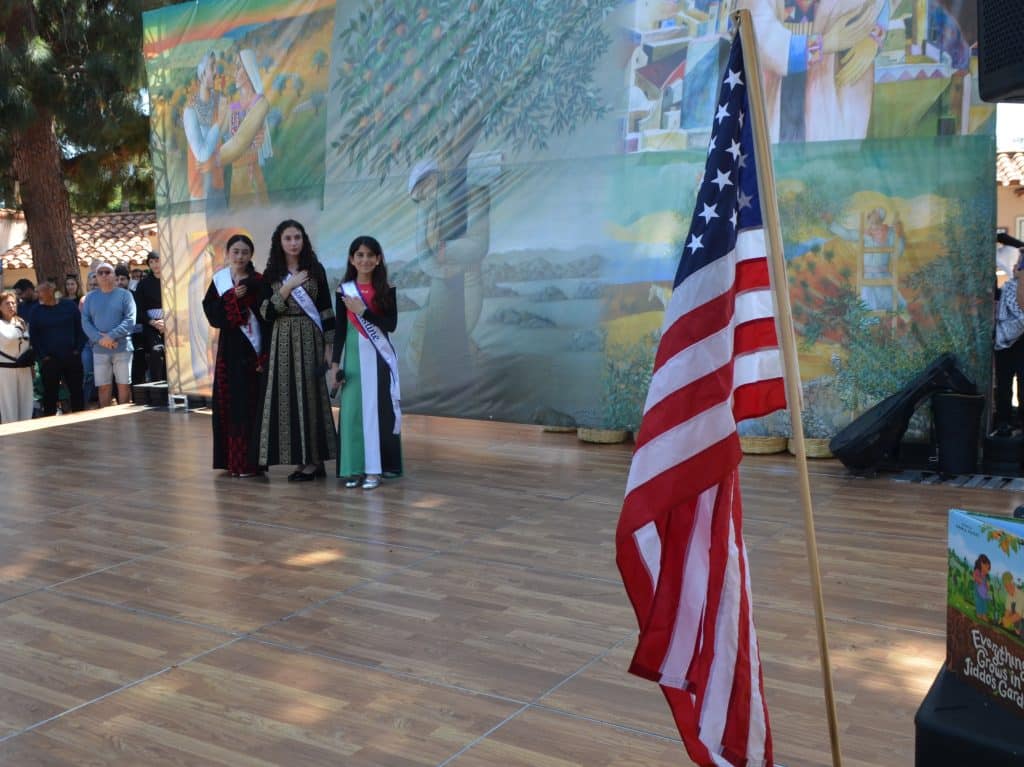
Performances ranged from traditional dance and live music, to a children’ s choir and a fashion show.
The event placed importance on passing culture down to future generations. Speakers in between each performance mentioned parts of Palestinian culture that were protected by UNESCO, like tatreez (embroidery) and dabke (dance and Palestinian storytelling).
A volunteer named Bushra told a story about her grandmother’s grief over an ancient tree. She loved it like a family member. The story emphasized the connection between Palestinian’s culture and the land they live on.
“Just like the olive tree roots, Palestinians endure—through loss, through rain, through drought, we remain rooted because we choose to stay, again and again,” Bushra said.
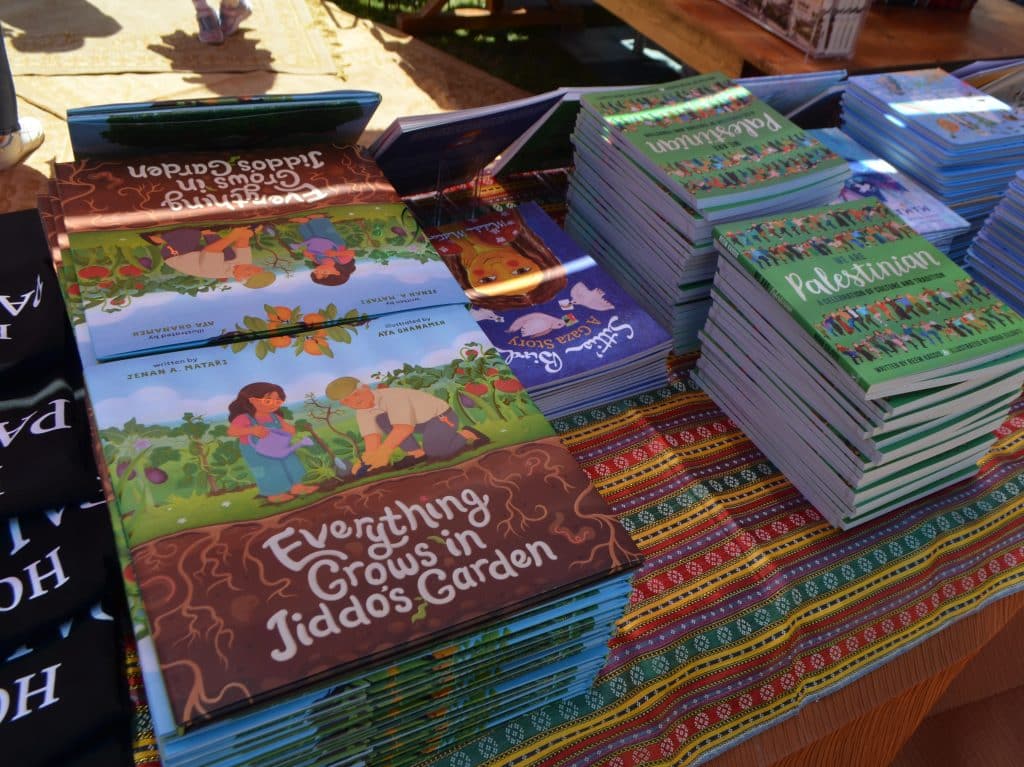
This theme carried over to visual displays. One was Jiddo’s Garden, inspired by the 2026 book Everything Grows in Jiddo’s Garden, by Jenan A. Matari. The orange trees, colorful thobes and keffiyehs came together to create an idyllic scene of Palestinian life.
One display contained a photo booth. Visitors could stand with a refugee tent and a boat, symbolizing the recent attempts to bring aid to Gaza via flotilla. Another booth allowed children to make kites, inspired by the final poem by Dr. Refaat Alareer, which described a kite giving Gazan children hope.
Another theme at Rooted in the Land was giving back.
Hany El-Saidany and his wife Nora run a business that has worked with the House of Palestine for a few years. Between the bracelets, pins, and jewelry on display were signs reading “100% of the proceeds from my shops go to support Palestinian Charitable Organizations.” El-Saidany specified he splits donations between the House of Palestine and organizations like the Palestine Children’s Relief Fund.
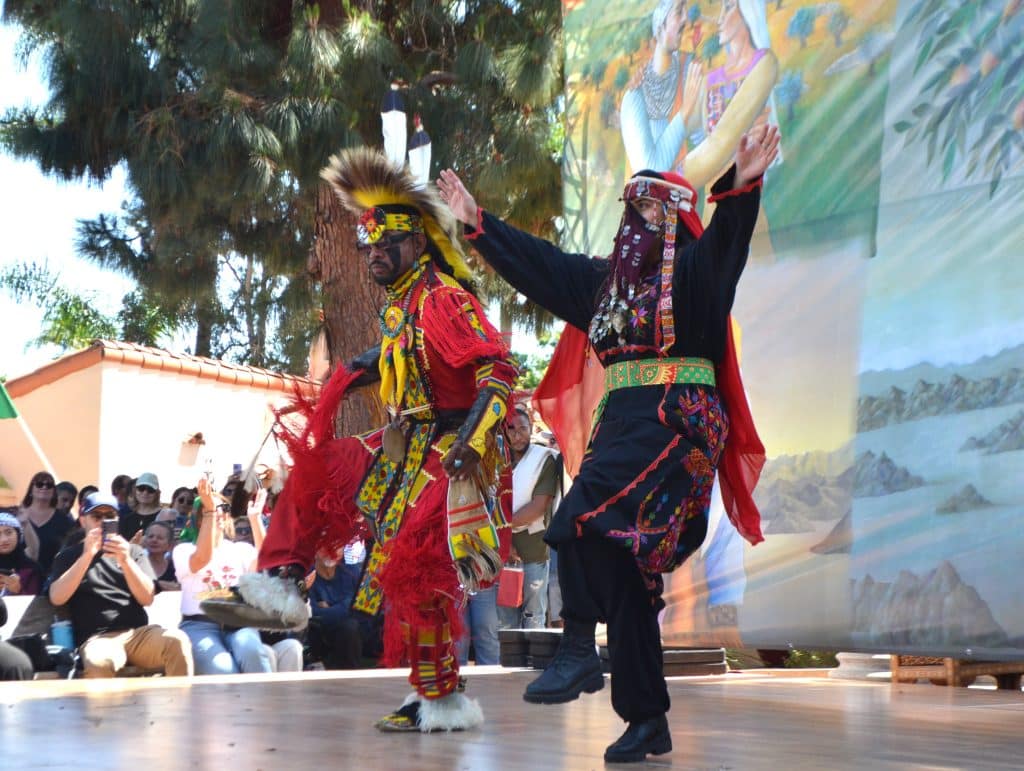
The event was both multi-generational and multi-cultural. A Palestinian dabke dancer accompanied Jamaal Isaac Jones, a Navajo (Diné) dancer. The performance invited the audience to draw connections between different cultures that draw inspiration from the land.
“We are from this land,” Jones said. “Just like our Palestinian brothers and sisters, we hold such a connection to our land.”
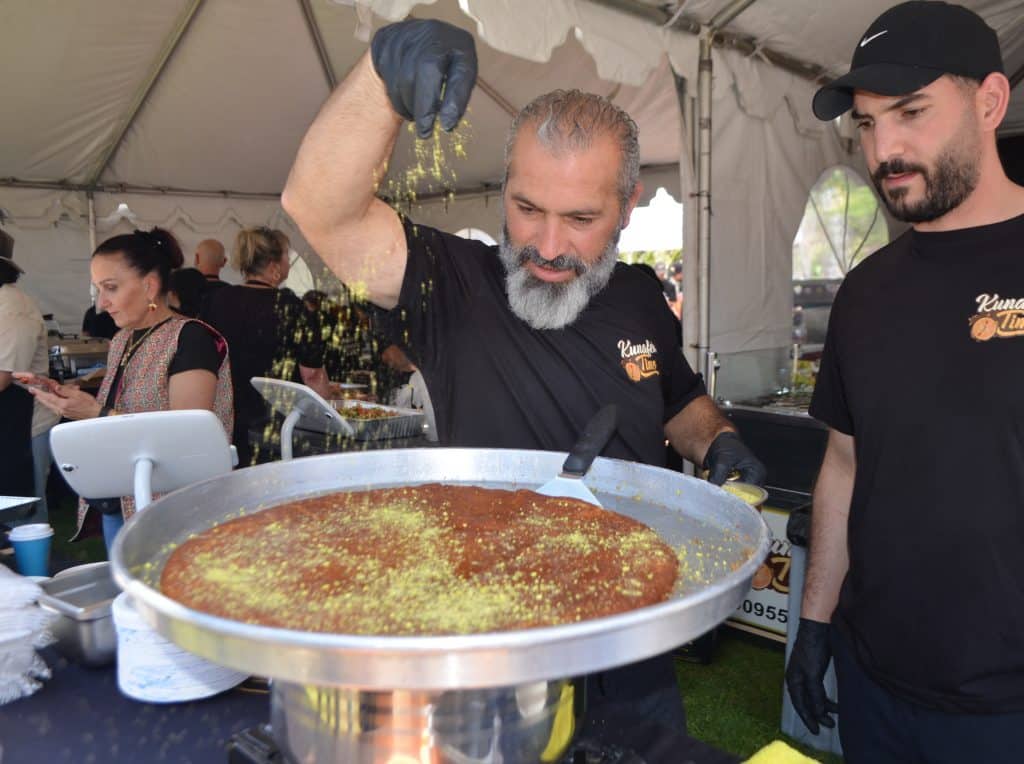
Some vendors embraced multiculturalism in their products. A longtime supporter of the House of Palestine, Finjan Coffee, sold knafeh matcha among other Palestinian-inspired treats.
Clarissa, of Clareez Tatreez, is of mixed Palestinian and Mexican heritage. She sold tatreez-inspired earrings that honored both cultures.
Um Amin H of Yummy Yamah has a business that sells Palestinian and Puerto Rican food. It’s inspired by her Puerto Rican stepmom. Um Amin H spent the event cooking maftoul, a Palestinian-style couscous.
Pride. Multicultural acceptance. Resilience. The event was filled with people, including up to 70 volunteers, who wanted to share these kinds of stories.
Like an older man who paused while cooking falafel to share that his family’s village was destroyed in 1948, forcing them to flee to Jordan. He has volunteered in San Diego for the House of Palestine for 15 years.
“It takes a village, truly. Takes the whole community,” Former House of Palestine President Yousef Ghandour said. “We’re here, and we do it, because it’s in our heart, it’s our blood.” SDSun