
While Americans across the country are tuning in to coverage of the Los Angeles wildfires, it hits close to home for many San Diegans. Downtown San Diego is roughly 100 miles south of L.A., with many local residents noting close connections to the city.
At last count, the L.A. fires have killed 23 people and destroyed more than 12,000 structures. The two largest fires, Eaton and Palisades, began on January 7 and have burned more than 37,000 acres combined, according to Cal Fire.
As of January 14, these fires are still raging, with the Eaton Fire at 33% containment and the Palisades Fire at 17% containment.
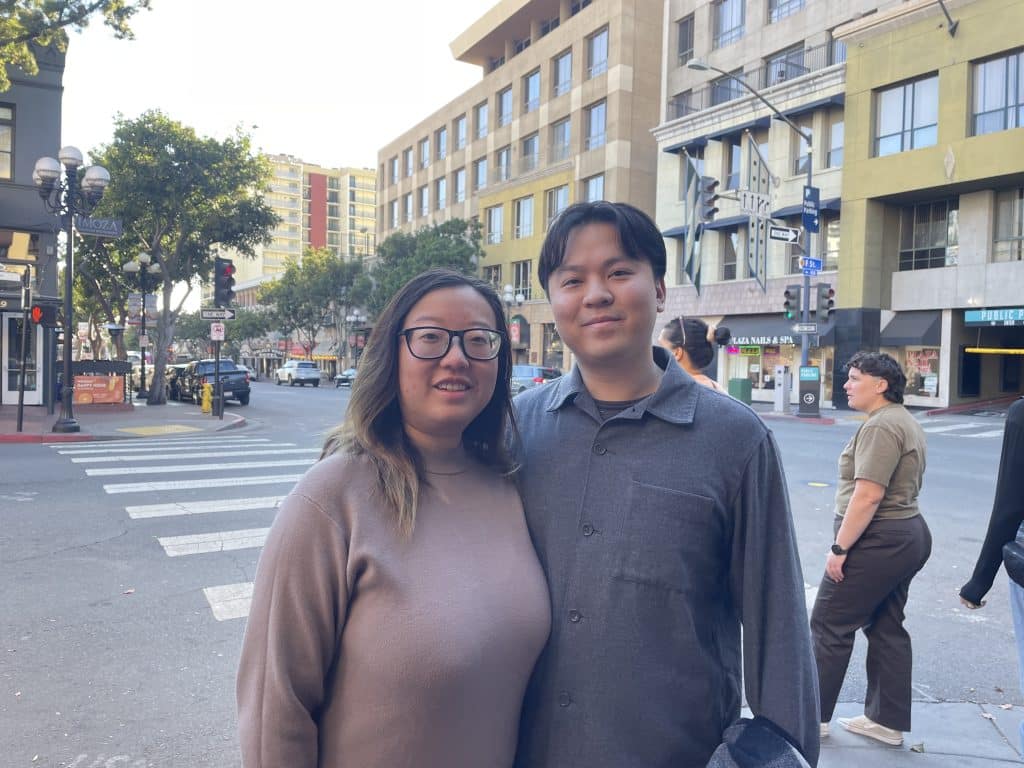
James Chen and Ru Hua are visiting downtown San Diego this week due to their close proximity to the Eaton Fire.
“Part of Arcadia is actually burnt down,” Hua says. “I was lucky enough to not be in an evacuation zone…The air quality is really bad, which is why we came down here.”
While their Arcadia home is still standing, the community around them has been directly affected. Hua works in a school and said she knows parents whose houses were destroyed by the fires.
“The city next to us is completely gone,” Chen says.
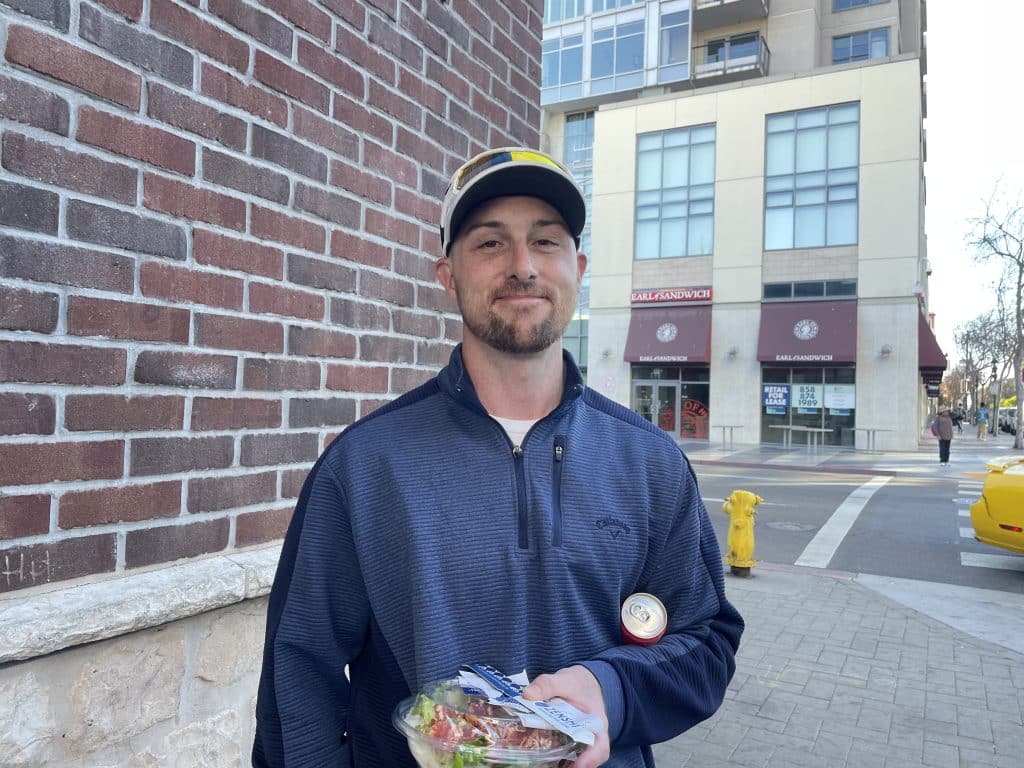
Dustin Harger, a downtown San Diego information technology engineer, also has connections with those affected in L.A.
“I have friends and family that have been displaced and/or concerned in general about the fires,” Harger says. “Some in the area or around the area and some outside the area. [I’m] worried about what they’re gonna do if they have to move or have to leave.”
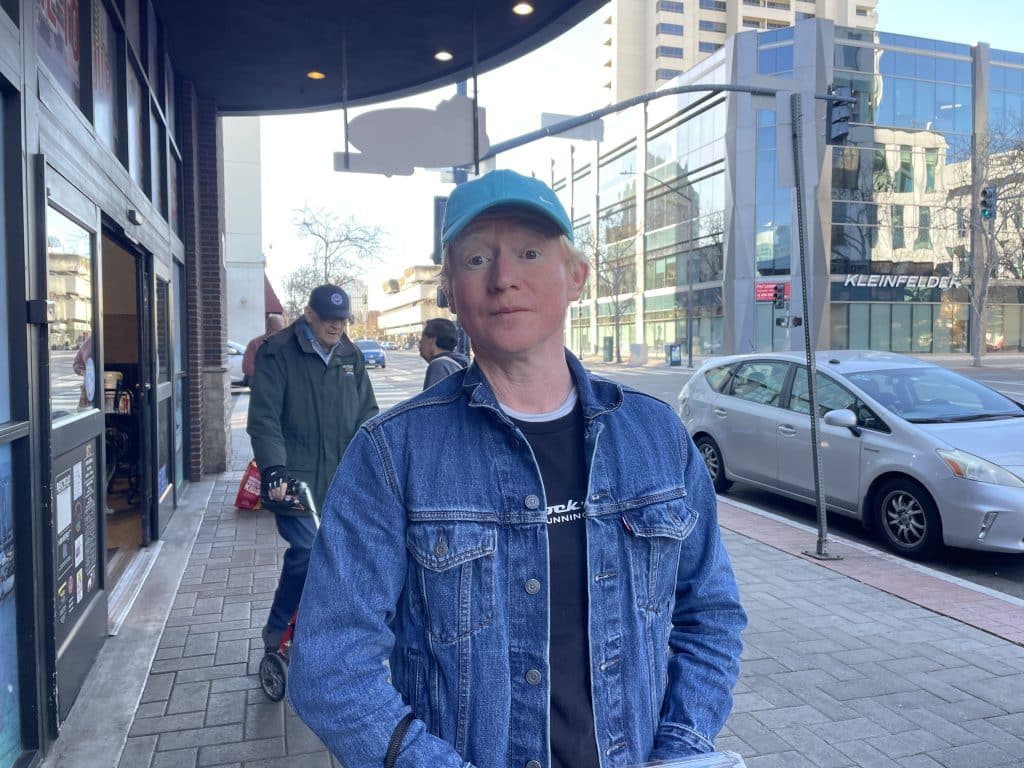
For downtown San Diego resident Oscar Guzman, the L.A. fires hit close to home in a different way.
“I’m just taking notice because I was living in Northern California in 2018 and 2019 during the fires there.” Guzman says. “For me, specifically, I’m kind of just reliving some of it by watching the news.”
The 2018 wildfire season was the most destructive in the state’s history, with the Ranch and Carr Fires alone burning more than 600,000 acres of land in Northern California.
Guzman says it was these fires that motivated his move to San Diego in 2019.
“The thing is, San Diego, they’ve been a lot more proactive than Northern California,” Guzman says. “Then again, there’s a lot more forest over there. Local officials do take into consideration that this part of the state has always been prone to wildfires and electrical issues.”

Downtown San Diego real estate agent Patricia Leone disagrees, arguing that officials aren’t doing enough.
“My heart breaks for all of those people and I think that our [state] legislators need to take a hard look [at] what they’ve not done,” Leone says. “They are not prepared. People have lost their livelihood, they’ve lost their lives and mostly homes. It’s strategy, and I think a lot of it was preventable.”
She expressed concern for the area near her Mission Hills home following the heavy rainfall and brush build-up she witnessed in early 2024.
“Hopefully they’ll eventually find out how [the L.A. fires] started, but our government was not prepared and they should be,” Leone says. “I think it’s time California voters took a hard look at why we keep putting in the same people.” SDSun
Note: The San Diego Tourism Authority has created this list of San Diego hotels offering shelter to L.A. fire victims.