You’ll smell the garlicky, sticky-sweet scents of downtown San Diego’s only Filipino pulutan bar before you see its front door.
A pulutan is a casual, sit-down eatery serving Filipino small bites and drinks.
Gaslamp Lumpia Factory is on a short block of F Street between Fourth and Fifth avenues. Plastered out front are advertisements for Pandesal Smash Burger, San Miguel beer and $6 shots.
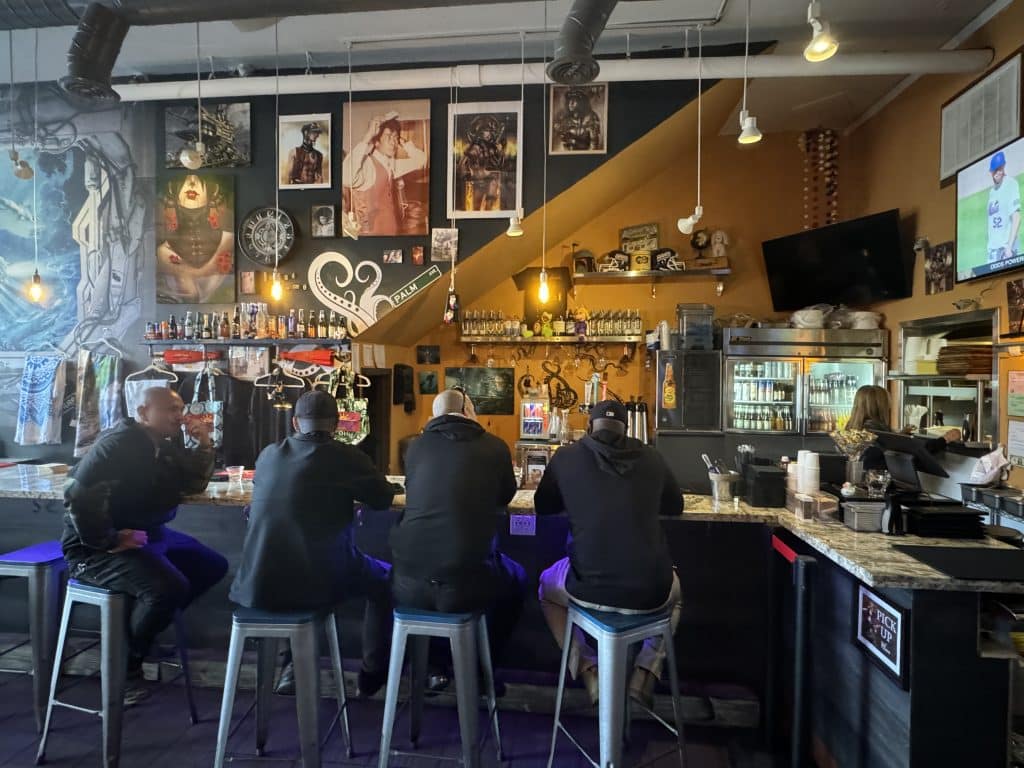
Inside, there’s a hole-in-the-wall vibe. It’s shanty-esque, with stools, tables and walls filled with various salutes to the United States Navy and steampunk tchotchkes.
“It’s an homage to my dad,” Co-owner Donna Pili says. “I was born and raised here in the States, but he came here via the U.S. Navy in 1964.” Aquilino Pili Jr., passed away in 2020.
“He was retired longer than he worked in his entire life,” Pili says of her father. “Not many people can say that. He built his house in the Philippines; sat around, drank beer and did pulutan.”

Pili and her partner, Craig Dalrymple, opened the restaurant in 2022. Pili is an accountant by trade; Dalrymple has a 30-year-career in restaurant management.
The pair deemed it somewhat risky to open Gaslamp Lumpa Factory in downtown–a non-Filipino area situated between National City and Mira Mesa, two predominantly Filipino hot spots more familiar with pulutans.
“This place was established for Filipino Americans, and for introducing Filipino foods to people who aren’t familiar with it,” Pili says. “It’s the best way to get a taste of Filipino food with an American twist.”
Fusion foods like loaded corned beef fries, and traditional foods like beef sitaw (a sauteed green bean dish), are menu items that were Pili’s dad’s faves.
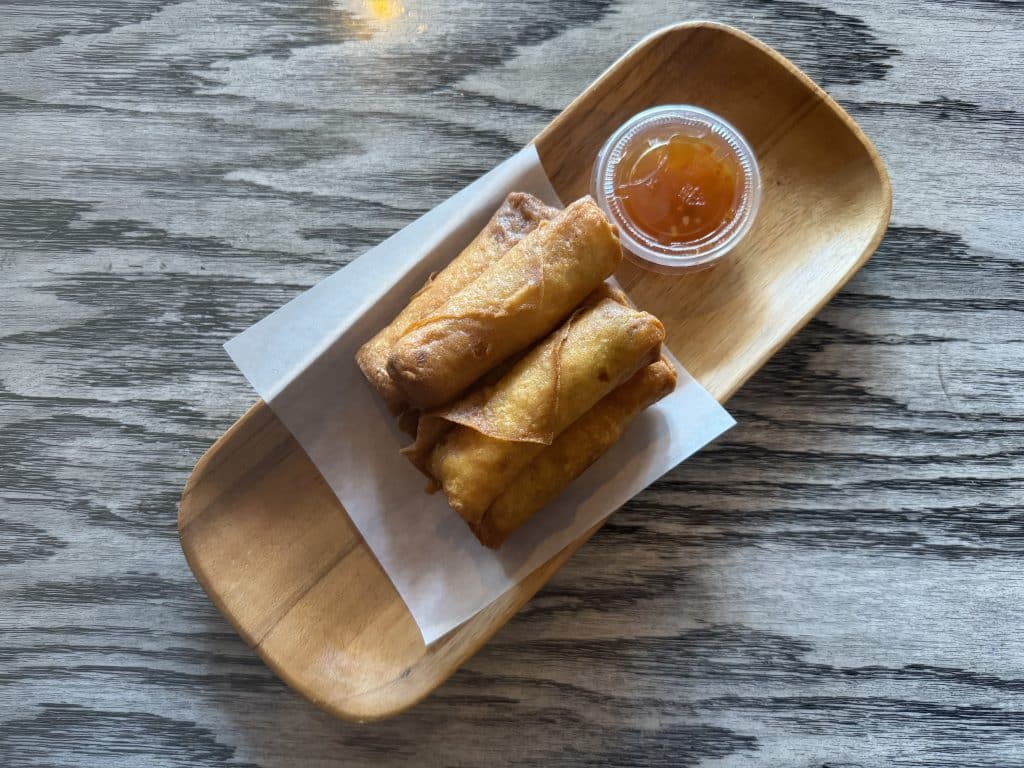
Pili named the place Gaslamp Lumpia Factory for two primary reasons: 1. Lumpia is recognizable to non-Filipinos and Filipinos. 2. “Factory” stresses the quickness of service.
The lumpia here comes five pieces per order and are generally larger than most homemade offerings.
Pili says her place is representative of Filipino-American heritage. Not traditionally Filipino, or too American.
“There is a generational gap between our parents, who were born and raised in the Philippines, and us here,” Pili says. “We are the future of our parents who migrated here, and we need to make them proud, American or Filipino.” SDSun