

Attempting to close the city’s quarter-billion-dollar budget deficit, San Diego Mayor Todd Gloria has proposed and enacted cuts on various facilities and programs.
When the smoke has cleared and the final budget draft arrives on June 10, don’t expect the long-standing public bathroom shortage to be resolved.
Year after year, the San Diego County Grand Jury reports a staggering deficiency of public restrooms. The group’s 2022-23 report is titled “Stop Kicking The Can Down The Road.”
In 2021, the mayor set a goal that no one should have to walk more than five minutes downtown to find a public restroom.
This goal has been far from realized. Instead, Mayor Gloria recently proposed to save $1.6 million by closing more than two dozen bathrooms in San Diego’s public beaches and parks, as well as seven in Balboa Park and one in Gaslamp Square. The proposal also seeks to limit the hours of many more facilities, including those at the Civic Center Plaza.
While many areas of San Diego County are without adequate numbers of restroom facilities, the issue hits downtown the hardest.

“I was just talking to my husband about this,” says East Village resident Jessica Reed. “There’s a lot of people that defecate right here. So, I’m guessing there’s not many public restrooms accessible.”
She was appalled by the prospect of more public restrooms being closed.
“Wow, I guess [the mayor] would want the city to be dirty and full of feces, human feces at that, Reed says. “I notice human feces all on the sidewalk or all on the street.”
At press time, the mayor’s office did respond to numerous emails requesting comment for this story.
“We’ve known literally for centuries that poop spreads disease and that we need safe ways to manage our human bodily waste,” says Megan Welsh Carroll, Ph.D., founding director of the Project for Sanitation Justice (PSJ) at San Diego State University. “We also know that, when people don’t have access to restrooms, that doesn’t mean that their needs disappear, it means that they have to take care of their needs in ways that are undignified, unsafe and stigmatizing… Open defecation is never anyone’s first choice.”
The 2017 Hepatitis A outbreak in downtown San Diego infected nearly 600 and killed 20. In 2021, a Shigella outbreak infected more than 50 people. Both diseases are spread via the fecal-oral route, and are cited in the 2022-23 Grand Jury Report as reasons to boost public restroom availability.
According to PSJ’s 2022 analysis of downtown restrooms, nearly half of the homeless residents surveyed downtown stated they practice open defecation, with nearly three-quarters citing the lack of a nearby bathroom as their top reason.

James Forse, who self-identifies as homeless, says he runs into public restroom issues on a daily basis. He adds that he’s repeatedly been barred from restrooms, including temporary porta potties set up for San Diego Padres home games, and at a local church.
He says going outside is his last resort.
“Even some places, for whatever reason, they won’t even let you upstairs to use the restroom. It’s crazy. Even a female has to go outside,” he says.
With the lack of an adequate bathroom supply, the city reportedly spends $1 million annually to clean up sidewalk biohazards, receiving hundreds of complaints of human waste a month.
Public restroom issues suffer continuous delays and funding avoidance due to the stigma around homelessness, according to Welsh Carroll.
“Public restrooms are often viewed as homeless-serving facilities, and so, even though we know that many people rely on and use public restrooms, they have unfortunately become a focal point for how we feel about homelessness as a society,” Welsh Carroll says. “Our approach to homelessness is very punishment-focused. We’re criminalizing homelessness quite a bit in an effort to make it less visible.”
She says while the mayor’s proposed budget cuts to public bathrooms hit the homeless community hardest, locals and visitors to the city are also affected by a lack of facilities.
“If you’re a person who likes to or needs to be outdoors, whether you’re a runner, a tourist, a delivery driver or a parent with small kids, folks’ daily activities are going to be limited and constrained by these lack of restrooms,” Welsh Carroll says.
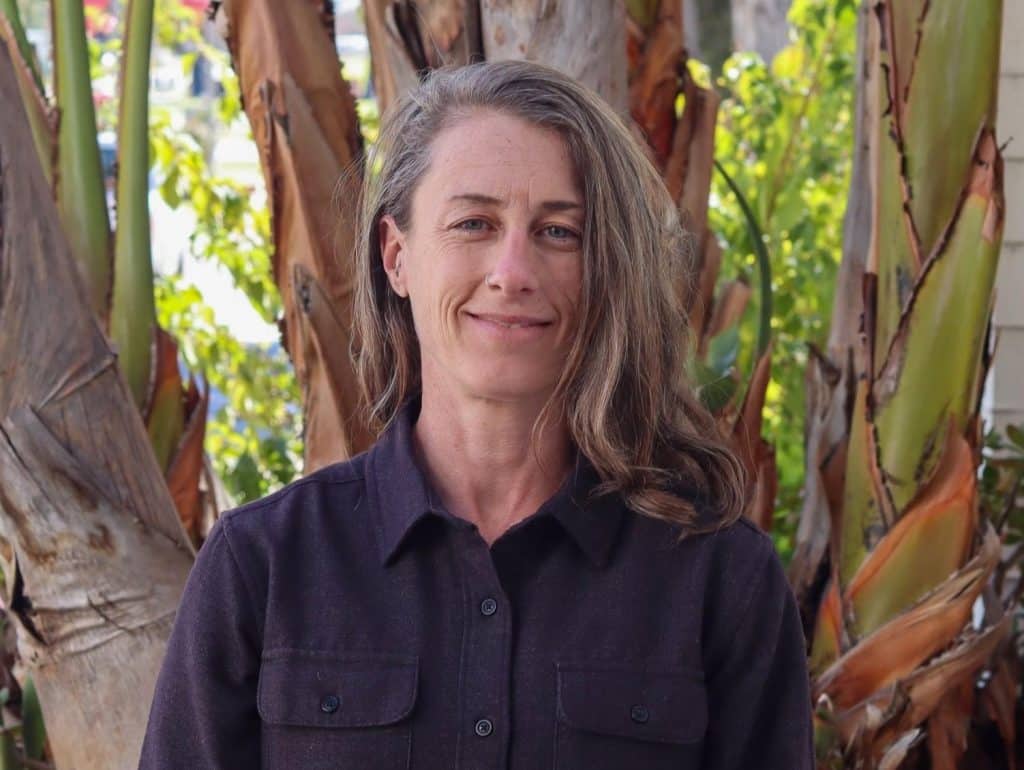
La Mesa resident Becca Shute visits downtown often, and expresses concern about bathroom availability for herself and tourists.
“This is San Diego, you kind of need to have [bathrooms],” says Shute, who often goes on downtown walks. “It’s a tourist place. That’s not gonna attract tourists as much.”
While Aidan Feil-Trulove, visiting from Twentynine Palms, wasn’t dismayed by the lack of bathrooms, she has taken notice of it.
“Most of the time, in most places I’ve seen, you have to buy something in order to use the bathroom,” Fiel-Trulove says. “I personally think that there should be more public bathrooms because not everybody’s looking to buy something. Sometimes it’s an emergency. It’s kind of embarrassing to buy just a bottle of water instead of actually wanting to go to that place.”
Despite recent discussions of overturning the law, requiring payment for public bathrooms is still illegal in California. Businesses, however, do have the right to limit their own restroom access to patrons, except in instances of “eligible medical conditions” as outlined by A.B. 1632.
In 2018, Starbucks enacted an open-door restroom policy in all of its locations in response to a racial profiling incident. This past January, Starbucks reversed that policy and now only allows paying customers into their facilities, citing safety, financial, and overall customer experience concerns.
For the city, maintaining restrooms is costly. The city reports that each new porta-potty site costs more than $30,000 a month to maintain, and Mayor Gloria says this isn’t the only hurdle.
“I just need to ask folks to quit acting a fool in these bathrooms,” Gloria joked during Voice of San Diego’s 2022 Politifest. “I mean, it’s not just the homeless population. It’s everybody. You’ve seen the stories about the lack of cleanliness. Talk about worker issues. It’s very hard to get people to do that job as well.”
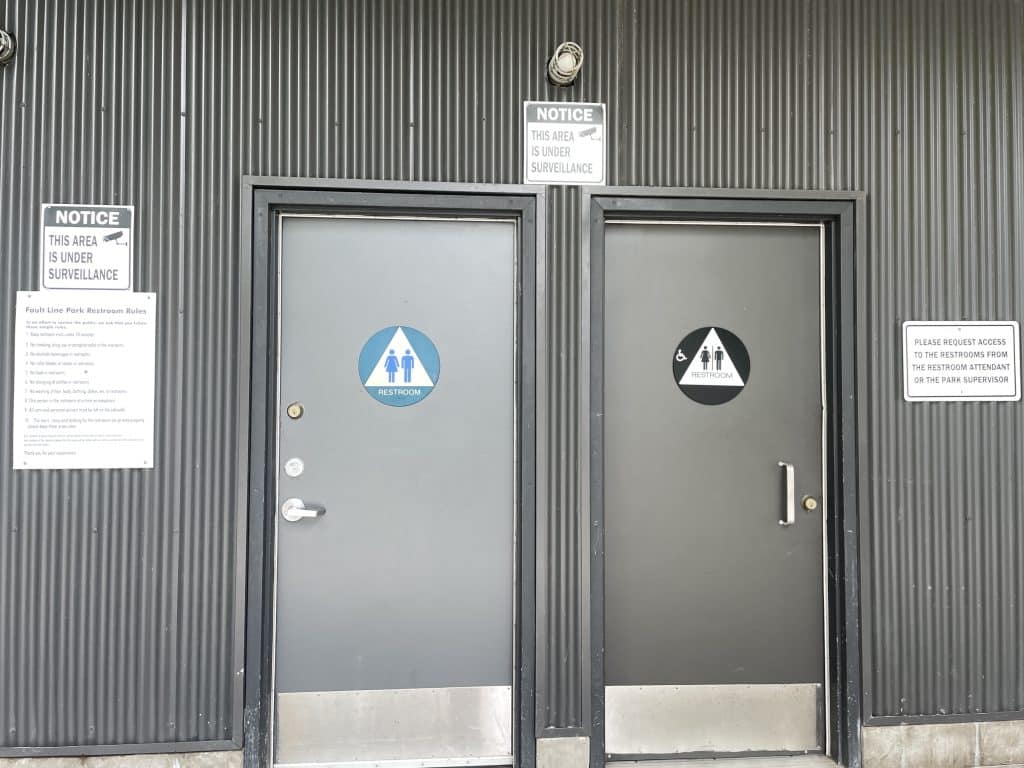
Currently, the city’s public restroom map shows more than three dozen facilities downtown, with around half reportedly open 24/7. However, the Project for Sanitation Justice points out various inaccuracies. They developed their own map in December 2022, complete with photos and extra details.
“The city of San Diego’s own web map is enormously inaccurate,” says Welsh Carroll. “But, the biggest issue is that they say that they make quite a number of public restrooms available 24/7, when, in fact, they are closed overnight. And that is a huge need, right? If you’re living outdoors, your bladder and bowels don’t run on business hours.”
At the time, PSJ reported the city claimed ownership of 24 permanent bathroom facilities downtown; PSJ found 22. Of these 22 facilities, seven were “subjective access,” meaning that there were barriers to entry, such as guards and/or time limits. One bathroom offered hot water in its faucets, two offered showers, and five did not offer doors on their stalls. Despite the city’s map showing over a dozen facilities open 24/7, PSJ found that only two lived up to this description. These two restrooms are located at the Civic Center Plaza and St. Vincent de Paul Village.
April 2025 data from the Downtown San Diego Partnership’s Clean & Safe department recorded a total of 902 unsheltered individuals. That means that there is roughly one 24/7 permanent toilet per 100 unsheltered individuals in downtown.
“It’s not that we don’t have bathrooms, it’s that the bathrooms that we have aren’t available for people to use,” Welsh Carroll says. “What would it look like for the city or even the County of San Diego to say to coffee shops, ‘Hey, we’ll give you a monthly stipend to clean your bathroom more frequently and maintain it if you make it available to the public?’”
One more reason nothing gets done, Welsh Carroll says, is that public restroom issues are being passed between different governmental departments, rather than being addressed by a set agency with a set budget.
“This issue raises big questions about…the role of local government in basic public health and safety,” Welsh Carroll says. “[It’s] right to be suspicious of proposals to outsource the responsibility to business owners or anyone else…in my view, this should be a responsibility that local government at least takes leadership on. And unfortunately, that’s not where we’re at.” SDSun