The multi-billion-dollar revitalization of downtown San Diego’s Seaport Village is far from a simple concept. It’s a multi-faceted project that’s already been in public discussion for nine years (sandwiched around the pandemic).
The eventual result may include multiple new hotels, the removal of a park, a meshing of current and new restaurants and retail, vastly different sight lines to the bay for existing Marina District condominium owners and numerous other moving parts.
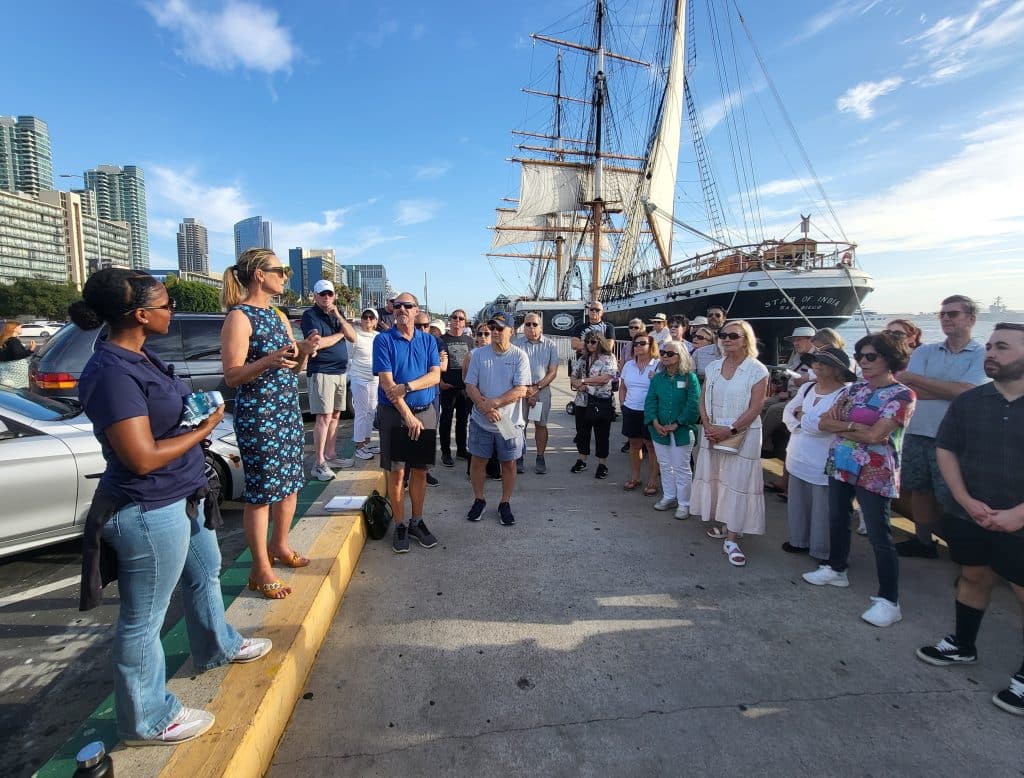
A multitude of disconnects about plan components was on display yesterday during a unique “Walk & Talk” event hosted by The Port Of San Diego and attended by roughly 60 interested members of the public.
Port CEO Scott Chadwick and Commissioners Danielle Moore (Chair) and Sid Voorakkara kicked off the Walk & Talk in front of the Maritime Museum. The three answered, and deferred, questions as the group strode down the Embarcadero to the northern tip of Seaport Village.
Communication between the Port and the public was itself a dominant point of conversation during the mobile event. Commissioner Moore, who’s been on the Port board since 2022, says she’s never participated in a Walk & Talk.
Nor had downtown resident Susan Simon, co-chair of the Embarcadero Coalition, who founded the citizens group with fellow downtowner Janet Rogers seven years ago.
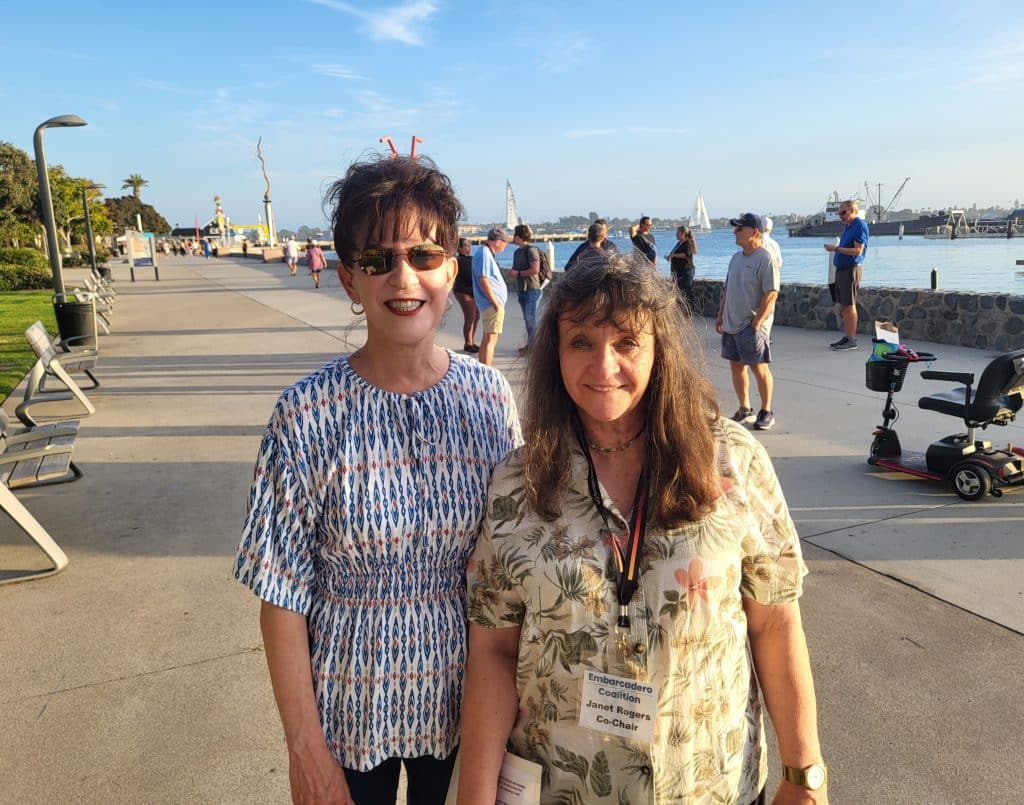
“There have been info-gathering symposiums where the public could make suggestions about Seaport Village,” Simon says. “And there are Port meetings where you can give general comments for two or three minutes. But there’s no feedback, and that’s a challenge.”
Moore says the Walk & Talk is an opportunity to be up close with the public.
“It makes the Port more accessible,” she says. “We’re really interested in connecting to the public…Being approachable and accessible is important. This was an opportunity for people to give us feedback and propose ideas of what they’d like to see changed.”
Simon applauds the Port commissioners for this effort.
“We’ve never done this before,” Simon says. “The Port does a lot of good work and we’re not trying to take anything away from that. Though, there were unanswered questions today. We hope they hear our concerns and take questions back to Port staff and other commissioners. We want dialogue that can help shape opinion. The developer [1HWY1 LLC] gets more one-on-one time with them than we do.”
Port CEO Chadwick insists the board and the developer are hearing from the public. He says valuable public comments are already on the record from meetings. He vows that input from this Walk & Talk will be passed on to other Port commissioners.
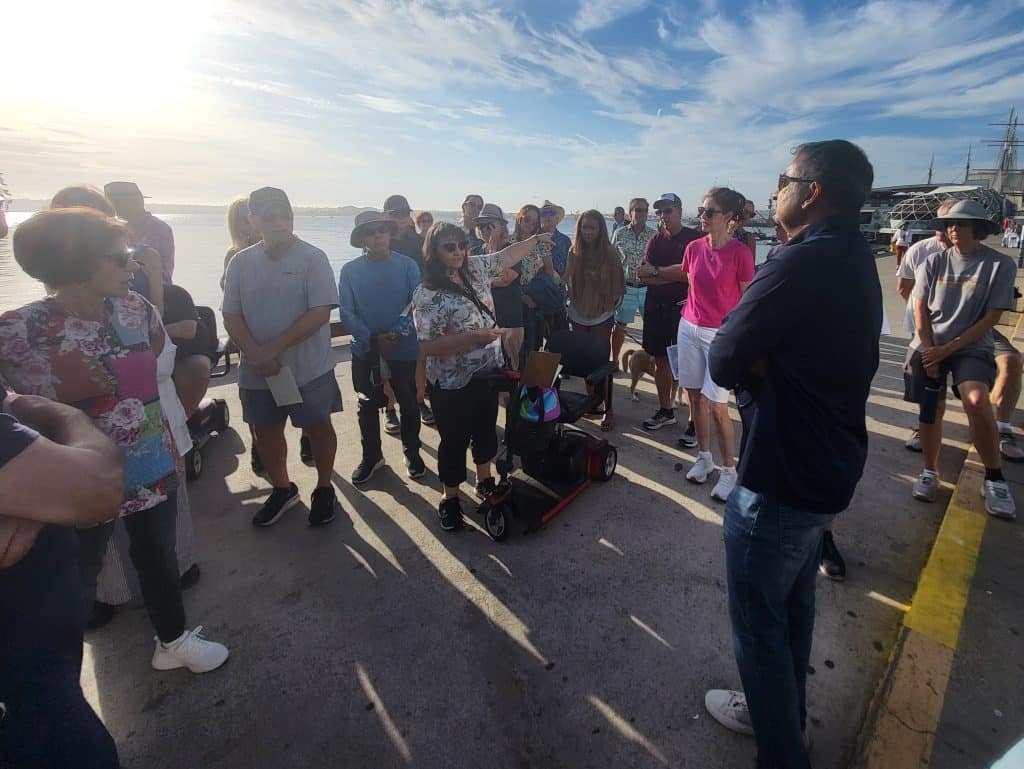
In addressing the entire group near the end of the Walk & Talk event, Moore says the ultimate plan will need to be a balancing act.
“You guys aren’t going to like what I have to say but there’s a balancing of the needs and the interest of those who live downtown,” Moore says. “And, those who do not have access, which are more often than not people of color who do not fit the demographics of this group that is present today.”
Another questioner wondered why major changes had to be made to Seaport Village on top of recent upgrades. There are currently 57 tenants in the ecosystem (making it 97% occupied), and revenue has increased more than $10 million since pre-Covid.
“This is an aging infrastructure,” Moore says. The changes we have done to Seaport Village really just put a Band-Aid on it.”
The plan is on a rolling timetable. Port staff says a draft Environmental Impact Report (EIR) is in progress. Public notifications will be made and Port staff will continues to work with 1HWY1 on refining the project. After the EIR is complete, the board will consider certification of the EIR. Once certified, the project will go to the Coastal Commission. Additionally, 1HWY1 must also get approval from the Board for Coastal Development Permit(s) and real estate agreements.
It will be changed to adjust to the market conditions,” Moore says. “There will be feedback incorporated into it. We do not have all that information today. We are still waiting to get more information from the developer as this project adjusts to different market considerations, community feedback and other plans. And so it is still in process.”
Simon and her citizens group will be paying close attention.
We hope there are many more events like [Walk & Talk],” Simon says. “And better opportunities for actual open dialogue where we can talk about problem-solving.” SDSun